Early on the morning of September 23, a 12-foot-tall bronze statue appeared on the lawn of the National Mall. It depicted President Trump and convicted child sex offender Jeffrey Epstein holding hands and frolicking together, and the plaque at its base read: “We celebrate the long-lasting bond between President Donald J. Trump and his ‘closest friend,’ Jeffrey Epstein.” By the next morning, the statue had been hauled away by U.S. Park Police.
The installation—titled Best Friends Forever—was intended to spotlight Trump’s 15-year friendship with Epstein, a chapter that’s faced intense scrutiny over the past several months. Trump has continuously attempted to discredit stories linking himself to Epstein, even as new evidence of their association continues to come to light.
It’s just the latest in a series of similar satirical statues that have cropped up on the National Mall and around Washington, D.C. In a statement to NPR on September 24, a group called The Secret Handshake claimed responsibility for Best Friends Forever, as well as most of the other statues that have materialized in recent months.
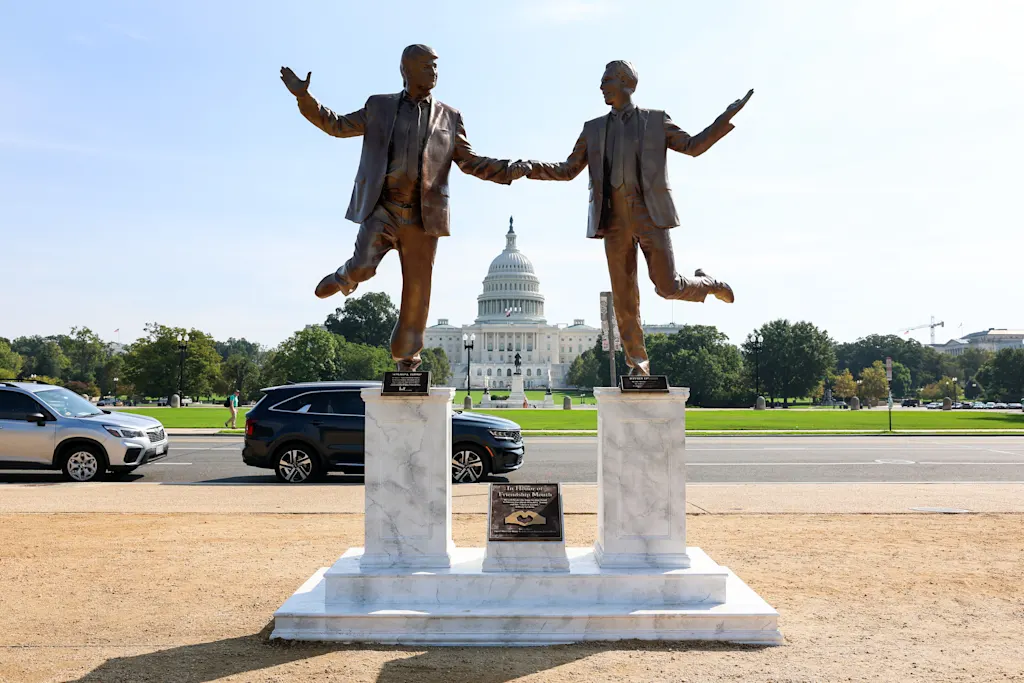
Despite receiving a National Park Service permit to remain on the mall until Sunday evening, the statue was removed just 24 hours after it appeared. A spokesperson for the Department of the Interior told NPR that it was removed because it was not compliant with the permit, though they did not specify how.
An anonymous member of The Secret Handshake told the media outlet that “some people within the parks department, aka most likely the Trump administration, were trying to find ways to say we were not in compliance.
“They showed up in the middle of the night without notice and physically toppled the statue, broke it, and took it away,” the source added.
According to Ken Lum, a sculpture artist and chair of the Department of Fine Arts at the University of Pennsylvania, The Secret Handshake’s brand of irreverent critique is part of a long tradition that dates back five centuries. He says the removal of Best Friends Forever signals that we’re living in a “humorless” time.
A medieval tradition
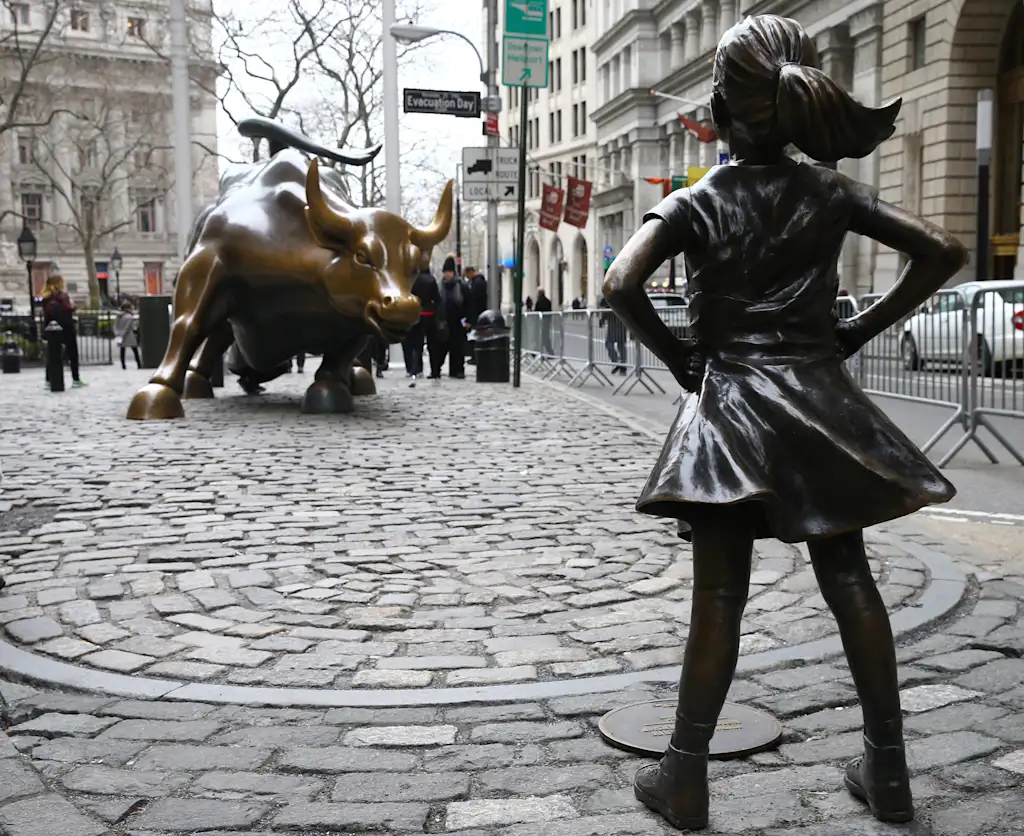
Sculpture as a form of social protest is nothing new. One of the examples that might be most familiar to an American audience, Lum says, is Fearless Girl—a statue of a small girl of maybe 6 or 7 that was erected in opposition to the famous Wall Street sculpture Charging Bull in 2017. The sculpture, meant to call attention to gender inequality in the Wall Street community, made national headlines and drew crowds for months.
But Lum says he believes Best Friends Forever and The Secret Handshake’s other recent statues critiquing Trump belong to a different genre of art—one that has its roots in a centuries-old practice first pioneered in medieval Europe.
“I wouldn’t say it’s really protest art necessarily,” Lum says. “There’s a range of art in between—social criticism, satire, cheeky expression. The first thought I have goes back to medieval carnivals.”
Starting in the early 1500s, Lum says, communities in England and France held carnival celebrations that were sometimes also known as the “Feast of Fools.” During this period, the ruling class allowed a brief role reversal, in which working people were permitted and even encouraged to “play the role of the king as a buffoon and openly satirize the prevailing social order.” Satirical art emerged as a key tool to expose societal inequities and allow open discussion of citizens’ grievances.
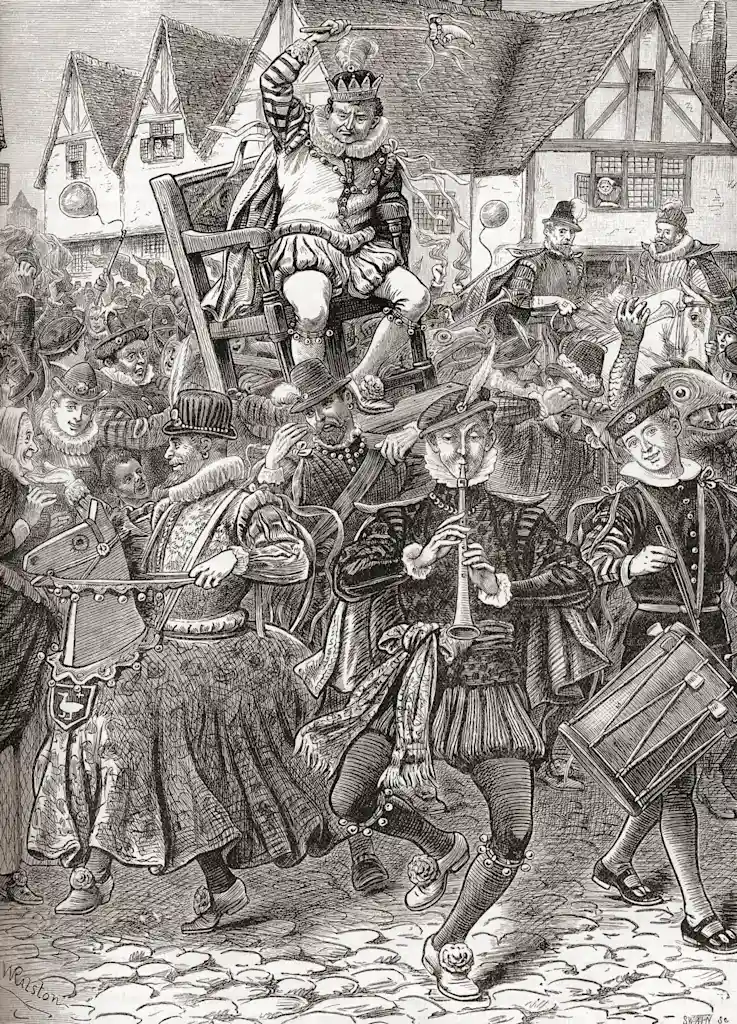
“I think there’s something to be said about [medieval carnivals], even though it’s not practiced anymore,” Lum says. “The situation right now is humorless.”
Hundreds of years later, Lum believes that this genre of artistic parody still serves a critical purpose—not just to allow for open dialogue, but also to bring some measure of levity to the discourse between the people and their government. Best Friends Forever pulls on that satirical lever through its sarcastic tone and absurdist take on Trump and Epstein’s friendship.
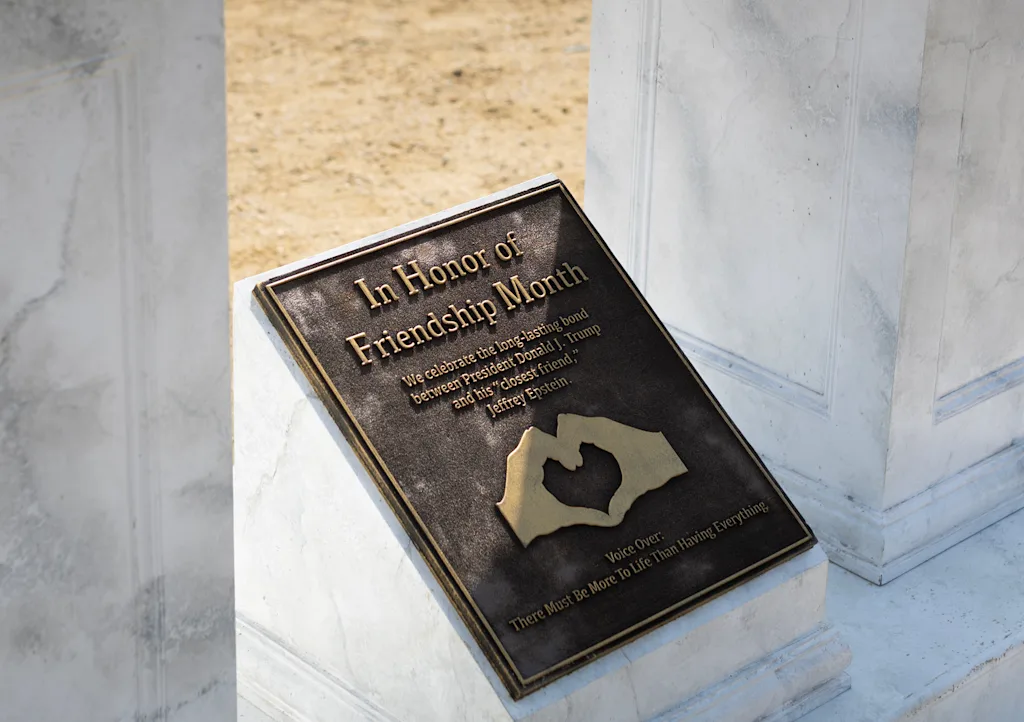
Further, Lum notes, the sculpture uses a strategy called anti-monumentalism, or the adoption of traditionally “powerful” sculptural aesthetics, to question the powers that be. In this case, Trump and Epstein are rendered in an imitation of bronze, a material that’s been “invested with a kind of authority,” Lum says.
“That’s to imitate a long tradition, going back thousands and thousands of years, where bronze, marble, and other types of stone are seen as the most important, or even sacred, materials for depicting topics of national importance,” Lum explains. Specifically, he adds, bronze is commonly associated with universality and univocality. “They’re playing on that, being very irreverent and even impudent.”
The Secret Handshake’s message may even be amplified by the sculpture’s immediate removal. While Lum wouldn’t necessarily characterize Best Friends Forever’s removal as censorship, given that it was initially permitted to go up, he says its swift removal demonstrates “a lot of practicing sanctimony.”
“That it was removed is no surprise,” Lum says. “The surprise is that it was allowed to be put up, however temporarily. But the cheeky humor of the work met up against an absolutist self-righteousness.”
Related Posts

I landed a software engineering job at Slack without a degree. Here’s how I taught myself to code and broke into tech.
Jeremiah Peoples works at Slack after years in the military.…

$100B OpenAI investment shows Nvidia’s enduring leverage in AI
Welcome to AI Decoded, Fast Company’s weekly newsletter that breaks…

Google salaries revealed: how much the search giant pays software engineers and other key roles amid the AI boom
Google and Alphabet chief Sundar Pichai is one of the…