Hello again, and welcome back to Fast Company’s Plugged In.
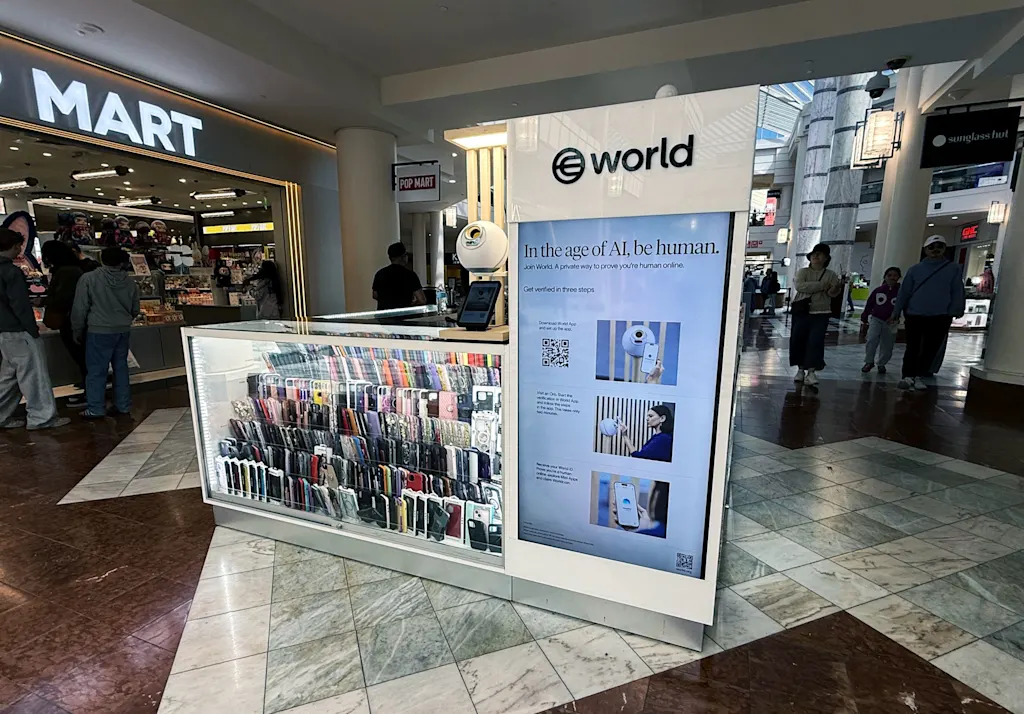
Last weekend, I stopped by a gadget kiosk at my local mall—but not to buy a phone case or get a cracked screen replaced. Instead, I was there to get my irises and face scanned by a device called the Orb so I could receive a credential known as a World ID. Its purpose: to provide verifiable proof I’m a human being.
Like everyone on the internet, I have grudgingly accepted the need to complete CAPTCHA tests, a truly irritating form of personhood verification that has been with us for almost 30 years. But until fairly recently, it hadn’t dawned on me that more conclusive evidence might be necessary. It did, however, occur to the founders of Tools for Humanity (TFH), the outfit behind the World ID. They—OpenAI CEO Sam Altman, Alex Blania, and Max Novendstern—founded it back in 2019, which is eons ago in AI years.
Now it’s become easier to understand why “proof of human,” as TFH calls it, might be a pressing issue. Deepfaked imposters have become so convincing that they’ve already been used in impersonation scams that have netted millions of dollars for cybercriminals. Moreover, the rise of agentic AI has us hurtling toward an era when agents will jostle for resources across the internet—not always for sinister purposes, but certainly in ways that will complicate life for those of us made of flesh and blood. By next year, Cloudflare CEO Matthew Prince recently predicted, the bots online will outnumber the humans.
Consequently, a reliable means of validating one’s humanity—CAPTCHAs are notoriously easy to fool—could become essential infrastructure. “At the limit, every single app and website on the internet will have to use something like World ID to protect itself and its users,” says TFH chief product officer Tiago Sada.
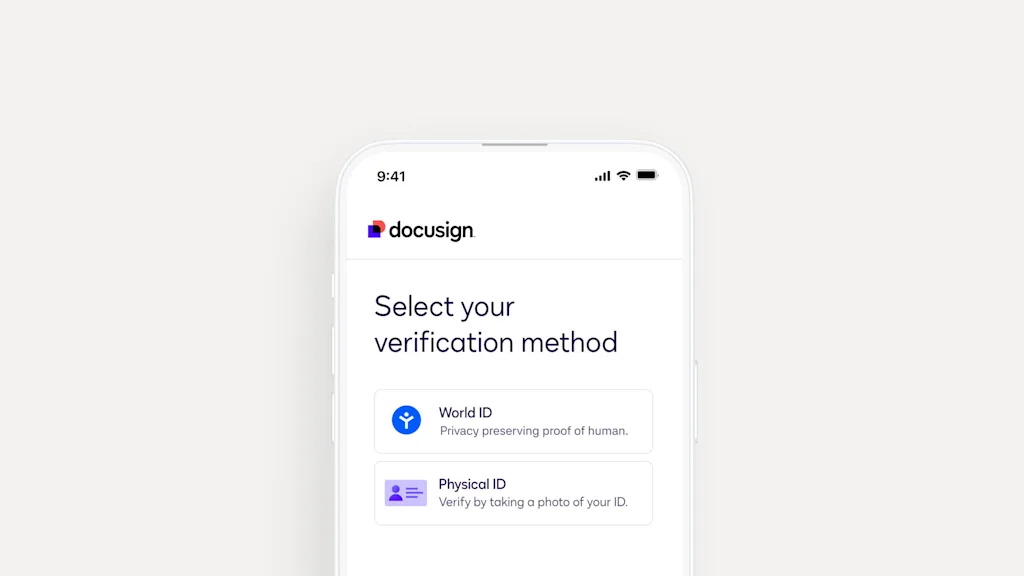
Last week, Altman (TFH’s chairman) and Sada were among the presenters at an event the company held in San Francisco to unveil version 4.0 of the World ID platform. (CEO Blania, recovering from emergency hand surgery, Zoomed in.) The launch was dense with news, including partnerships with Zoom, DocuSign, and Tinder—three familiar brands that will build World ID-based verification into their apps—and a system for preventing bots from buying up concert tickets en masse. A selfie-based option will supplement the Orb’s face-and-iris scan for situations in which absolute certitude of humanity is less critical. And a new feature will assist users who want to delegate tasks to their personal agents, helping to distinguish the good bots from the bad.
TFH’s event amounted to a reboot of sorts. The company has issued 18 million World ID verifications to date, but has struggled to frame its service in a consistent, broadly appealing way. In its early days, it called itself “a technology company built to ensure a more just economic system,” a mission that led to it creating its own cryptocurrency. New World ID members still receive Worldcoin as a benefit—mine is currently worth $10.59—and the World app feels as much like a crypto wallet as an ID verification tool.
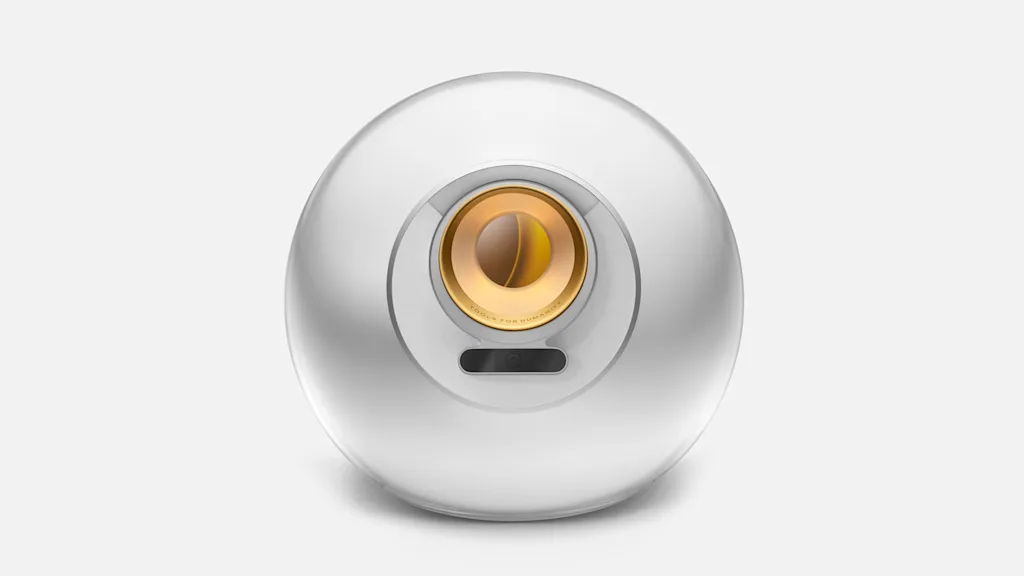
Inevitably, scanning people’s irises and offering cryptocurrency as a signup inducement has struck many observers as creepy. That might help explain why I didn’t catch a single mention of Worldcoin at the launch event, and why TFH is beta-testing an app focused entirely on World ID—”a much simpler and streamlined experience,” says Sada. The design of the Orb—which gives off the vibe of an enormous, possibly omniscient robotic eyeball—remains foreboding, but the company is working on a much smaller version in a smartphone-like shell.
As TFH has rolled out World IDs globally, it’s faced sprawling pushback, with regulators in Brazil, Hong Kong, Indonesia, Kenya, the Philippines, Portugal, and Spain impeding its efforts based on concerns over its stewardship of biometric data. That said, its approach to privacy is far from a worst-case scenario. Signing up does not require you to disclose information such as your name, email address, or gender. Rather than TFH holding onto your iris and face scans, they get transferred to your own device, then deleted from its servers. The means of verification is abstracted into single-use codes; companies that receive them learn nothing about you based on the transaction except that TFH vouches for your humanity. (The company will collect a fee from such companies for each user it verifies: “Even though the technology is very new, the business model is very old,” says Sada.)
I was comfortable enough with these measures to get my own World ID, a self-serve process that involved downloading the World app and briefly staring into the Orb with my eyeglasses off. It took less than five minutes at the kiosk I visited, and then I ambled off to see what was new at the Apple Store. What I’m still wrestling with is TFH’s current messaging about what it’s trying to do.
Instead of saying it’s striving for a more just economic system, TFH now calls itself “ But surveys show that the AI industry has not yet convinced most people that AI will benefit them personally. And yet they’re increasingly being asked to adjust themselves to the technology’s impact on daily life, and World ID is one of those accommodations. It’s not obvious that anyone will get much out of having proven they’re human, other than clawing back a shred of pre-AI normalcy.
Maybe it’s not TFH’s job to make the case that AI will be worth the hassle. (In his brief introductory remarks at last week’s event, Altman—whose association with the company lashes it to the controversy he generates in his day job-mentioned “a lot of wonderful things” the technology is doing, but didn’t specify what they were.) It’s clear, however, that it’s working hard to make getting verified seem cool rather than a utilitarian necessary evil, like dental insurance or a sump pump.
For example, the company’s flagship stores in cities such as Lisbon, Rome, San Francisco, and Seoul, which are among the nearly 400 locations where you can get scanned, look like quirky art galleries. Its event included a sneaker drop and a concert by rapper Anderson .Paak. In a strange mini-scandal, after TFH announced at the event that it was “joining” Bruno Mars’ upcoming tour with “VIP experiences for verified humans,” Wired’s Maxwell Zeff and Lauren Goode reported that Mars’ team and concert producer Live Nation denied such a partnership existed or had even been broached. A TFH spokesperson attributed the on-stage claim to “a miscommunication.” (The anti-concert-bot technology will be used for an upcoming European tour by Jared Leto’s band, however.)
In the end, I think Sada is likely correct that something akin to World ID will need to become pervasive. Whether it’ll be World ID itself is a classic chicken-or-egg puzzle. Unless way more than 18 million consumers sign up—TFH has said its goal is a billion—companies won’t see it as the de facto method of human verification. And until it’s widely adopted by apps and sites, most people won’t need it. Neither cryptocurrency nor sneaker drops will change that basic fact.
Still, the addition of Zoom, Docusign, and Tinder as partners speaks to three activities humans undertake at scale: holding meetings, signing paperwork, and finding dates. People will continue performing them in the AI era, regardless of any new complications. If TFH gains enough support in other popular domains, from additional major players, it might yet make the transition from slightly unsettling curiosity to mainstream necessity.
You’ve been reading Plugged In, Fast Company’s weekly tech newsletter from me, global technology editor Harry McCracken. If a friend or colleague forwarded this edition to you—or if you’re reading it on fastcompany.com—you can check out previous issues and sign up to get it yourself every Friday morning. I love hearing from you: Ping me at hmccracken@fastcompany.com with your feedback and ideas for future newsletters. I’m also on Bluesky, Mastodon, and Threads, and you can follow Plugged Inon Flipboard.
More top tech stories from Fast Company
Apple’s new CEO is a hardware guy, but software is his biggest challenge
John Ternus’s leadership has already given us some of Apple’s best devices ever. But the company could use a reboot when it comes to software.
Read More →
Sorry, Reese Witherspoon is correct about AI
Celebrities are learning the hard way that the AI discourse is toxic. Read More →
NASA’s awe-inducing iPhone moon video is a free ad for Apple, but there’s a catch
Who owns the moon (video)? Read More →
OpenAI releases GPT-5.5, a more powerful engine for coding, science, and general work
The company is positioning its newest system as its strongest agentic coding model yet, as it faces pressure to keep pace with its rival Anthropic. Read More →
Plug-in solar is coming. Here’s how much you could save on electric bills
A new calculator from the nonprofit Bright Saver estimates potential savings from plug-in solar panels. Read More →
Brace yourself for a flood of patches in all of your tech gadgets
Anthropic’s Mythos is surfacing hidden vulnerabilities across operating systems and browsers, prompting urgent fixes. Read More →
Related Posts

How small businesses can offer lavish employee benefits
Talent wins the day. And when small business owners invest…

HR exec caught on Coldplay kiss-cam resigns after viral moment
The female executive who was caught on camera embracing the…
Dude Perfect hired its first content chief as it strives to build a Disney-style flywheel
The Dude Perfect guys on tour. The company hired a…