The lights drop, the first chord detonates, and somewhere in a stadium packed with 60,000 people you’re holding a cold beer.
At a growing number of stadiums in the United States, your beverage cup isn’t made of flimsy plastic you’d toss into a bin on the way out. It’s a sturdy, reusable cup, designed to be handed back, washed, and ready for the next customer.
This isn’t hypothetical. Coldplay served drinks in reusable cups during its Music of the Spheres World Tour, and Billie Eilish went a step further, writing reuse into her tour rider, from refillable bottles and mugs for the crew and water refill stations for fans.
Getting that cup into your hand is enormously complicated—a tangle of collection hubs, wash facilities, digital tracking, contracts, and standards almost no one in the crowd will ever see. And today, consumers will become acquainted with a new icon that identifies a product as reusable.
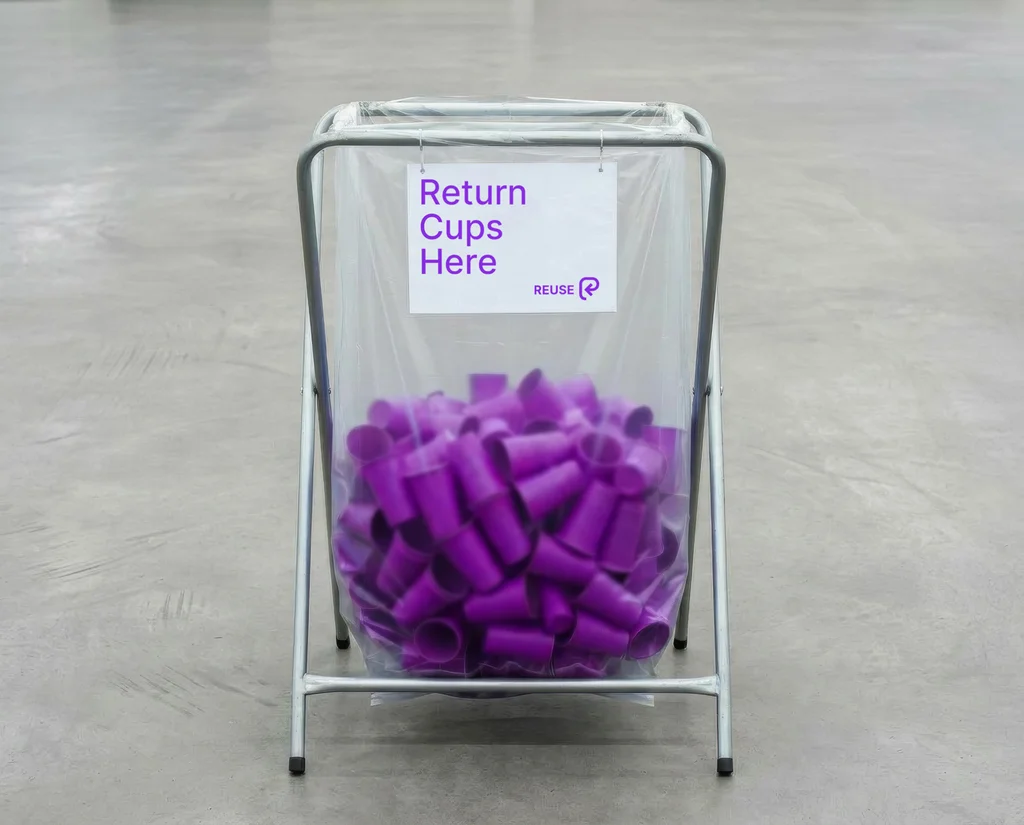
The symbol is being launched by an organization called PR3: The Global Alliance to Advance Reuse. It arrives amid mounting pressure over the plastic and climate crises and a growing recognition that recycling alone can’t solve a problem of this scale.
Today only about 9% of plastic waste is recycled, while the rest is landfilled, burned, or lost to the environment. Reuse addresses this problem by keeping packaging in circulation, which could ultimately reduce the production of single-use packaging as well as the carbon emissions required to make them.
It will take time for reuse to become as widespread as recycling. “I believe we’re close to a tipping point,” says Amy Larkin, PR3’s cofounder and director. But a crucial step to getting there is building awareness that these new systems exist— and the new symbol is instrumental to creating this new reality.
A spiral, not a loop
To find its new symbol, PR3 hosted an open competition in 2025 to crowdsource designs—a call that drew 236 submissions from 29 countries.
The winner came from Epigrama Studios, a creative practice in Bogotá, run for nearly two decades by the cofounders Juan Navarrete and Nicole Ascanio Rodriguez. Their design was chosen after multiple rounds of jury review and market testing with roughly 1,275 people across 17 countries.
Epigrama heard about the competition through one of its own clients, Ciclo, a software platform that manages returnable packaging, so the designers came into the process familiar with the psychology of getting people to bring products back for reuse.

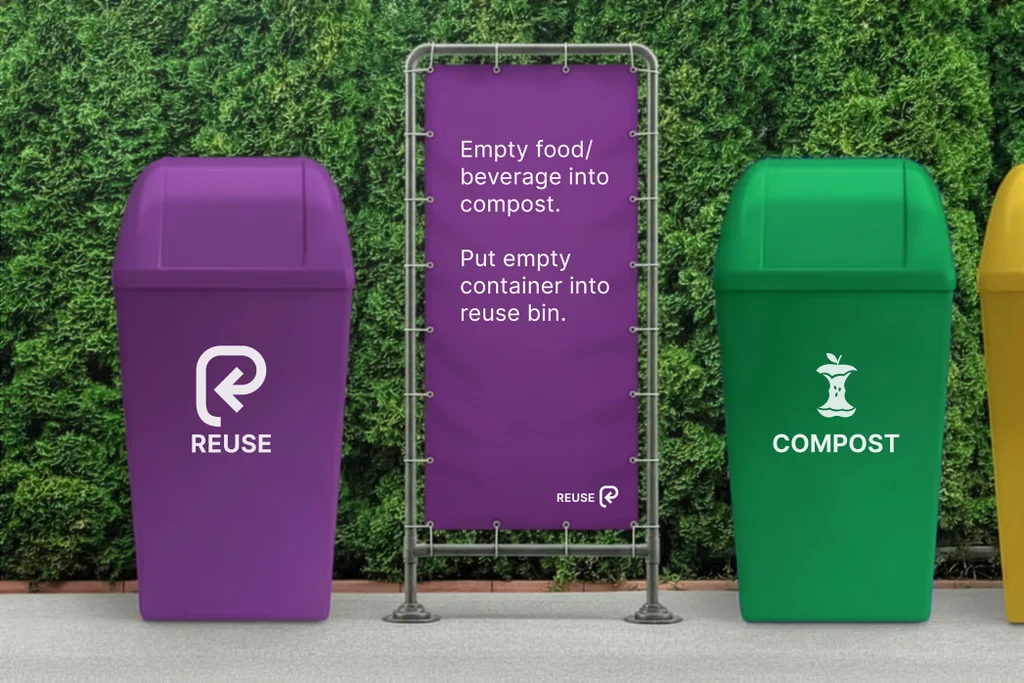
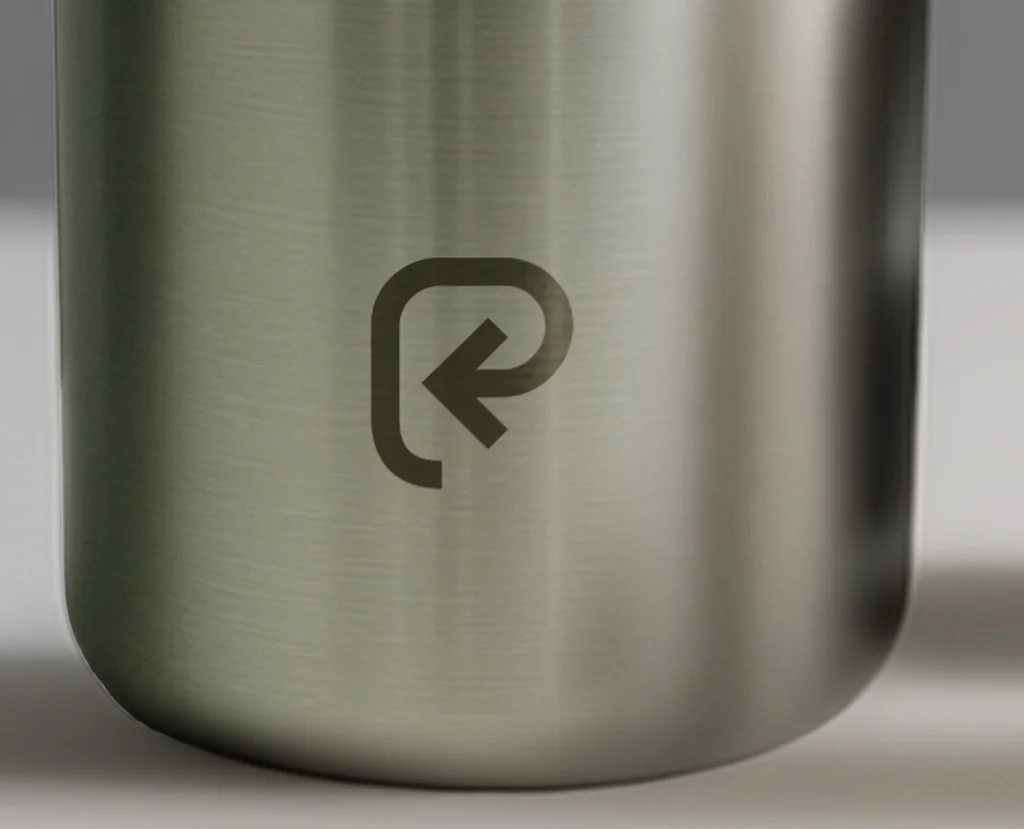
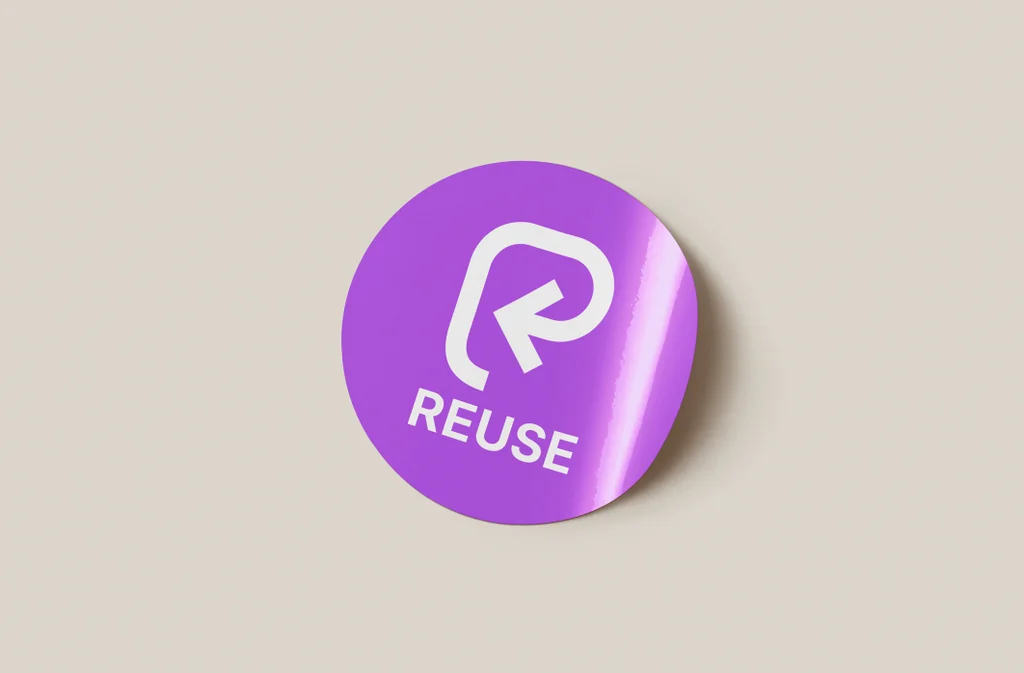
The shape reads as a spiral, but when you look closely, you see the letter R. The spiral, Navarrete says, is a tribute to the philosophy of the Global South, which understands time not as a straight line but as something that returns on itself. Consumer culture, in contrast, treats time as linear. We’re always chasing the next thing: a new phone every two years, a new car, new clothes each summer.
The spiral is supposed to represent the opposite: that some answers for the future lie behind us, in older ways of living with materials. For Navarrete, it’s also a symbol of resistance to the status quo that has been largely perpetuated by the consumer culture in the Global North.
The designers studied the recycling symbol closely and admired its universality, but felt it had curdled into something institutional and faintly shaming—you recycle because you feel bad. They wanted the reuse mark to read as an invitation instead: the visual equivalent of we’re in this together. Crucially, they didn’t pitch it as the recycling symbol’s rival.
“We want to be its evolution,” Navarrete says. Instead the R nods to both reuse and recycle, part of the same spiral.
Where you’ll start seeing it
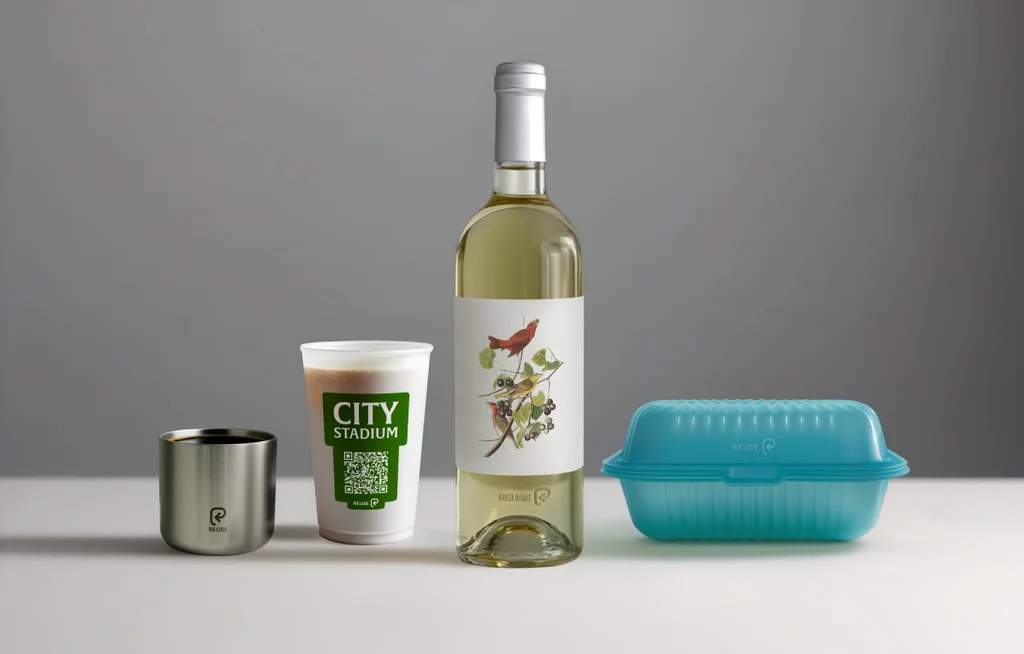
The symbol is already showing up in reusables. Larkin points to Solo, the cup brand, which has built a reuse program with the Portland, Oregon-based operator Bold Reuse and is putting the new mark on its reusable cups. Stadiums are the early proving ground, in part because venues don’t have to build anything themselves.
Reuse service providers handle the washing, pickups, deliveries, and inventory, with a shared digital standard tracking cups across the whole chain. “It’s a very low lift for the venue, because service providers are managing the logistics,” says Larkin at PR3.
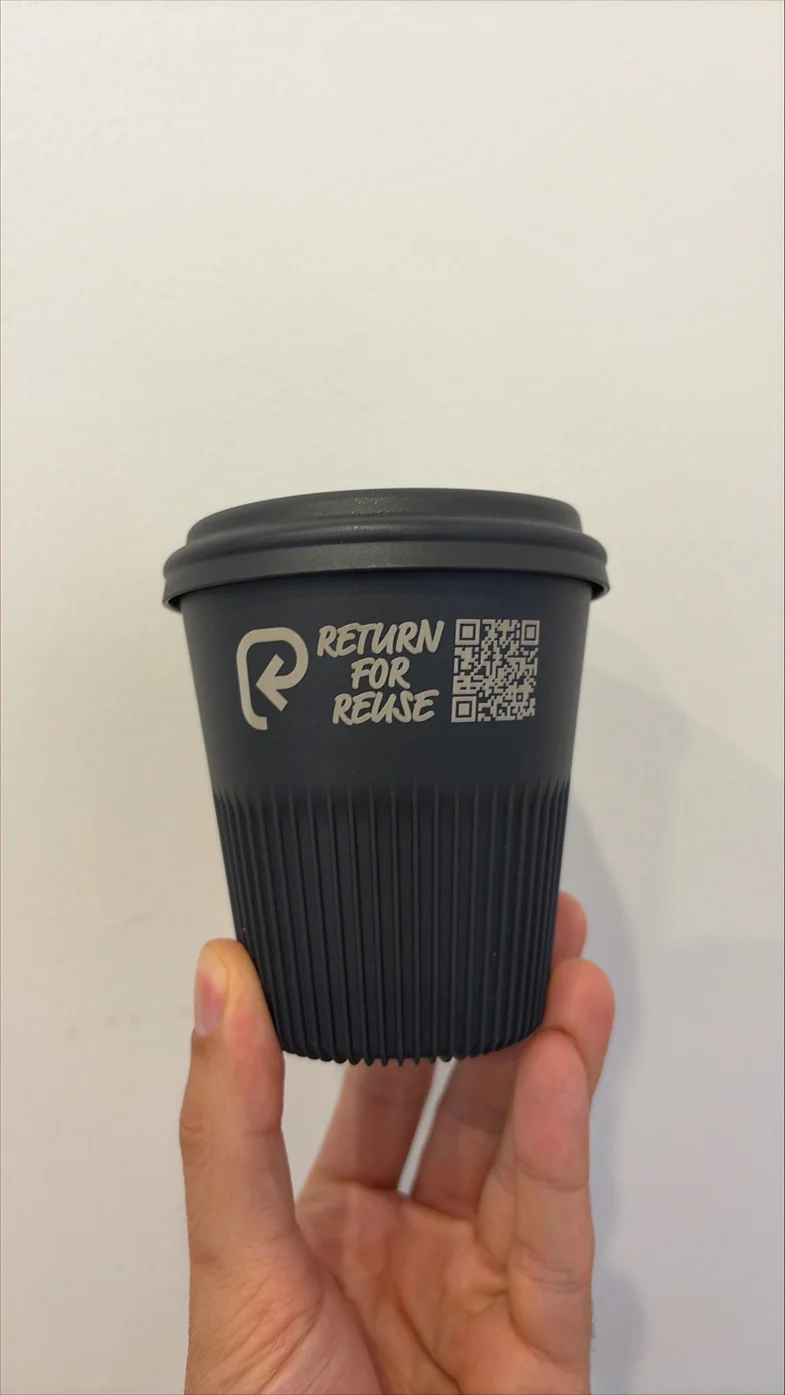
Larkin expects to see reuse turning up at major sporting events, such as NASCAR races and FIFA fan zones around international soccer matches. It is also going to be common at stadium concerts, particularly as musicians advocate for reuse as they write it into their tour riders.
The mark is being piloted across more than a dozen countries, including the U.S., the U.K., and Canada. Unlike a vague recyclability claim, the symbol is tied to specific criteria in PR3’s Marking & Labeling Standard, soon to be published through the American National Standards Institute. It can appear only where there’s a system to collect, transport, sort, wash, and reuse.
The long road to a tipping point
The history of reuse is littered with elegant pilots that never scaled. Years ago I wrote about CupClub, the London startup founded by the architect Safia Qureshi, whose cups were engineered to be used 132 times, tracked by radio-frequency identification (RFID) chips, and dropped at collection points around the city before being run through industrial dishwashers and sent back out. Around the same time, Loop—backed by giants like Procter & Gamble and Unilever—promised to deliver brand-name shampoo, mouthwash, and condiments in sleek refillable containers. While these systems were well designed, they never reached mass market.
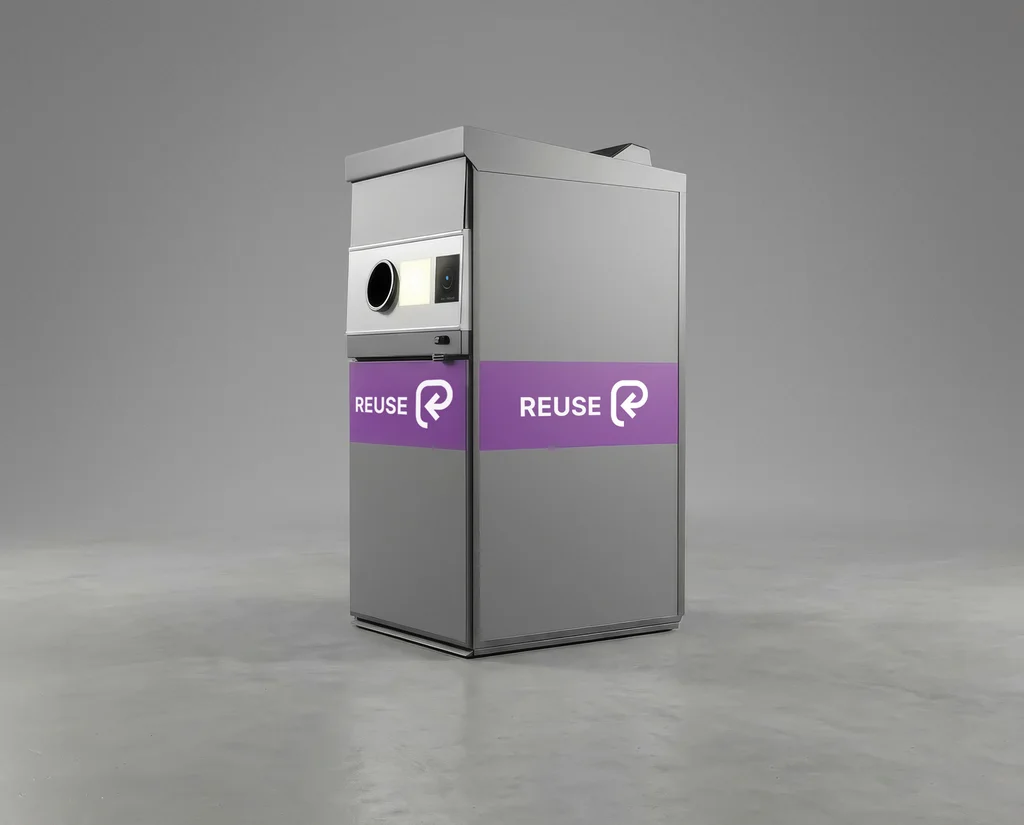
What’s different now, Larkin argues, is that there’s a global effort to build the standards and logistics required to create a reuse system at scale. PR3 has been hammering them out over the past three years, convening a panel of more than 80 organizations spanning informal waste pickers, multinationals, plastic producers, cities, and environmental-justice advocates. Three national governments, she says, are now considering the standards for draft policy, and a certification program is coming, anchored by a washing standard to ensure that reusable containers are clean when they land in the consumers’ hands.
Larkin believes tipping points can happen only after a lot of work has already been done. For more than a decade, many people have been working towards reuse systems, including entrepreneurs, multinationals, scientists, and city governments.
“You open every door you can,” she said, “and then one of them opens, and overnight there it goes. A tipping point.”
She’s convinced the cultural moment is turning too. “After a long stretch of cynicism, people are looking for ways to do good,” she says.
Related Posts

Does AI have a role to play in mental health treament?
In recent weeks, OpenAI has faced seven lawsuits alleging that…
9 of the best and worst looks celebrities wore at the 2026 ACM Awards
Shania Twain at the 2026 ACM Awards in Las Vegas.…

Trump punted on tariffs, again. Here’s where trade talks stand after the reset.
President Donald Trump hasn't been able to sign trade deals…