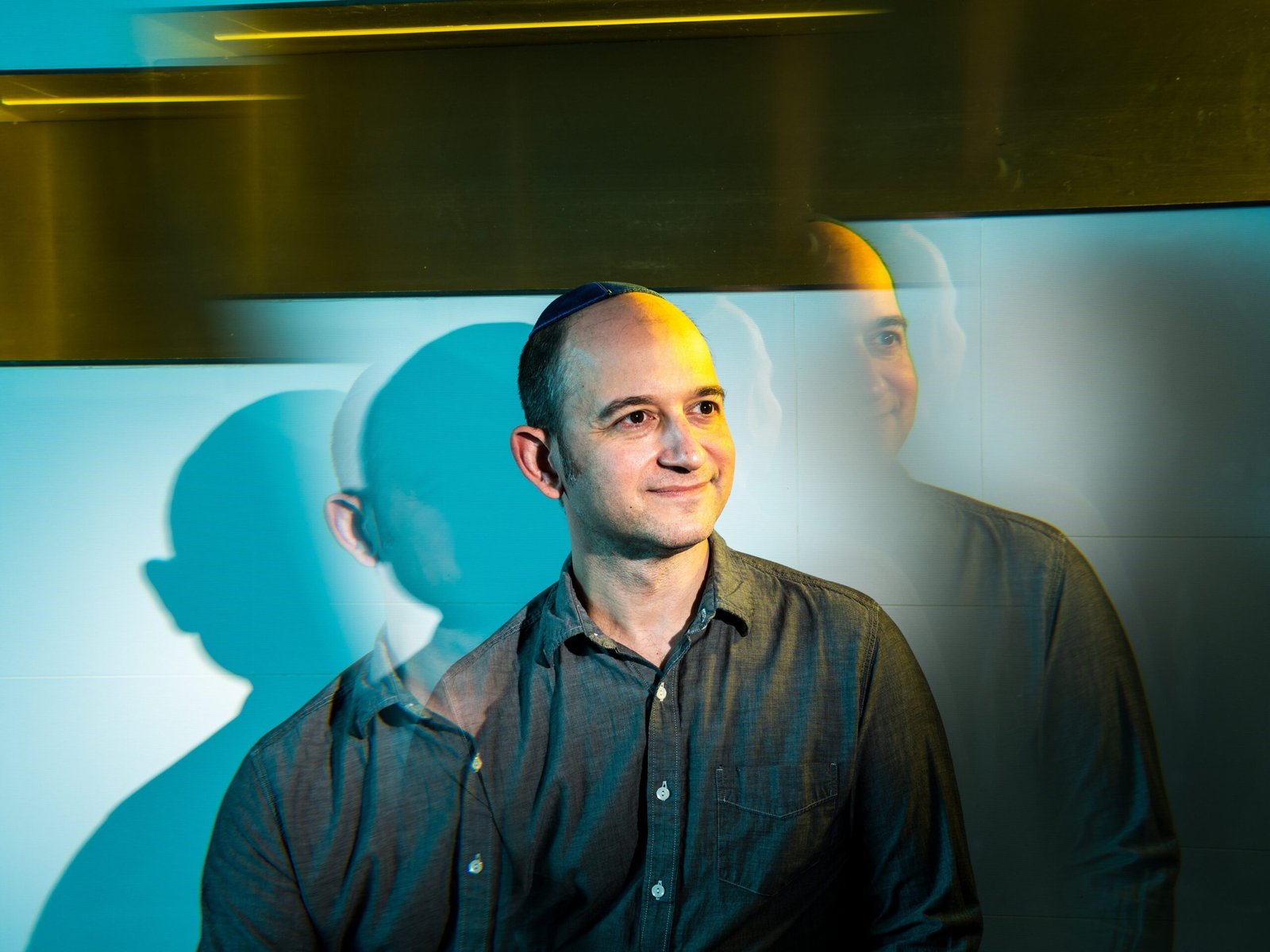
Winni Wintermeyer for The Washington Post via Getty Images
- A series of high-profile AI moves in recent weeks has upped the ante in the race for top talent.
- The difference this time? The caliber of the talent that’s moving around.
- It’s a boon for Anthropic — and a loss for Google, whose shares slid on Monday.
A Nobel laureate, an OpenAI cofounder, and the architect of modern AI announced they’re joining new AI labs.
It reads like the opening of a niche joke for techies. It’s actually a sign the AI talent wars have entered their celebrity era, as labs compete not just for top talent but for superstar names in the quest for AI supremacy.
On Wednesday, Noam Shazeer, a vice president of engineering working on Gemini, said he is leaving Google to join OpenAI. Shazeer is a co-inventor of the Transformers architecture that underlies most of today’s large language models from the likes of Meta, OpenAI, and Anthropic.
Two days later, Google DeepMind’s John Jumper, whose work on AlphaFold won him and CEO Demis Hassabis a Nobel prize, announced he was leaving the lab to join Anthropic. He has one year of garden leave, a source familiar told Business Insider.
The moves come a month after Andrej Karpathy, an OpenAI cofounder who coined the phrase “vibe coding,” said he would join Anthropic.
Michael Macor/The San Francisco Chronicle via Getty Images
Together, the tech transfers ups the ante in what was already a relentless battle for AI talent. Last summer, Meta was offering some researchers eye-popping amounts of money to jump to its “Superintelligence” lab. It recruited over a dozen top researchers from DeepMind and Scale AI, and other tech giants similarly raised the bar.
While the flow of talent never stopped, Jumper, Shazeer, and Karpathy are among the field’s most decorated and recognized names — the kind of hires that could even tip the scales in the finely balanced AI race.
Google takes a hit
For Google, the talent moves are a setback after the company cemented its place back in the AI race late last year.
Its share price fell by as much as about 7% on Monday, the first day of trading since both Shazeer and Jumper had announced their departures, before closing down 5%.
A Google spokesperson told Business Insider that AI talent is a competitive space and that the company remains confident in its ability to attract and retain people, including from rival labs.
In 2024, after Shazeer had left Google to launch his own AI startup — Character.AI — Google paid $2.7 billion to license the startup’s technology and hire Shazeer back, underscoring how valuable the company considered him.
Those at Google recognize the loss, but point to its deep bench of talent.
“The talent density at Google is extremely high. That leads to incredible internal competition for resources but also means that there is inherent resiliency built into the system,” wrote Samira Khan, a Google DeepMind employee, on X last week.
“That being said, there is just one Noam Shazeer,” she added.
The Google spokesperson said its talent pool includes top-level PhDs, researchers, and engineers, and so its overall trajectory would not be affected by a handful of departures.
Meanwhile, Anthropic and OpenAI have pulled ahead of rivals — including Google — in coding, which has emerged as the first major enterprise use case for modern artificial intelligence.
Google knows this and is trying to move fast to catch Anthropic. “everyone I know is hopeful and locked in, lots of things in the pipeline that will hopefully pay off short and long term,” Logan Kilpatrick, a member of technical staff working on Gemini, wrote in a post on X.
Of course, Google also holds a hefty stake in Anthropic, somewhat hedging any gaps between the two. Plus, many have counted Google out of the AI race in recent years — only to realize they had spoken too soon.
Have something to share? Contact this reporter via email at hlangley@businessinsider.com or Signal at 628-228-1836. Use a personal email address and a non-work device; here’s our guide to sharing information securely.