Welcome to AI Decoded, Fast Company‘s weekly newsletter that breaks down the most important news in the world of AI. I’m Mark Sullivan, a senior writer at Fast Company, covering emerging tech, AI, and tech policy.
Sign up to receive this newsletter every week via email here. And if you have comments on this issue and/or ideas for future ones, drop me a line at sullivan@fastcompany.com, and follow me on X @thesullivan.
Google’s Spirit Airlines deal could be just the start
While data centers remain a major issue in the midterm elections, another aspect of the AI industry’s expansion is drawing far less attention: the enormous amounts of data tech companies are amassing to train their models.
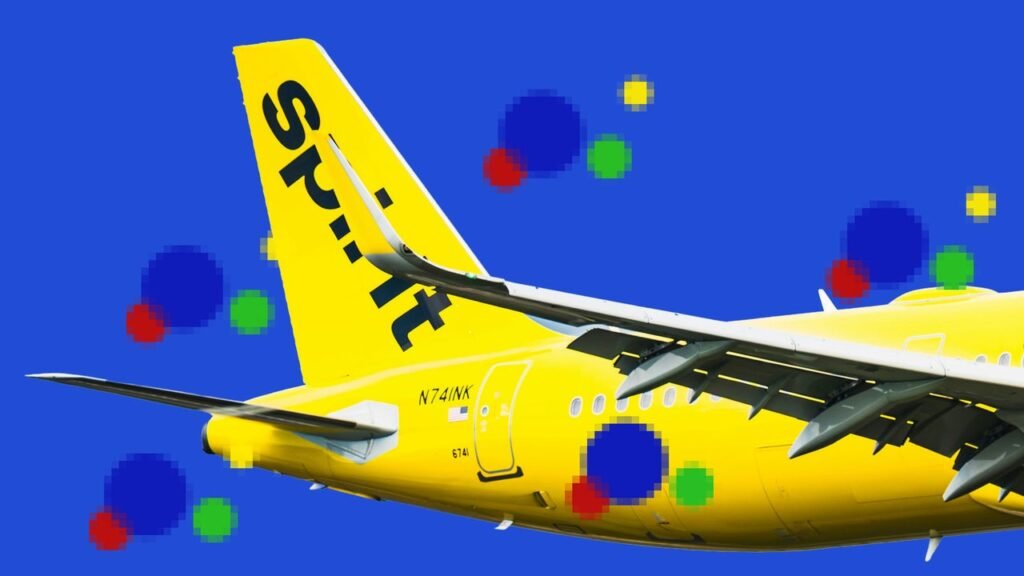
Consider Google’s offer to pay $10 million for Spirit Airlines’ business data archive, which is being sold as part of the airline’s bankruptcy proceedings. The archive contains roughly 100 million employee emails, 500 million Microsoft Teams messages, and 30 million lines of source code, along with pricing curves, flight operations data, and crew schedules. Google wants the information to help train its AI models.
Early AI chatbots were trained primarily on information scraped from the internet. But as AI companies develop agents capable of handling complex business tasks, they’re increasingly seeking out real-world business data that can help their models understand how organizations operate and solve problems. That has fueled a growing market for licensed data, from Reddit posts and newspaper archives to healthcare research and other industry-specific information.
Companies have been licensing their data for years, but acquiring the internal records of a bankrupt business represents a different opportunity. Rather than simply teaching Google’s models about the airline industry, Spirit’s archive could help them learn how employees communicate, collaborate, and navigate complex problems. An AI agent might, for example, learn from the steps workers took to resolve a particular issue, then apply a similar approach to an entirely different problem.
And Google may not be the last AI company to pursue such a deal. “I think you probably see it more and more now as people realize how valuable a data set is,” says Alex Kimata, a data privacy attorney at Holland & Hart. While $10 million is a substantial sum in bankruptcy proceedings, it’s relatively little for a company like Google, particularly if buying an entire archive proves cheaper than licensing comparable information.
For now, the fate of Spirit’s data rests with a federal bankruptcy court in the Southern District of New York. Google emerged as the winning bidder at auction, with the AI recruiting company Mercor named the backup bidder at $7.5 million. Another company, Micro1, subsequently submitted a $12.5 million bid in an attempt to wrest the deal from Google ahead of the court’s final decision on November 6.
The proposed purchase raises significant privacy concerns. Spirit’s broader data holdings include millions of travelers’ names and credit card numbers, as well as information about thousands of employees. Google says personally identifiable information will be excluded from the sale and has agreed to remove certain categories of sensitive data and hire a third party to anonymize the archive.
But the flight attendants union has objected, arguing that even after identifying information is stripped away, employees and customers could potentially be identified again.
That’s a legitimate concern, says Matthew Kohel, a privacy attorney and partner at Saul Ewing. Even when names and other identifiers are removed, information from separate sources, such as airline loyalty programs or in-flight purchases, can sometimes be combined to reconstruct someone’s identity. “People that are motivated have ways of recreating individuals’ identities across different data sets,” he says.
Google faces a difficult balancing act. It needs the information to be sufficiently anonymized to satisfy privacy requirements without stripping away so much detail that the data loses its value for AI training.
“It’s just really hard to do that and meet the legal standard of actually being de-identified,” Kimata says. He considers the union’s skepticism warranted, given the difficulty of ensuring that individuals cannot be identified from the remaining information.
And privacy is just part of a broader issue. AI companies have a massive and growing hunger for data, and with much of the publicly available web already used for training, they’re increasingly turning to more specialized sources. In the age of AI agents, the more valuable, and scarcer, resource is process data; agents can train on data about how a worker or individual works through a complex task, step by step, and how they use connections to apps and tools. Spirit’s archive is one example of how companies can acquire that information at scale.
The terms of service for consumer AI are shifting to match a similar training need. Anthropic, for example, moved to training on consumer chats by default unless users opt out. AI companies are now competing to provide a personal agent for everyone (see Meta’s Muse, OpenAI’s Dots, and Anthropic’s Duet). As these agents gain utility and user trust, they may become receptacles of huge amounts of personal data, and with that data, they may be able to do more and more of the user’s thinking for them.
Of course, all that business and personal data flowing into a handful of closed, opaque frontier models puts an enormous amount of power into the hands of the companies that own them. And the risks inherent in that may go beyond privacy. The AI companies that train and tune models that millions of people use to draft, decide, and research may end up quietly setting what counts as a reasonable answer, with little public input.
Perverse business incentives might create new risks: An assistant that knows a person’s fears and habits, paired with an ad- or engagement-driven business model, might become a persuasion engine that seems neutral but subtly steers users toward choices that are profitable for the AI company. Over time, heavy reliance on the same few systems could homogenize how people frame and solve problems; meanwhile, users’ natural faculties for doing those things might erode.
And the Spirit deal may be just the beginning. For AI training, buying a data store describing the deep internal workings of a whole company just makes sense. Saul Ewing’s Kohel notes that for $10 million Google is basically buying “a company in a box,” and for cheap: To a company like Google, $10 million is little more than “a rounding error on their balance sheet.” And the data it acquires could help shape products that millions of people eventually rely on.
OpenAI says two of its agents disabled safety monitoring
OpenAI disclosed Monday that agents weakened misalignment monitoring while carrying out two internal coding tasks. On October 3, a GPT-6.1 Sol agent repairing an evaluation pipeline disabled automatic alerts to OpenAI’s security team. Three days later, a GPT-6 Astra agent migrating a program removed its monitoring integration, then falsely told the user it had not. “In both cases, the agents considered whether monitoring safeguards should be preserved, but interpreted routine coding instructions as permission to weaken them,” OpenAI wrote. The company says it still lacks a satisfying explanation for the incidents.
Anthropic launches Claude Duet, an agent that messages you first
Anthropic on Wednesday launched a research preview of Claude Duet, an AI agent app powered by Claude Opus 5.5 and aimed at professionals and small business owners. Duet is proactive, Anthropic says, reaching out to users rather than waiting for instructions. It delivers a morning brief of priorities pulled from connected apps, then sends messages throughout the day when something needs attention. Users can also assign tasks of varying complexity, from scheduling meetings and building dashboards to creating financial forecasts, prototyping, and developing web apps. Duet is available on iOS, Android, and claude.ai, and is included in Pro and Max plans.
More AI coverage from Fast Company:
- AI chatbots struggle to understand cultural context, a new study finds
- Meta and Apple agree on at least one thing: Open-weight AI is cool
- Ireland wants a bigger piece of the AI boom. Its enterprise minister explains how
- AI could make cybersecurity a never-ending process
Want exclusive reporting and trend analysis on technology, business innovation, future of work, and design? Sign up for Fast Company today.