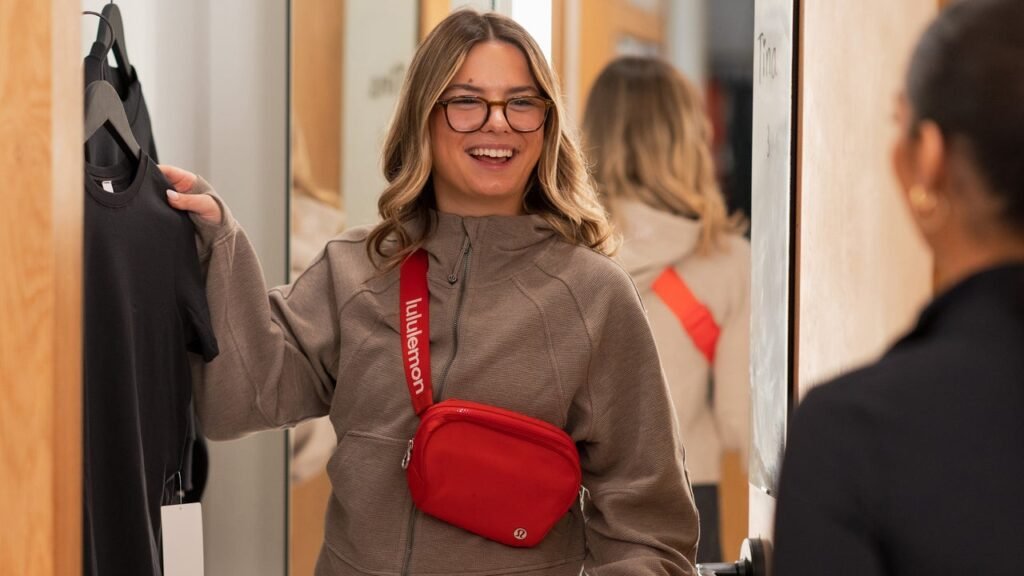
If you’re at the mall, you’ve likely seen middle schoolers walking around in packs with matching belt bags slung across their chests, stuffed with lip gloss and pocket money. If you look closely, you might catch the Lululemon logo glistening on the bottom right hand corner.
Lululemon’s Everywhere Belt Bag has become a uniform for a generation of teens and tweens. But even though the bag has become iconic, Lululemon has decided to redesign it, adding a range of features that will make it more functional and harder for competitors to copy. Through this update, Lululemon wants to show off its obsessive attention to detail and keep its youngest consumers engaged.
An Accidental Hit
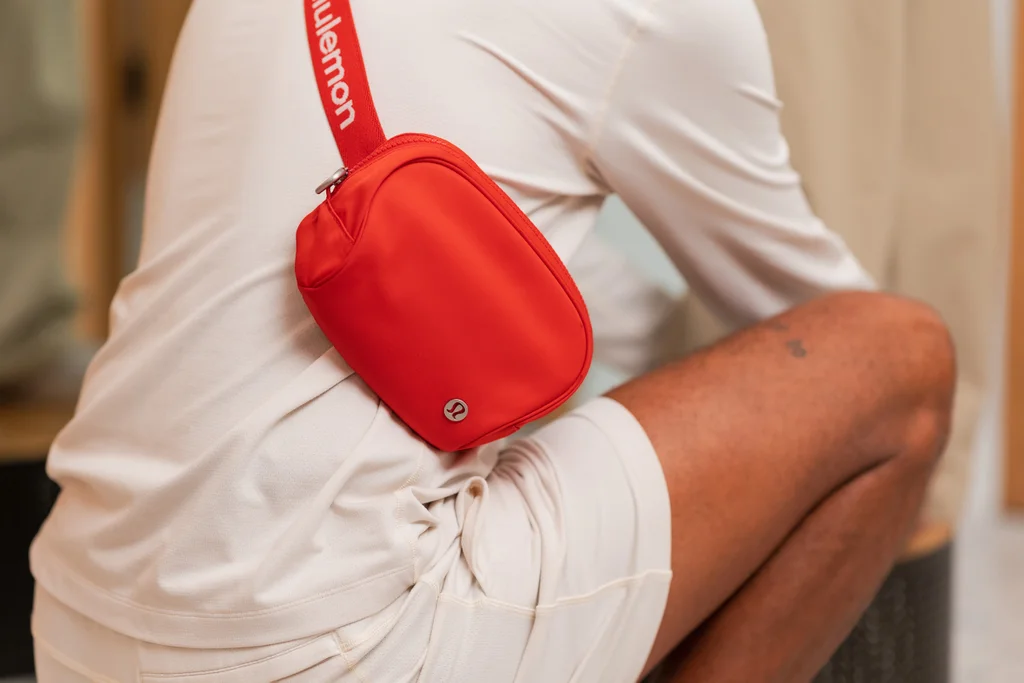
The wild success of the belt bag came as a surprise to Lululemon, because it had never even planned to sell this product. The company originally designed the bag for store employees who needed to be hands-free as they engaged with customers on the floor. “They needed to have something to help carry their mobile ordering device, gift cards, and other items they needed on the floor,” says Philip Hamilton, VP of global merchandising at Lululemon.
The company got constant requests from customers asking where they could get one. So in 2018, Lululemon released a retail version for $38. Interest around the bag built as people talked on Reddit and Instagram about how handy it was. During the pandemic, when people stopped going to the office but frequently went out for walks, a hands-free belt bag was particularly useful. “It suits any demographic and psychographic,” says Hamilton. “It’s very democratic.”
Demand peaked in 2023. While Lululemon won’t release sales figures for the bag, Hamilton says that the company sold hundreds of thousands of bags just over Christmas and Boxing Day that year. Its low price, by Lululemon standards, made it a gateway for young shoppers. By fall 2024, Lululemon had become the third most popular bag brand among teen girls, according to a survey by Piper Sandler. “The bag brought a lot of guest acquisition for the brand,” Hamilton says.
Redesigning a Classic
Now, Lululemon is doing something a little risky. It’s trying to improve on a product that already has millions of devoted fans. Most of the changes are small enough that casual observers may not even notice, but Lululemon is hoping that belt bag devotees will appreciate the tweaks.
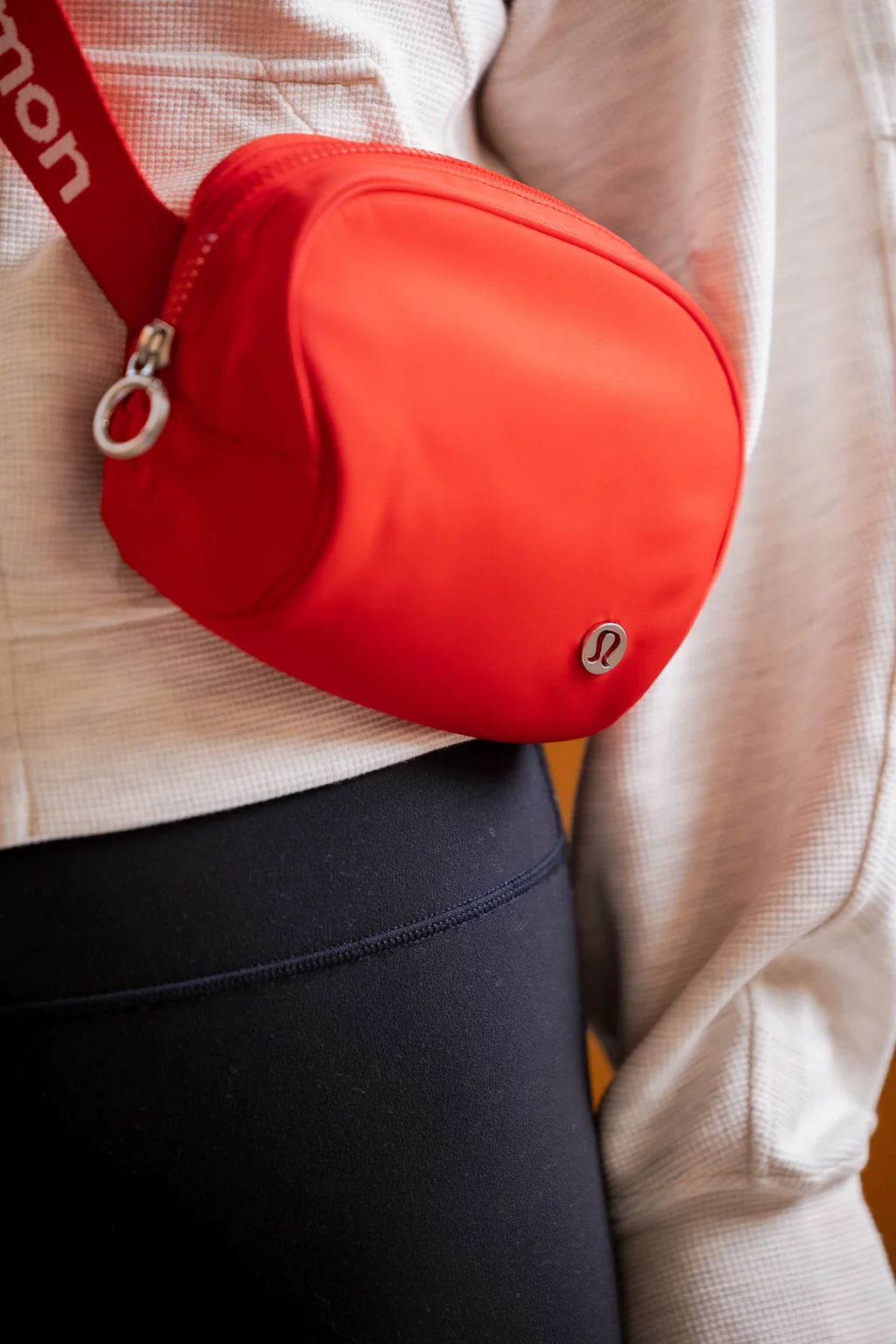
The new bag is about 30% larger, in response to feedback from customers who need more space. Phones, for instance, are now bigger than they used to be. The shape has also been redesigned so the bag opening doesn’t gape when it’s full. The strap now sits flush against the bag, making it easier to adjust, but it is also fully removable. There are many more pockets inside. And in a particularly clever move, Lululemon’s designers have created a simple safety system by allowing you to put the zipper through a carabiner, making it virtually impossible to open.
The bag’s silhouette is fundamentally different. Rather than being squarish, the front curves, tracing the shape of Lululemon’s logo. This new design is meant to reinforce Lululemon’s branding, but Hamilton says it is also meant to fend off dupes. The Everywhere Belt Bag has been copied endlessly, but this new design is more complex and subtle to replicate, which the company hopes will make it harder to knock off.
The new bag will come in a range of colors and costs $6 more. Hamilton says the added features justify the increase and it is still priced affordably.
Making a Comeback
This updated product comes at a time when Lululemon is struggling.
Its stock is down 43%. In September, it briefly fell below $100 a share for the first time since 2018. In its most recent quarter, revenue fell 4% to $2.4 billion, with an 8% drop in the Americas. Meghan Frank, Lululemon’s CFO and interim co-CEO, told analysts that consumers’ response to new products has been uneven, and the company now expects full year revenue to drop as much as 7%. Heidi O’Neill, who spent three decades at Nike, took over as CEO in September, and is tasked with orchestrating a turnaround.
Lululemon’s broader accessories business has historically been a bright spot for the company, though it saw a 13% decline in the second quarter of 2026. When the company saw the Everywhere Belt Bag take off, it began designing a wider range of bags, including crossbodies, shoulder bags, and totes. It now sells everything from a $28 nano belt bag to drawstring bucket bags and racket bags that cost $128 or more. These days, bags are “one of the larger categories at Lululemon,” Hamilton says.
Teens and tweens helped drive the growth of these products. The problem is that tweens are a fickle audience and cycle through trends quickly. By 2026, Piper Sandler’s survey found that Lululemon had lost mindshare, with the steepest drop among upper-income girls. In handbags, Coach is now dominant, with 60% of teen girls naming it their favorite, up from 43% a year earlier. Lululemon hopes that this newly updated bag may create excitement among tweens and bring them back into the fold.
But courting kids carries other risks. A brand associated with young consumers may alienate a brand’s older customers. Consider Drunk Elephant. In 2024, the skincare brand became associated with the “Sephora tweens” trend, and early that year reported a 77% sales jump. But that hurt its reputation with older shoppers and then, eventually, the kids moved on. Drunk Elephant’s sales dropped 65% in the first quarter of 2025.
Still, for a company of Lululemon’s ambitions, writing off young consumers isn’t an option. The brand needs to be able to win over moms with Align leggings as well as their kids with belt bags strapped to their chests. Few brands have pulled that off.
A bigger, sturdier, $44 belt bag won’t solve this problem on its own. But it could be a step in getting there.