Lisi Niesner/Reuters; BI
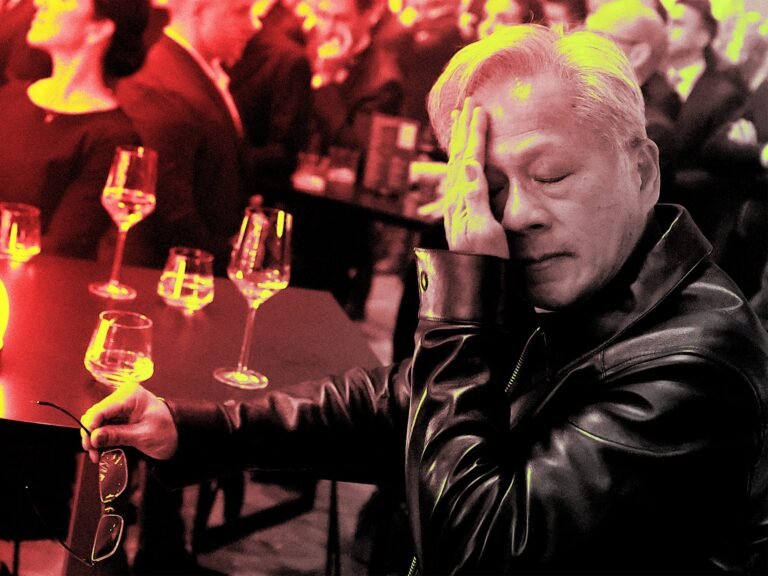
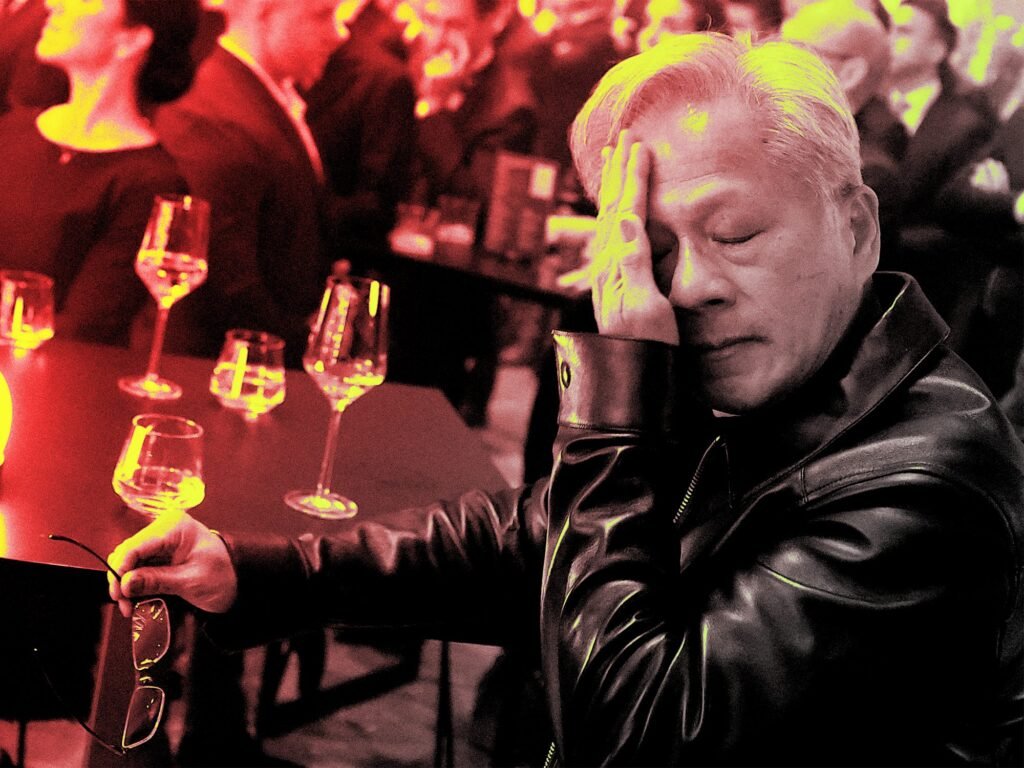
- Silicon Valley is divided over Jensen Huang, following his resignation over his infidelity.
- Some tech leaders, such as former Uber CEO Travis Kalanick, want Huang back in charge at Nvidia.
- Huang is more controversial in the AI community, and with some women in tech.
Where do you stand on Jensen?
That question is roiling Silicon Valley as it reckons with the tech titan’s fall from grace.
Venture capitalists, tech founders, and Nvidia employees are rallying to his defense — and some are pushing to bring him back. But others see the rush to forgive him as a familiar Silicon Valley reflex: excusing a powerful man’s conduct while minimizing the damage to the people and institutions around him.
The Nvidia cofounder and CEO resigned last week following reports that he had multiple affairs, including with an alleged Chinese spy and a subordinate. To some, that’s overshadowed by his achievements.
“Jensen is one of the great builders of our time. We cannot starve the future of his innovation and industrial breakthroughs,” reads a comment from Uber cofounder Travis Kalanick on Stand With Jensen, an online petition with more than 186,000 supporters.
“To err is human,” Kalanick — who said he is crowdsourcing “wild ideas” to get Huang reinstated — added.
Nvidia’s board of directors is not considering reinstating Jensen Huang as CEO, a person familiar with the matter confirmed to Business Insider on Monday.
Kalanick joins a growing chorus of people in tech defending Huang, including Y Combinator CEO Garry Tan, Replit CEO Amjad Masad, and Nvidia executives, all of whom have signed the petition.
For others, Huang’s downfall was well-deserved given the ethical and national security implications of his conduct. Huang has long rankled some corners of tech because of his constant lobbying to sell powerful AI chips to China.
One notable venture investor privately disagreed with Huang’s friendly approach to China, given the chronic chip shortage in the US.
The investor was frustrated that Huang had done little to address the industry’s growing compute crisis, with some startups struggling to secure the resources needed to continue scaling. Nvidia had a lot of compute primarily reserved for research and development, the person said.
Huang’s business tactics are being scrutinized more than ever given his relationship with one of Nvidia’s biggest customers, who some in the US government believe was part of an espionage scheme.
That’s without even mentioning his reported affair with an employee, executive Kimberly Powell, while he painted himself as a family man. (Both Huang and Powell are married.)
One woman VC said Huang’s infidelity and potential national security implications have barely surfaced in her Silicon Valley women’s group chats. Some women investors, she said, have expressed that they feel sorry for Huang’s wife. But, she said, “The general sentiment is, ‘He’s such a great leader, who cares what he does in his private life?'”
Another woman VC said she and other women in venture were hardly surprised by the news, having grown accustomed to such conduct in the Valley. “Any time there is ego, power, and money, this is what happens,” she said.
“The tech right and founder class is rallying behind Jensen against all reason,” Zvi Mowshowitz, who publishes an influential AI Substack, told Business Insider.
At stake isn’t just whether Huang gets back on top of Nvidia or not — an unlikely prospect — but the legacy of a key figure behind the AI boom.
The godfather of the AI boom
For years, Nvidia was best known for the graphics cards it sold to PC gamers. Huang was prescient in predicting that the high-powered chips would power the AI revolution.
In a fateful moment, he personally delivered an Nvidia supercomputer, the DGX-1, to OpenAI’s office in 2016. It was signed by then-OpenAI researcher Dario Amodei, who now runs Anthropic — which is set for a trillion-dollar blockbuster IPO this week.
Huang’s role in helping birth the thriving AI startup ecosystem is partly why so many venture capitalists are still Huang fans, industry insiders said.
Nvidia’s rise has been lucrative for them, too. Nvidia often invested in AI startups at high valuations, boosting the value of their portfolio companies by the billions.
The funding also benefited Nvidia because it could be used to buy even more Nvidia chips. If the next Nvidia CEO takes a less aggressive investment approach, it could be the beginning of an AI industry correction, some investors cautioned.
Tatiana Koffman, a GP at Moonwalker Capital, said Nvidia’s board should finish its investigation, and that Huang should be reinstated if it finds no credible proof of a security breach.
“We’re painting Jensen with a moral brush for something leaders have done time and time again. He’s one of the greatest engineers of the last two generations, and few people have done more for American innovation,” she said.
A divided AI community
In the AI policy and safety world, Huang’s push to sell Nvidia chips to China raised concerns about giving a US competitor powerful AI hardware.
As worries about AI going rogue reached a fever pitch, Huang’s staunch defense of the technology also raised eyebrows.
“I would say Jensen’s views have been at odds with a lot of the AI community,” said former OpenAI employee Will Depue.
Huang’s brash statements annoyed some of the most senior people in the industry.
After Huang said that Anthropic was trying to control AI through safety regulations, Amodei called Huang’s claim “the most outrageous lie I’ve ever heard.”
Lior Susan, founder and CEO of VC firm Eclipse — which has invested in startups that Nvidia has also backed, like autonomous driving company Wayve — said the industry will endure beyond any single man.
“Jensen was huge for the industry of AI and robotics, but the rise of robotics did not happen because of one person, and the rapid technological transformations we are witnessing will not slow down,” Susan told Business Insider.
“There is a world after Jensen, and there is still so much progress to be made.”
Have a tip? Contact Charles Rollet securely on Signal at charlesrollet.12 or +1-628-282-2811. Contact Rya Jetha via email at rjetha@businessinsider.com or Signal at rjetha.07. Contact Katie Roof on Signal at kroof.26. Use a personal email address and a non-work device; here’s our guide to sharing information securely.