There is a house in Humacao, Puerto Rico, that belongs to an 84-year-old man named Román Carrasco Delgado. Painted in pastel pink and yellow, it has a flat roof and a balcony. It’s a prototypical model of the modest, dignified architecture of a working-class barrio, the kind of home that generations of humble Puerto Ricans have built their lives inside.
Bad Bunny borrowed the house design and called it “La Casita” (“the little house” in Spanish). He used it in Debí Tirar Más Fotos (I Should Have Taken More Photos), a short film he created to protest the rapid gentrification, displacement of locals, and cultural erasure taking place on the Caribbean island. Then he built a replica, which he has been hauling into massive stadiums on his ongoing world tour. La Casita takes over the center of the stage and, in theory, gets filled with people from the audience, who dance in the last segment of the concert as the people in Puerto Rico do.
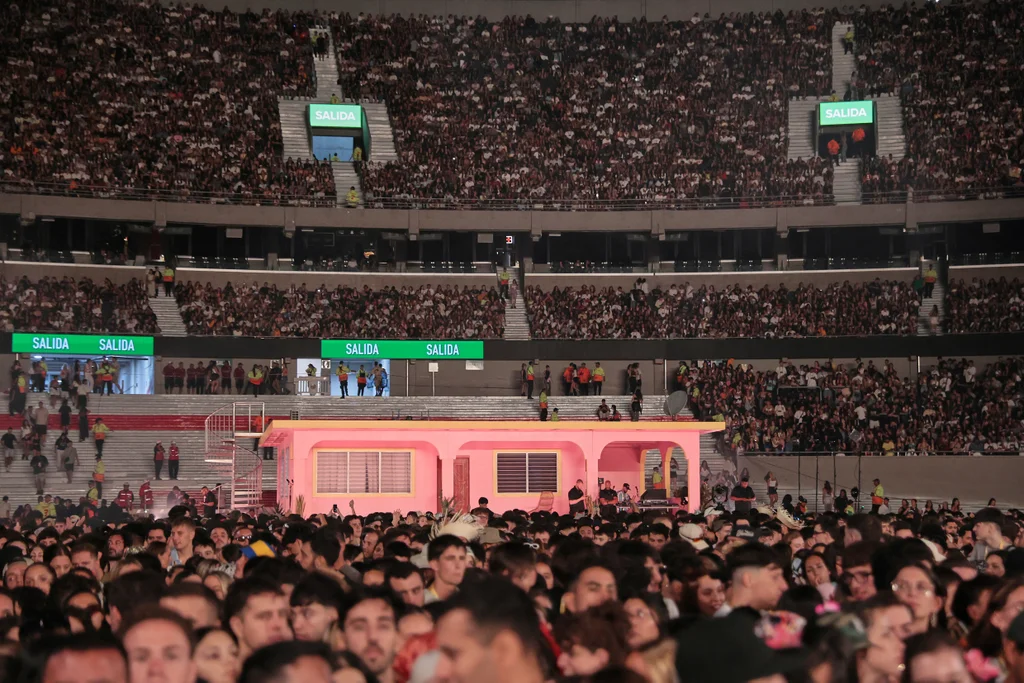
Bad Bunny says La Casita is a tribute, a love letter to the people, to the neighborhood, to the island, to inclusion, and all things good and nice. It seemed like a great idea.
Then the problems started.
First, Carrasco Delgado sued Bad Bunny in September 2025, alleging that the singer’s representatives “fraudulently” used his signature in “two different contracts” and caused him great emotional distress for using his home without permission.
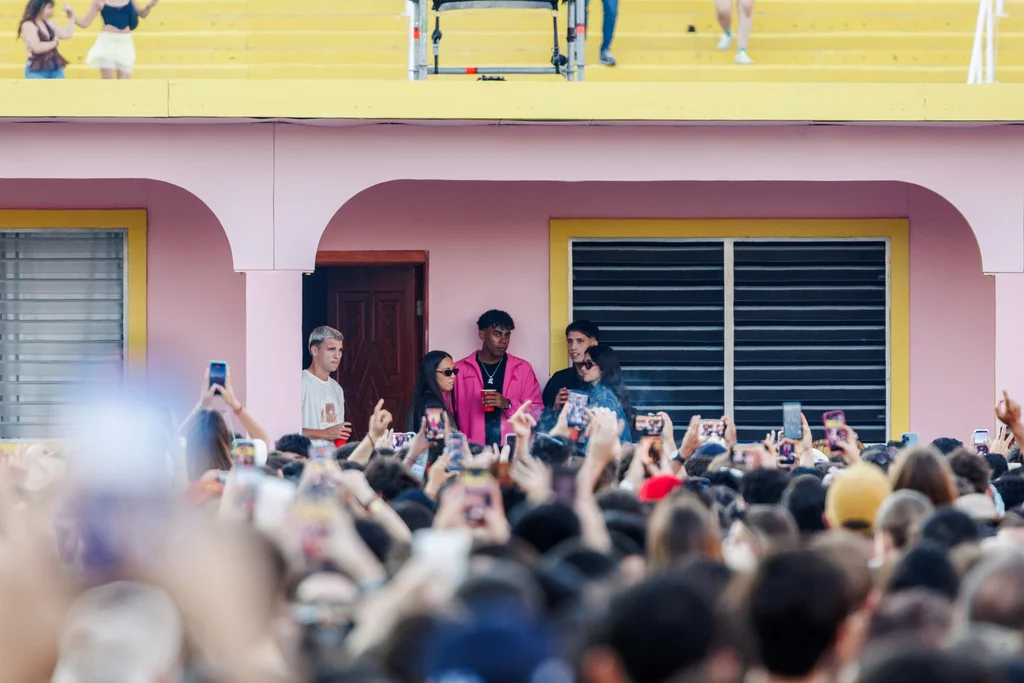
Then, on May 30, the lights came up at the Riyadh Air Metropolitano Stadium in Madrid. Standing on the balcony of this monument to Puerto Rican working-class life were famous footballers like Kylian Mbappé, billionaires like Inditex heir Marta Ortega, VIP influencers, and dozens of beautiful young white women. The little house had become a Playboy mansion and a symbol of privilege, which hit especially hard in a country with a big housing crisis. A firestorm of fan criticism started with the power of a thousand suns.
People accused Bad Bunny of taking the most potent architectural symbol of Puerto Rican communal identity—a structure whose flat roof and shared porch were designed for collective neighborhood life—and repurposing it as the most exclusive, entry-controlled space in a global stadium tour. As Spanish writer Pedro Torrijos put it, the balcony, the porch, and the communal threshold of a typical Puerto Rican house are elements built around shared presence, around the open porosity of neighborhood life. In Madrid, those same elements became a velvet rope.
You didn’t get in because you were from the neighborhood, poor, unknown, and ugly. You got in because you were famous, wealthy, or—if you were a regular fan—because Bad Bunny’s people decided you were pretty enough.
Machismo casting
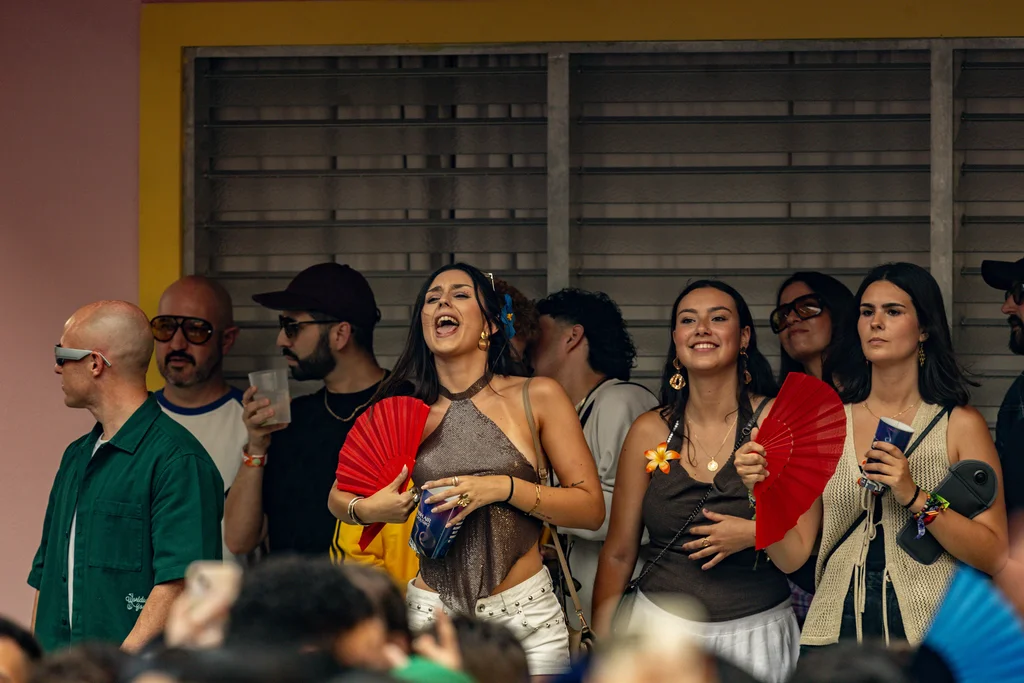
That last part is where the controversy gets uglier, and more revealing. As they’ve done since the little pink house became part of Bad Bunny’s concert staging, from the opening nights of his Madrid residency the singer’s team deployed scouts to the stadium floor to select fans to join the fun at La Casita. The pattern that emerged—documented in attendee videos, social media posts, and eventually national wire coverage—was not subtle: They were overwhelmingly young women conforming to a narrow physical standard: slim, conventionally attractive, styled in line with the album’s aesthetic.
People got very angry. TikTokers like @hellobynour denounced the objectification of women: “It’s not normal to have scouts going through the floor scouting girls, women specifically, all fitting one single beauty prototype.” It was not a random fan lottery but a production decision to select women by how they look, and it happened inside a structure supposedly built to honor the dignity of ordinary Puerto Rican people.
By June 1, every Spanish media outlet had a full-blown cultural flashpoint on their hands. National radio network Cadena SER echoed the feminist critique in a phrase that was repeated everywhere: “Young women with normative bodies.” Newspaper El País published an article titled “We want fat women!” describing the team of scouts recruiting women from the audience to stand onstage, who were then seen competing for Bad Bunny’s attention and a second of fame on the stadium’s big screen.
“What are we telling these generations? That they must conform to a standard in order to be accepted,” proclaimed Laura Barrios, president of the Spanish Federation of Young Women. The singer, who has been both defended and attacked for his sometimes feminist, sometimes misogynistic lyrics, didn’t do himself any favors with La Casita’s casting policy. But after the first two nights of documented criticism, someone apparently got the message.
By the third concert on June 2, the selection was visibly more diverse: broader range of ages, racial backgrounds, and body types.
Bad Bunny has issued no statement directly addressing the controversy, which still echoes through social media. Perhaps one day he’ll explain why a production this carefully conceived—a world tour with a replica house that traveled from Puerto Rico to the Super Bowl to 10 consecutive nights in Madrid—never stopped to ask who was being let in, and what that said about everything the house was supposed to mean. La Casita was built to honor a community defined by its exclusion from wealth and power. In Madrid, it reproduced exactly that exclusion.
Related Posts
The 10 countries with the highest birth rates — and the 10 with the lowest
Somalia had the 3rd-highest birth rate in the world in…

The job you studied for? AI may soon have it.
AI job interviews gremlin/Getty Images This post originally appeared in…
Mark Cuban says AI’s ‘biggest challenge’ for businesses is consistency
Billionaire Mark Cuban has been Nicola Gell/Getty Images AI tools…