In 2019, California Governor Gavin Newsom used his first State of the State address to “level about the high-speed rail.” The Los Angeles-to-San Francisco project “would cost too much and, respectfully, take too long,” he said at the time.
Newsom was taking issue with a plan first laid out in 2008 that promised a 2 hour 40 minute high-speed rail journey between S.F. and L.A., funded by a $10 billion bond. Those travel time requirements, combined with a too-low estimate for the initial funding, had made the full project practically impossible to execute.
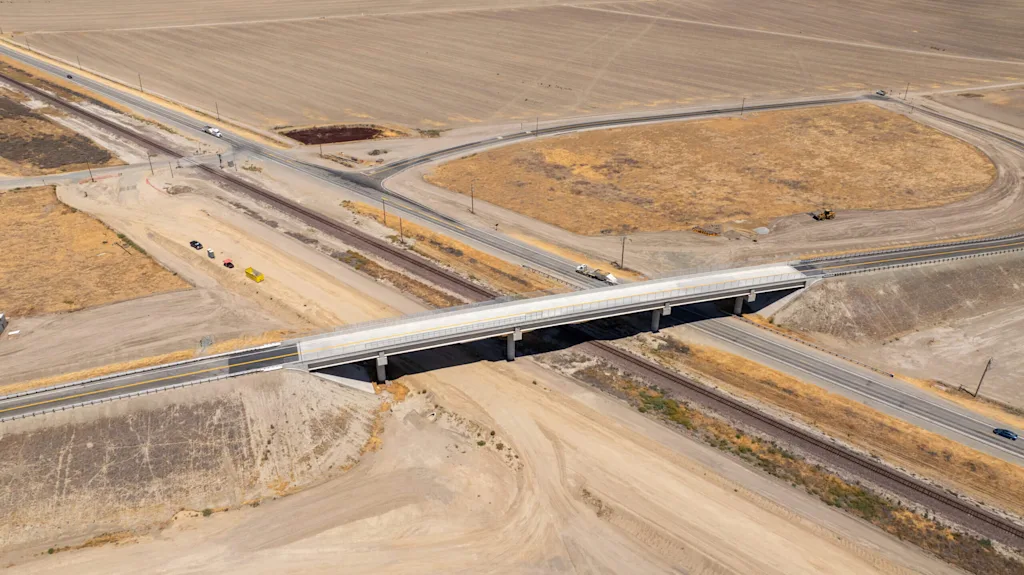
So California came up with a solution—sort of. For the past six years, the state has focused its energy and funding on a 170-mile section in the middle of the route connecting the Central Valley cities of Merced and Bakersfield.
Now the newly instated CEO of the California High-Speed Rail Authority, Ian Choudri, is imploring Newsom and the state legislature to reverse course once again. Choudri is publicly declaring what has been intuitively obvious to anyone with the vaguest sense of the state’s geography: Merced to Bakersfield is not a great high-speed-rail corridor. A politically and economically viable system needs to connect the state’s major population centers. It needs to make good on what voters were promised in 2008 when the project was introduced.
Choudri has succeeded in one part of his mission: getting the state to extend its funding commitment to the project to the tune of $1 billion per year through 2045. But that’s just the start of what he’ll need to accomplish to make high-speed rail a reality in California.
Choudri has asked the state government to consider a new plan that would expedite connections to the Bay Area and Los Angeles area using private funding. While he’s at it, he has put out a laundry list of procedural reforms—piggybacking off of the ascendent “abundance” movement popularized by Ezra Klein and Derek Thompson’s best-selling book—that could grease the wheels of a project notorious for delays.
It could be a do-or-die moment for California high-speed rail. The Trump administration is seeking to claw back more than $4 billion in grants, and Republicans in Congress have made clear that no new federal funds will be forthcoming as long as they’re in power. (The California High-Speed Rail Authority, or CHSRA, is fighting the administration’s funding clawbacks in court.)
“The program is now at its crossroads,” Choudri said at a press conference in August. “We can choose to let the challenges of the past define the program’s future, or we can meet the moment by supporting high-speed rail with the right tools and partnerships to make the kind of meaningful progress we all want to see.”
A long time coming
Choudri has been talking about making major changes to the project since shortly after he took the CEO job a year ago. In August, the CHSRA offered the most detailed look at what those plans could entail in a published report.
The 2025 Supplemental Progress Update Report states that the current project, connecting Merced and Bakersfield, could be completed by 2032 at a cost of $37 billion. But it would be saddled by an ongoing operating deficit of at least $30 million annually, violating the terms of the 2008 ballot measure, which requires the project not to receive operating subsidies. That deficit would also make it impossible to bring in private investor partners.
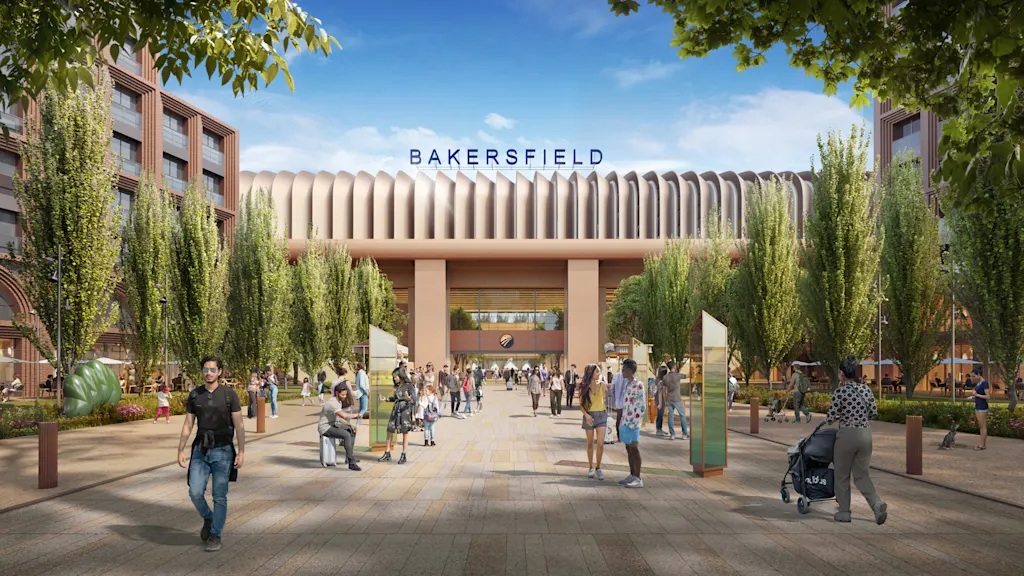
By contrast, the report finds that a route connecting Bakersfield and Gilroy, on the rural fringes of Santa Clara County, would generate an operating surplus of roughly $300 million. Under this plan, high-speed trains would continue up to San Francisco on tracks shared with Caltrain. Construction would cost $54 billion—not including an additional $3 billion to $6 billion to electrify and improve Union Pacific-owned tracks connecting Gilroy and San Jose—and be complete by 2038.
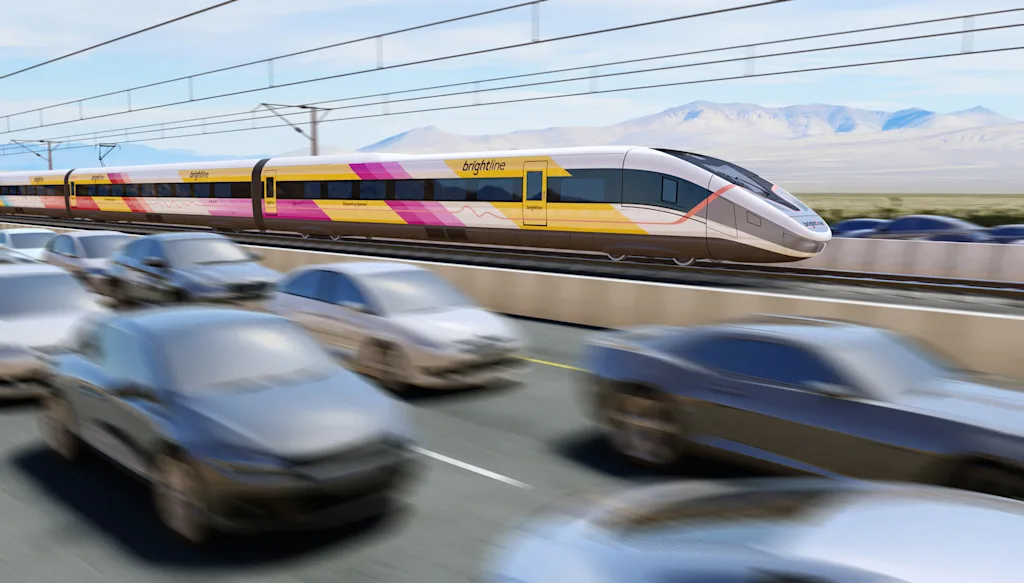
An additional connection from Bakersfield to Palmdale, where riders could transfer to local trains for Los Angeles or, potentially, to Brightline trains bound for Las Vegas, would generate an even greater operating surplus, of more than $600 million annually. Combined with the section up to Gilroy, this scheme would cost a total of $87 billion and could also be ready by 2038.
Those operating surpluses could be used to pay back investors over time, or to fund future extensions of the line.
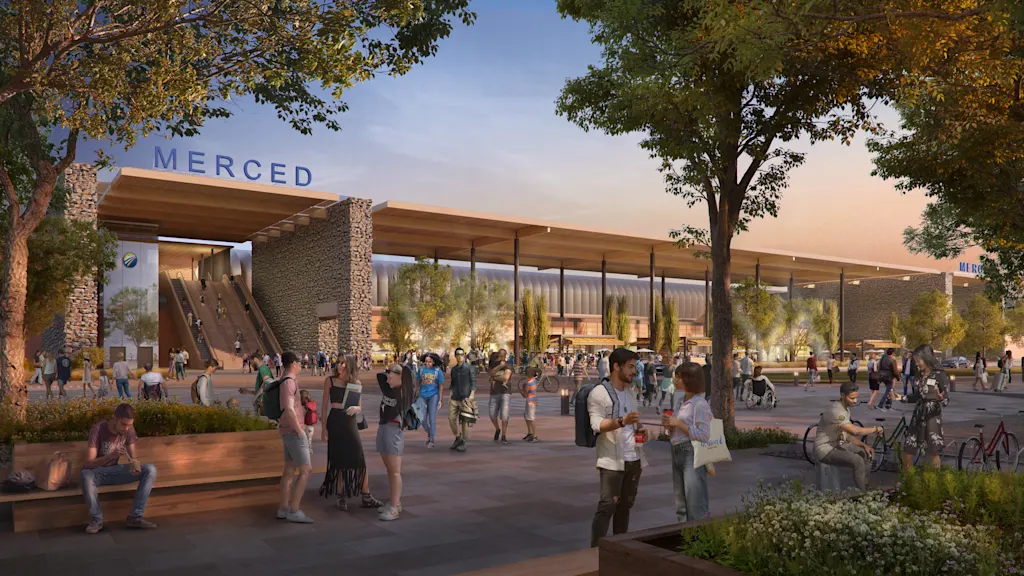
All of these scenarios would be value-engineered to be cheaper and more feasible to construct than previously envisioned. The railroad would be designed to handle steeper grades and sharper turns, limiting the expensive tunnels and viaducts that would be needed. Stations would be far smaller and less elaborate.
Choudri also hopes to maximize other revenue streams, like building transit-oriented development around stations, using railroad corridors for fiber-optic cables and electrical transmission lines, selling clean energy, and even building AI data centers.
To do this, and build the railroad, the CHSRA wants more power to streamline its own activities through permitting reform. These proposals build off of the abundance-inspired California Environmental Quality Act exemptions the state legislature passed in June, one of which specifically exempted high-speed rail stations and maintenance facilities from environmental review.
Another permitting reform bill that would have allowed neutral third parties to provide construction permits and capped the amount of time such permits would be allowed to take died in committee in August. A different bill that would empower the authority to capture profits from transit-oriented development is pending.
The project scored a major victory on September 10, when the state legislature and Newsom agreed to extend CHSRA’s share of cap-and-trade funds through 2045, ensuring the project will receive $1 billion per year in funding. It is the single largest funding commitment the project has received in its history.
With this consistent revenue stream, Choudri believes private investors will come calling to help get the railroad out of the Central Valley. Over the summer, the authority received 31 responses to its request from private entities interested in getting involved in the project.
“The part of the community that came in a strong way was the equity partners,” Choudri said at the authority’s August 28 board meeting. The authority is continuing to have more detailed discussions with these groups.
Another potential model for partners is to make an up-front investment and then earn their money back by operating passenger trains, freight, or other services using the project’s infrastructure. This is done in many other countries, Choudri noted at the board meeting, and many of those same firms are among those that responded to the authority’s request for expressions of interest.
However, in his statement celebrating the cap-and-trade funding, Choudri also suggested that a greater financial commitment from the state would be needed to get the project out of the Central Valley. “We must also work toward securing the long-term funding—beyond today’s commitment—that can bring high-speed rail to California’s population centers, where ridership and revenue growth will in turn support future expansions.”
New line, new challenges
The Bakersfield to Gilroy to San Francisco plan appears to be the authority’s favored option going forward, though Choudri insists that it would be a building block to completing the entire system. The NorCal-first phasing, leaving the project more than 100 miles and a mountain pass away from Los Angeles, has historically been an impediment to securing L.A.-area politicians’ support.
This plan would also require other challenging maneuvers. It would nix the city of Merced from the route after years of big promises, angering leaders there. It will also require negotiating with Union Pacific, and identifying additional funds to upgrade the stretch of track it owns between Gilroy and San Jose. (In a statement, Union Pacific said it had previously discussed sharing track with California High-Speed Rail along that segment, and is open to continued discussions.) Additionally, the plan would require a repeal of a 2022 law that limited spending outside of the Central Valley.
The pivot may even contravene the terms of the 2008 ballot initiative. As California Policy Center fellow Marc Joffe has observed, the slower travel times on that Gilroy to San Jose segment could render the total San Francisco to Los Angeles journey impossible to make in under 2 hours and 40 minutes, violating the ballot initiative language.
Joffe, a longtime critic of California High-Speed Rail, believes the best way forward is a new ballot initiative laying out a more manageable project, roughly in line with what Choudri is currently proposing. With recent polls showing Californians remain broadly supportive of the project, that could be a winning proposition.
What’s undeniably clear is that Choudri is finally “leveling” about the project in a way no public official has done. He’s not simply pointing out the overambitiousness and underfunding of the initial concept; he’s also laying out more modest steps that could get a useful project up and running “in our lifetimes,” in his words. That means reckoning with the morass of procedural obstacles that have turned practically every lawsuit and permit into a delay, and the overdesigned stations and track structures that the project blithely pursued despite the escalating costs.
Instead of shooing away private-sector partners, as the CHSRA has done in the past, Choudri is welcoming them in with the humility that outside entities might know a little bit more about building high-speed rail than a state agency with no prior experience.
Perhaps the Trump administration’s threats are having a focusing effect for everyone involved. Newsom, hero of the anti-Trump resistance movement, would be loathe to concede defeat to the president on the state’s signature infrastructure project. Democrats skeptical of the project are probably going to be wary of aligning themselves with Trump.
The abundance movement has offered a new vocabulary for liberals to support cutting red tape for projects like this one. Indeed the book Abundance cites California High-Speed Rail as the epitome of liberal governance gone wrong. Choudri’s fixes for the project look like they came right out of the abundance playbook.
The tides have turned. The question is whether it’s too little, too late.
Related Posts

NASA veterans say political pressure and slashed funding are destroying mankind’s ability to go on future missions
NASA veterans are slamming the Trump administration for its proposed…
New York’s VCs are opening their wallets to elect Cuomo. Here’s the data to prove it.
Hiroko Masuike/Getty Images New York's mayoral race is entering its…

I’ve spent 190 hours on long-haul flights. Here are 11 tips for surviving 6 or more hours stuck in economy.
Business Insider's reporter shares her top tips for flying long…