While biking the perimeter of Prospect Park in Brooklyn on a sunny August afternoon, the pedal strokes are smooth. On the Citi Bike, I ease through all of Park Slope and most of Windsor Terrace, but as I bike through Prospect Lefferts Gardens, also known as Flatbush, tension builds. When I enter the park at Lincoln Avenue, where Flatbush begins, there is a massive shift in my ability to move. It is jarring, and I’m forced to dismount.
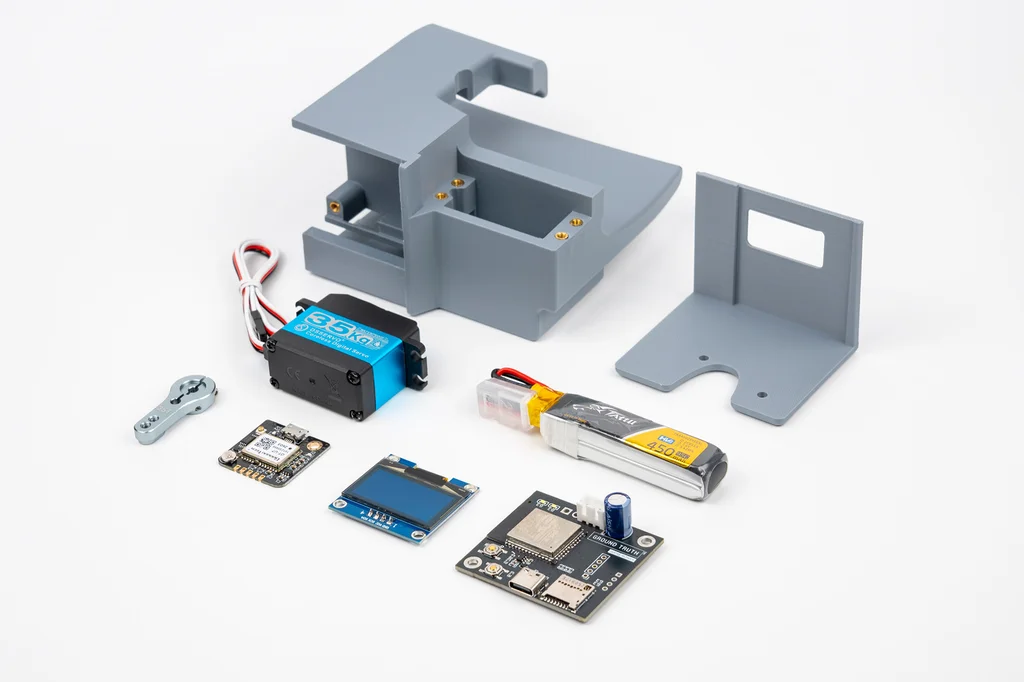
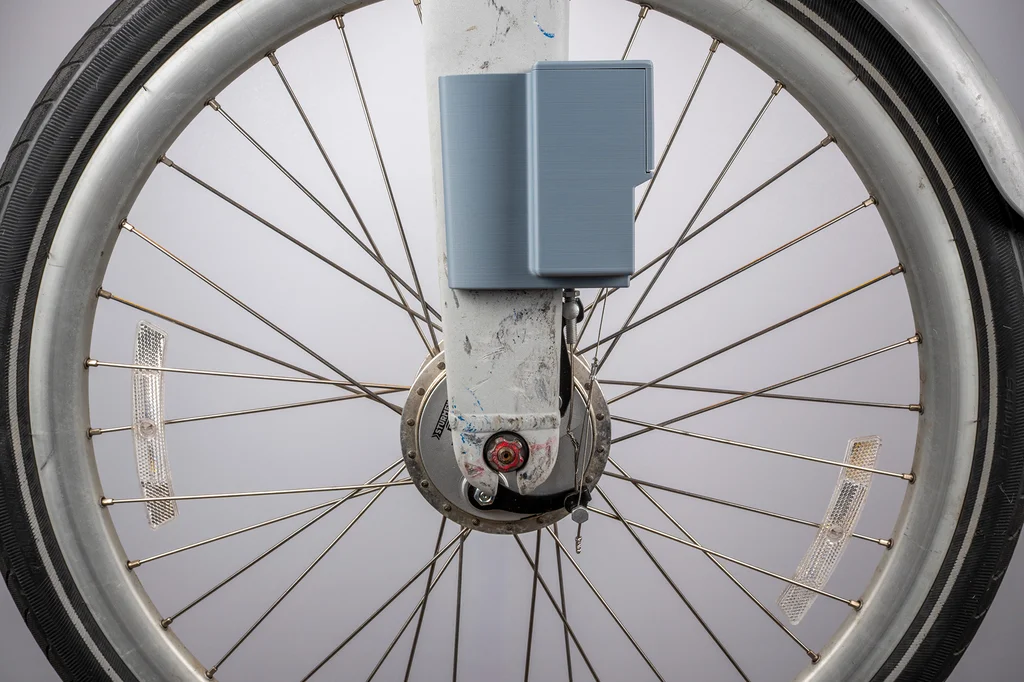
I’m riding around with a device attached to the e-bike that manipulates the brakes depending on the levels of rent affordability in the neighborhood you’re biking through. The device is an artwork called Ground Truth, Justin Blinder’s latest creation and part of an exhibition with the same name that closed on August 2.
Blinder is a researcher, biker, scientist, and, at his most vivid, an artist. The exhibition explores New York City’s affordability crisis and, through the device, makes the disparities felt on a physical level. While the device is not publicly available, he created it for both the Lyft manual and e-bikes and has biked more than 35 miles across New York City with it installed.
This work was made possible with money from Idle Hands, an art incubation program founded in 2025 by Linden Renz and Gabrielle Sirkin. Blinder was the Idle Hands Incubation award’s inaugural winner, cashing out $10,000 and loads of professional support to make Ground Truth a reality.
The device uses data from the U.S. Census Bureau’s American Community Survey on rent-burdened neighborhoods. Once attached to any Lyft Citi Bike, it draws on GPS and the housing-affordability data to create physical resistance for riders in cost-burdened neighborhoods, easing up in more affordable ones. A resident is considered rent-burdened if they pay 30% or more of their monthly income toward rent.
Blinder got the idea for Ground Truth while working as a food delivery bike rider struggling to make ends meet. He was impacted by how starkly the financial realities of people living in New York City contrasted with one another despite living in such close proximity.
“There were so many extremities just within small regions. To me, that’s just such a fascinating aspect of the crisis,” Blinder tells me. “You can be in one block where people are significantly less rent-burdened and go to another where it’s totally a different story.”
This isn’t Blinder’s first time translating data into a physical experience. During the early years of the COVID-19 pandemic, Blinder created a computer malware program called Pandemic Pulse that would slow down his computer’s CPU in proportion to local infection rates, and dim the computer screen based on the rate of local deaths.
“Every morning I remember going to The New York Times homepage and seeing the COVID infection rates, and it’s basically just, like, charts and a map. But all of that [information], at the end of the day, is people. . . . All of these people have family members. There’s a story behind them,” Blinder says. The malware would interrupt his work and make it harder to see his computer or use it at all on days when the numbers were particularly high.
Blinder has spent more than a decade examining how dominant technologies shape public understanding of inequality, and Ground Truth is no exception. By physically experiencing this resistance while cycling through different New York City neighborhoods, riders embody tension. Whether that tension is a symbol for the economic hardship reflected in the census data, the strife between commuters and community members, or the exhaustion felt by all New York renters as housing costs rise, Blinder has clearly transformed abstract statistics into a tangible, felt experience.
“I think one huge component is that there’s so much variation in terms of affordability,” Blinder says. While biking through neighborhoods with New York City Housing Authority (NYCHA) housing, for example, the device didn’t create the tension he expected, making for an easy ride.
“It just shows how NYCHA housing is sort of working. It’s not necessarily more affordable for people there, but at least that aspect is dampened by proper policies,” he says.
In 2025, the same month that Brooklyn was voted the best large city for biking, the borough announced it was removing three blocks from the nearly 2 miles’ worth of protected bike lanes that run through Bedford-Stuyvesant, or Bed-Stuy, due to resident complaints about cyclists running over children. The original protected lane had been installed for less than a year after a decade of advocacy by cyclists.
Bed-Stuy is home to Brooklyn’s oldest Black community. Despite decades of gentrification, Black residents remain the neighborhood’s largest racial group, making up 38% of its population. In Bed-Stuy, bike lanes have been and continue to be a major point of controversy.
After reading minutes from Bed-Stuy Community Board 3 meetings, Blinder realized it wasn’t a failure on the city’s part, but a result of community members who did not want bike lanes in their neighborhoods.
Bike lanes have historically been linked to increased gentrification, rising rents, and real estate speculation. From highways to bike lanes, transportation development and displacement have historically existed hand in hand. Studies show that “green gentrification,” when a neighborhood gains a new seemingly eco-friendly infrastructure such as bike lanes, does lead to the displacement of lower-income residents. In addition, some residents may not use this infrastructure for various reasons, whether due to preferences for other modes of transport or affordability.
Lyft—which owns and operates Citi Bike in New York City; Capital Bikeshare in Washington, D.C.; Divvy in Chicago; Bay Wheels in California; and more—is the only major bike-share program operator in the country and is corporately funded. While Lyft offers $5 monthly Citi Bike memberships for public housing residents and SNAP recipients, Blinder argues that a lack of awareness and bureaucratic hurdles can make the program difficult to access.
“A lot of times the bike lanes are a conduit for people to move through the neighborhood and not invest in it. So maybe people are just going through their neighborhood benefiting from this infrastructure, but the community doesn’t actually benefit otherwise,” Blinder says.
Blinder wanted this device to force people to stop in neighborhoods that are often treated as transportation routes rather than destinations. He says his work is designed to be dialogic, and that he hopes Ground Truth will offer a critique of the affordability crisis within both housing and micromobility as e-bike rental costs continue to rise.
“It’s not really to get people to talk about an issue that they haven’t talked about before, but more a different perspective on an issue that’s very much present. In this case, it was affordability,” Blinder says. “What we think affordability looks like, and how that can often be much more complex and many times we don’t have any clue what it actually looks like.”
This story was originally copublished by Next City, a nonprofit news outlet covering solutions for equitable cities, and Hyperallergic, a leading voice in contemporary perspectives on art and culture.
Related Posts

Chatbots aren’t supposed to call you a jerk—but they can be convinced
ChatGPT isn’t allowed to call you a jerk. But a…

Ukrainian troops are walking more and spreading out to avoid drones, special operator says
Elite Ukrainian soldiers are walking more and spreading out to…
We named our youngest Disney. Our other 6 kids have unusual ones, too.
Newborn baby Disney Jones with some of the Disney characters…