The structural DNA of the newest statement lamp from Ikea is hidden inside its glowing, basket-like construction, but it will be familiar to almost anyone who’s ever assembled a piece of Ikea furniture. Named Ödleblad, the spherical lamp is made up of 60 snap-together pieces that were inspired by the shape of the Allen key wrench, the most essential tool in the Ikea pantheon. But in a twist, the Allen key that inspired the lamp’s design isn’t even needed to put it together.
Instead, the Allen key shaped components are flat pieces of birch veneer that use precisely placed notches to slot together, forming pentagon-shaped rings that patch together like an oversize soccer ball.
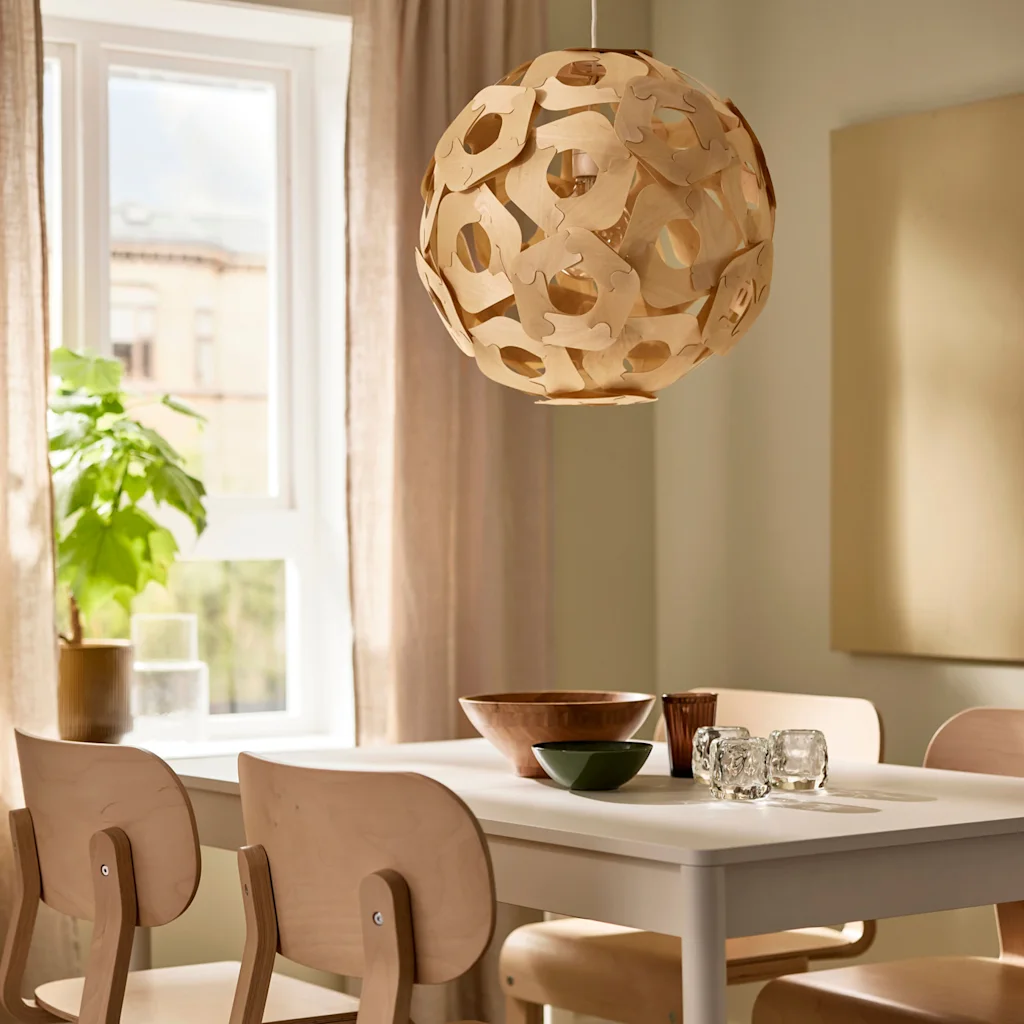
The lamp was designed by one of Ikea’s in-house designers, David Wahl. He says he wanted to explore how he could make something as big as possible from pieces as small as possible.

“I already had the thought of building something from repeating parts, and after experimenting with different prototypes, the waste-reducing aspect was what first led me to the Allen key shape,” Wahl says. “It turned out to be very practical in production, since the shape leaves almost no waste when cut from the wood—and I basically thought, why not just repeat it 60 times to create a sphere?”
This idea took considerable refining, both in its geometry and its materials. To get the shapes just right, Wahl created a parametric 3D model using CAD software. “I could adjust the angles and thickness to see how the shape changed,” he says. “Once it worked, it was quick to tweak, but setting it up was definitely the longest part of the process.”
He then started experimenting with different variations, first with the digital model and later through “countless” laser-cut prototypes. “I began with paper, then tried wood, plastic, and even metal. At one point the whole lamp was made of paper,” he says.
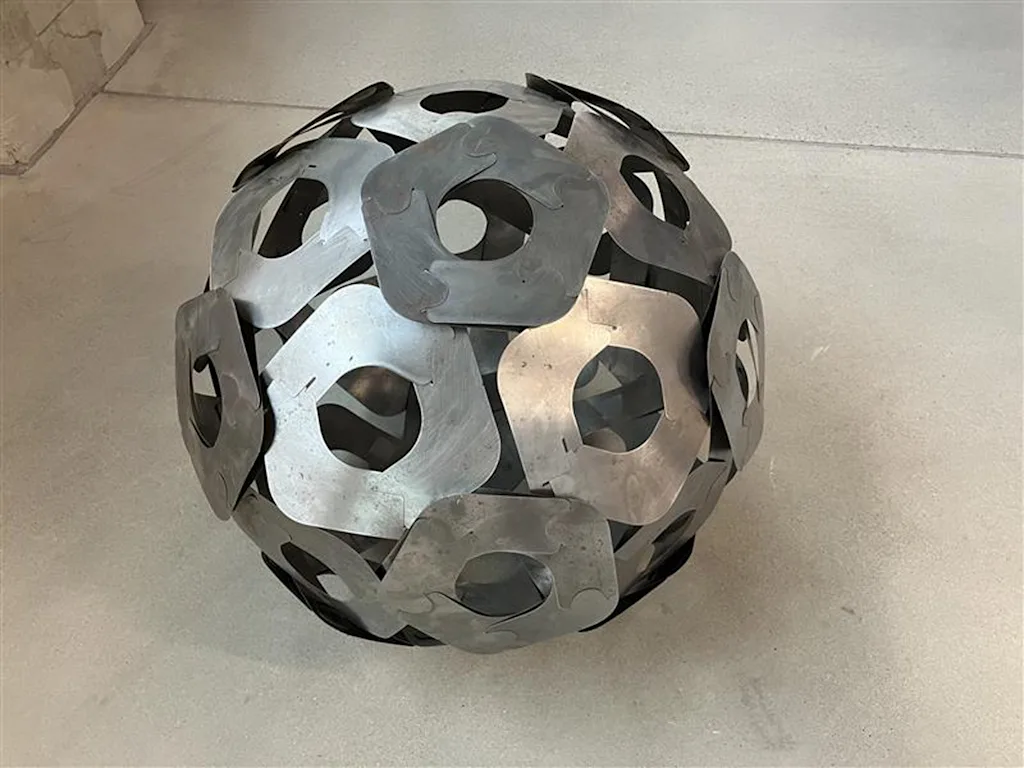
Birch veneer turned out to be the best choice for the lamp itself. “When the lamp is off it looks like solid wood, and when it’s on the light softly shines through the grain. We tried stiffer versions and other materials, but they didn’t give the same warmth or glowing effect as the wood,” Wahl says. (One version, made out of thin pieces of metal, is still being used in Wahl’s office—as a soccer ball.)
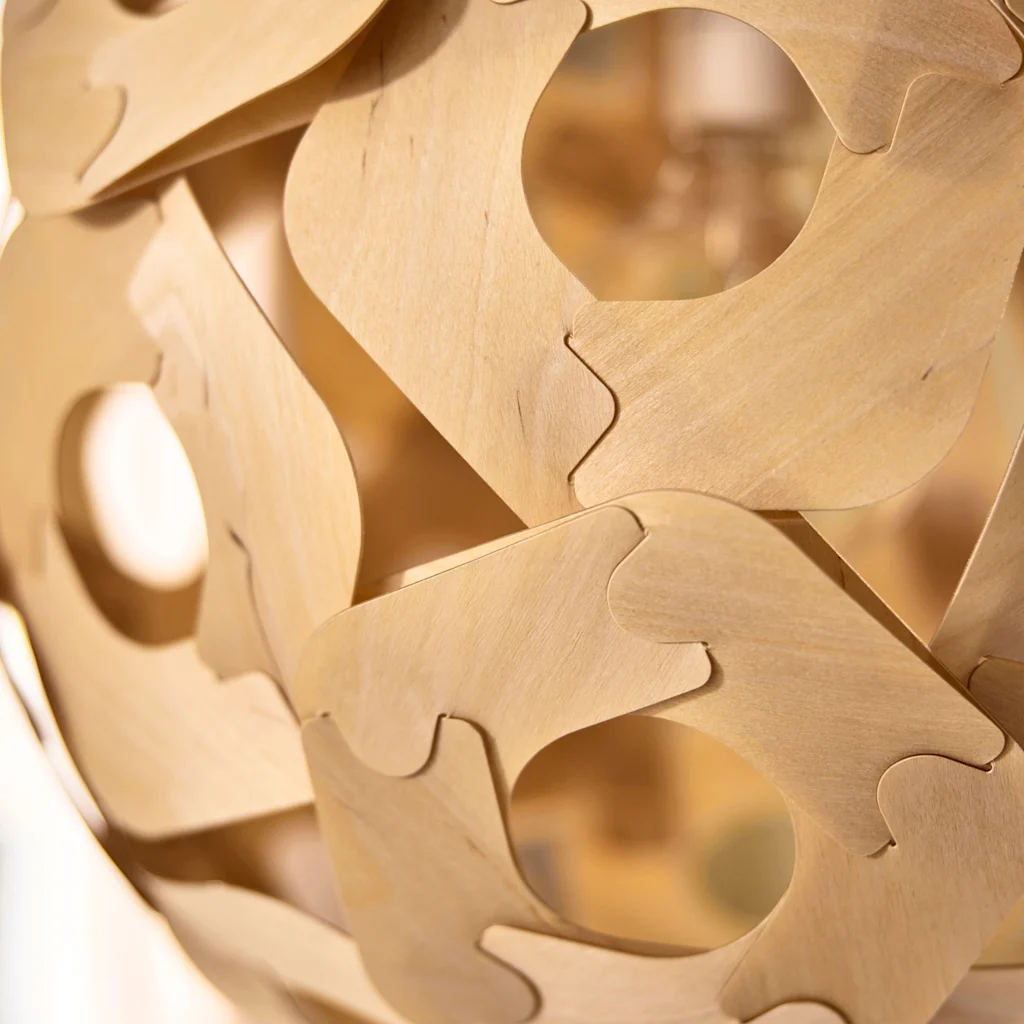
There are 60 Allen key–shaped pieces in the lamp, but customers won’t be required to thread every single one together like a large 3D puzzle. A colleague suggested that might be a bit too much work for people, so the lamp’s Allen key pieces have been partly preassembled into flat modules that the consumer will then connect to give the lamp its spherical shape. “At first I imagined people snapping the whole lamp together piece by piece, which I have to admit was an idea that really appealed to me,” Wahl says. “But I also realized it might frustrate.”
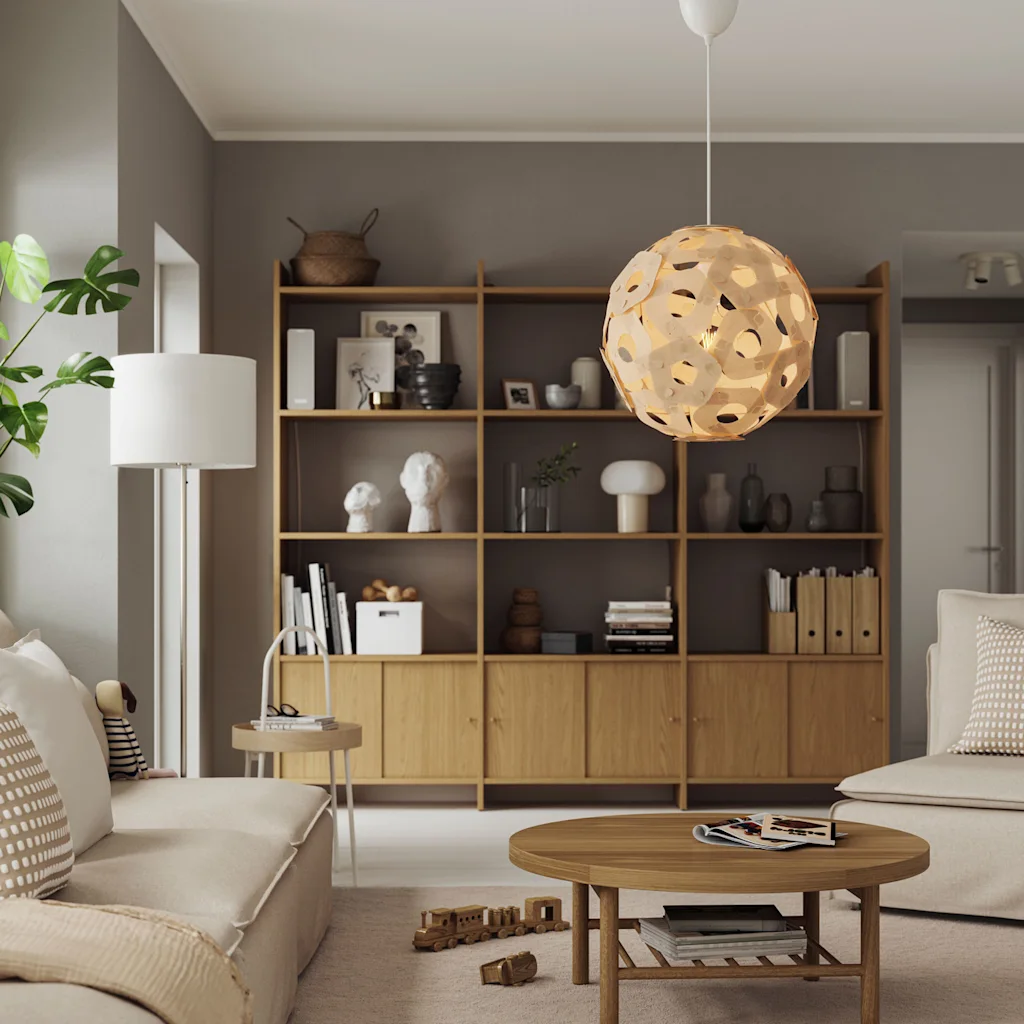
This approach still allows the lamp’s pieces to fit compactly into a flat box for easy shipping, a key outcome of Ikea’s famously interconnected approach to designing, manufacturing, and shipping its products.
Another benefit of using the Allen key shape is that the pieces are easy to cut and leave behind almost no waste. “I wanted to reduce waste from the start, which influenced every other decision,” Wahl says. “In the end, it almost became more of a study in construction and material efficiency than a typical lamp project, which I think makes it even more interesting.”
Related Posts

We had a 66-person wedding for $16,000. Our guests danced all night and still tell us how much they loved it.
The author and her husband had a wedding of 66…

TikTok bans the #SkinnyTok hashtag for unhealthy weight-loss content. Will it actually solve the problem?
TikTok, a platform where misinformation and dangerous rhetoric often spreads…
I stayed at a 99-year-old hotel in Montauk for $490. It hasn’t lost any of its 1920s charm.
Montauk Manor was completed in 1926. Jonah Rosenberg for Business…