If you have an aging furnace, you might have considered replacing it with a heat pump—the ultra-efficient technology helps shrink utility bills and can have as much climate benefit as switching from a gas car to an EV. But heat pumps are also typically expensive: whole-home systems can sometimes cost $25,000 to $30,000.
Jetson, a startup based in Vancouver, says that it can cut those costs in half to $15,000, or roughly the cost of premium gas furnace. In some areas, after adding in local incentives, the cost can be as low as $5,000.
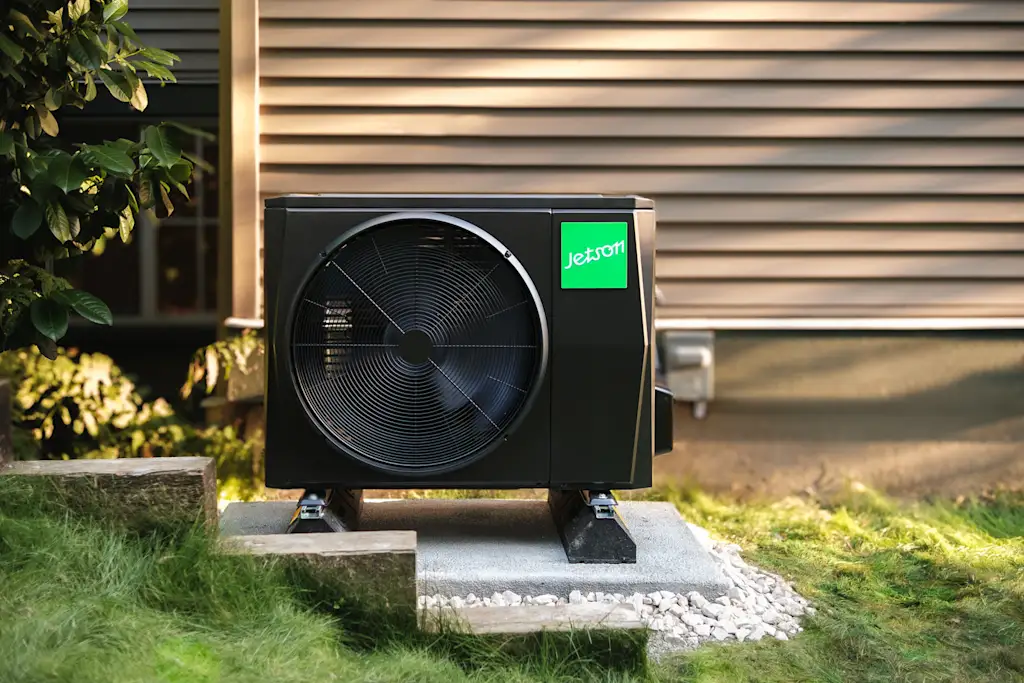
With other heat pumps, “you’ve got this huge green premium out there,” says Stephen Lake, Jetson’s founder and CEO. “That’s one of the core reasons we started Jetson: to try and make this something that would become an easy yes for the average homeowner.” The company launched its own heat pump, the Jetson Air, in September 2025.
Lake, who previously started a smart glasses startup that was acquired by Google, decided to work on heat pumps after looking at the biggest opportunities for decarbonization. “If you just look at the numbers across the U.S., about 15% of end energy use goes to residential heating and cooling,” he says. “It’s one of the biggest single buckets of carbon emissions out there. In many cases, your home is emitting at least as much, if not more, CO2 than the car in the driveway.”
The technology isn’t new—heat pumps have been in use for decades. (Improvements that made the tech work well in very cold temperatures are newer, rolling out over the last 15 years.) But most homes still rely on fossil-fueled heating, and the upfront cost is the main barrier.
To bring down cost, the company started by eliminating markups as much as possible. Most heat pumps are made by a manufacturer, relabeled by a brand, sold to a distributor, and then sold through a contractor to a homeowner, with markups at each point. Jetson works with a manufacturer to make its own heat pumps.
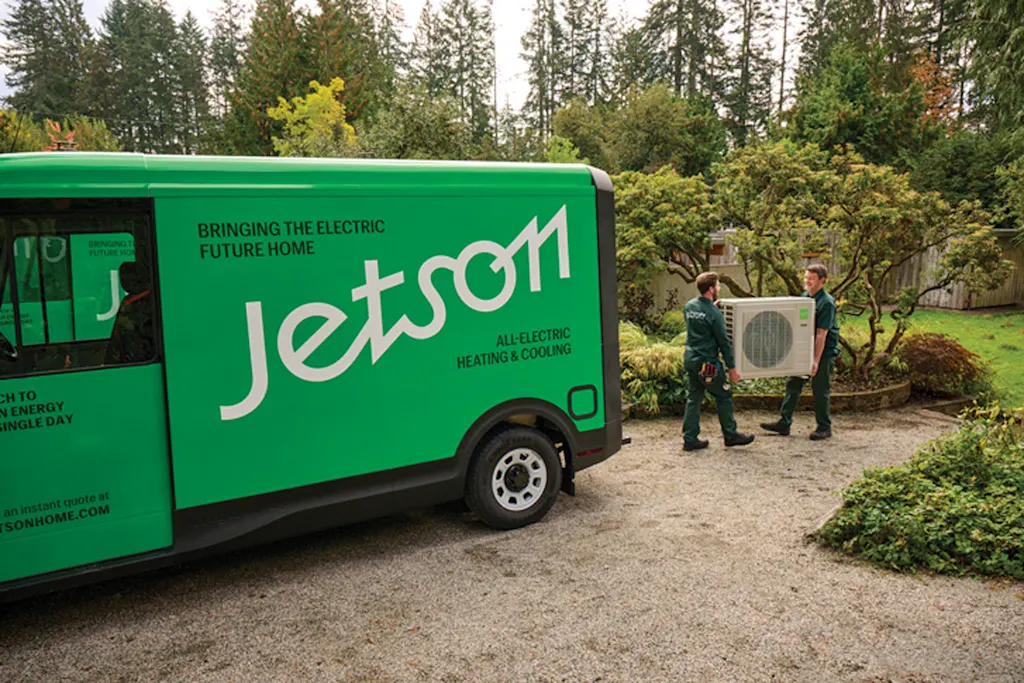
Then the team does its own installation. “We really optimized the install process to be a very efficient process, cutting out any wasted labor,” Lake says. “So we’re not like a typical contractor doing something different every day. We’re installing cold climate central heat pumps, basically the same system, every single day over and over.”
The company uses software to virtually plan each project, rather than having to send out a crew to take measurements in person. Then, the startup sends out HVAC technicians, an electrician, and all of the parts needed for the whole installation to happen in a single day.
The system is designed not only to reduce costs but also to minimize friction for homeowners. Typically, getting a heat pump is a multistep construction project—a homeowner would have to find HVAC contractors, schedule time for them to come give quotes, and spend time choosing between appliances. “You’re trying to navigate this complex web of rebates and incentives and then a very technical sales process around which model you want,” Lake says. Often, homeowners also need to separately hire an electrician. Jetson’s site can give a quote, and information about available rebates, within a few minutes.
The company’s heat pump uses software to continually update itself and to improve performance. To help consumers save more on bills, for example, it can time itself to run when electricity prices are lowest.
Right now, the startup only works in a few locations: British Columbia, Colorado, and Massachusetts, with New York launching shortly. Those locations all have the right conditions, Lake says, including consumer awareness of heat pumps, relatively high utility bills for oil or gas heat, and good incentives. In Massachusetts, for example, consumers can save thousands on a new heat pump through rebates.
Until the end of 2025, Americans can also use the federal tax credit of up to $2,000. But even without that incentive, the product can make financial sense. Lake says that demand has been strong; after launching the startup last October, it’s on track to install around 1,000 systems by the end of the year.