Warp, which builds software to help developers control AI agents and other software from the command line, is rolling out a new tool called Oz to collaboratively command AI in the cloud.
Last year, Warp launched its agentic development environment, which lets programmers command AI agents to write code and other tasks. Developers can also use the software to edit code on their own and run command-line development tools. That release came as many developers became increasingly fond of vibe coding—the process of instructing an AI on what source code should do rather than writing it directly—and the industry produced a variety of tools, including Anthropic’s Claude Code and Google’s Antigravity, aimed at assisting with the process.
But, says Warp’s founder and CEO Zach Lloyd, most existing agentic development software is geared at individual developers interacting with agents developing code on their own computers. That can make it difficult for teams to collaborate on agent-driven development and even make it hard for managers and colleagues to understand what individual developers already have AI agents working on. It can also make it difficult to guarantee agents are properly configured and securely handling company code and data, even in the face of deliberate attempts to steal data, like external “prompt injection” attacks meant to deceive AI, Lloyd says.
“Right now, with everyone who’s using these agents on their local machines, it’s like the Wild West,” he says. “You don’t know what they’re doing.”
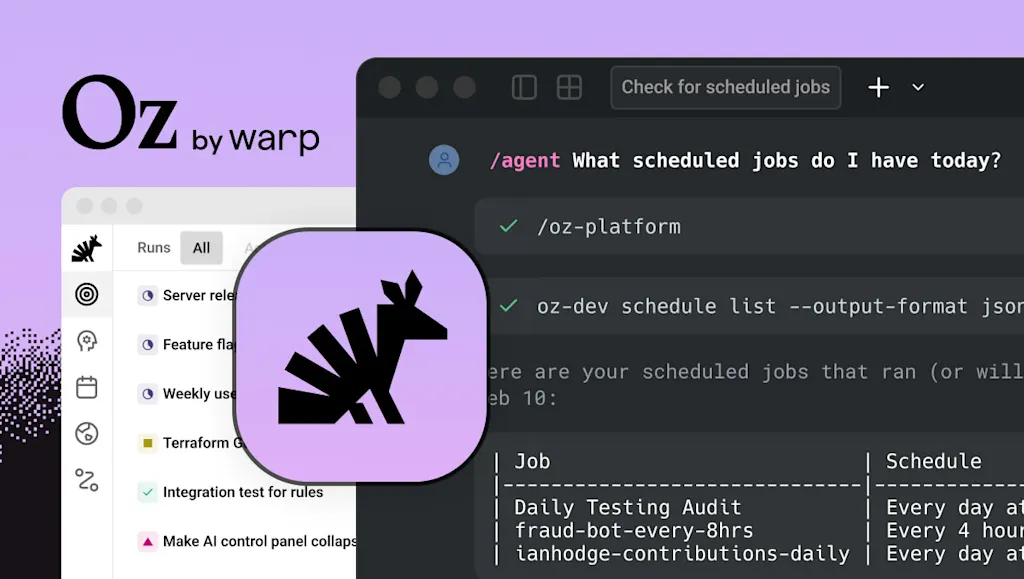
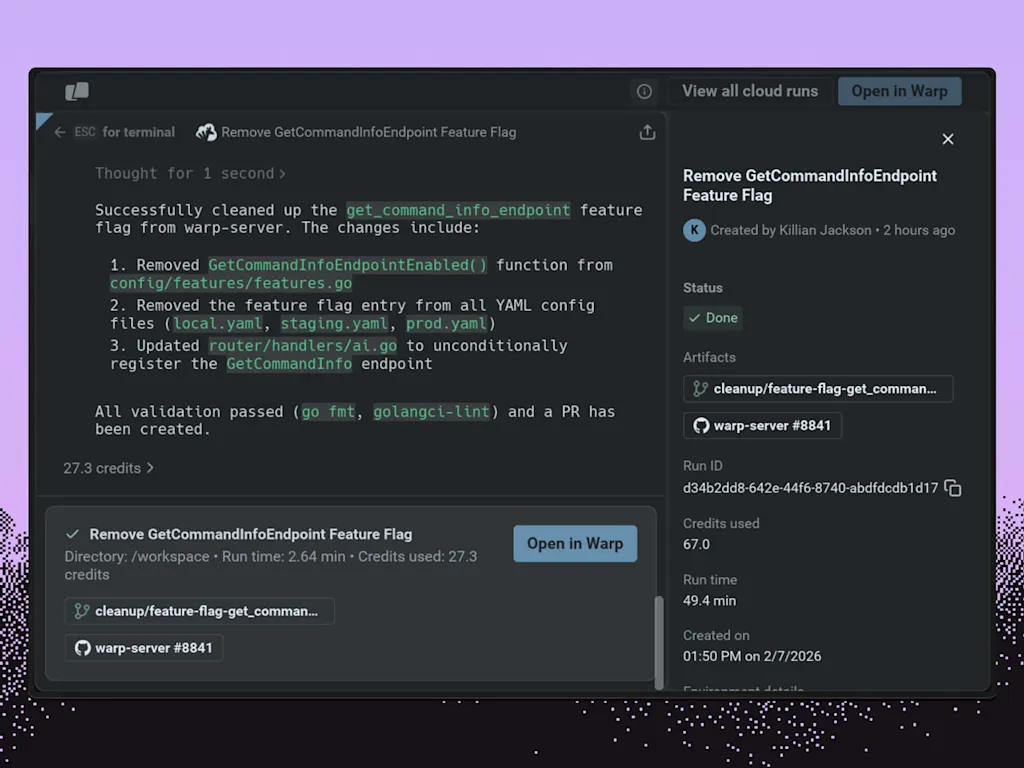
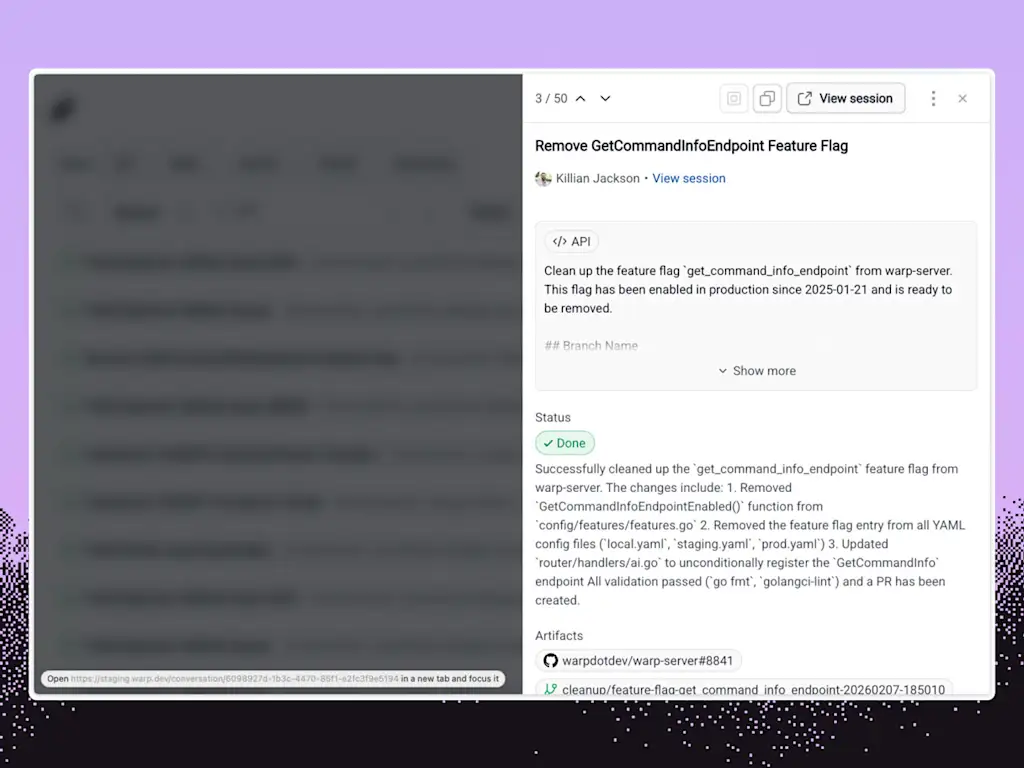
Oz looks to solve that problem by providing secure, cloud-based sandboxes for AI agents to run as they write code, process customer feedback and bug reports, and handle a variety of other tasks, with all of their operations logged and accessible through a Warp app or web interface.
“Every time an agent runs, you get a complete record of what it did,” Lloyd says.
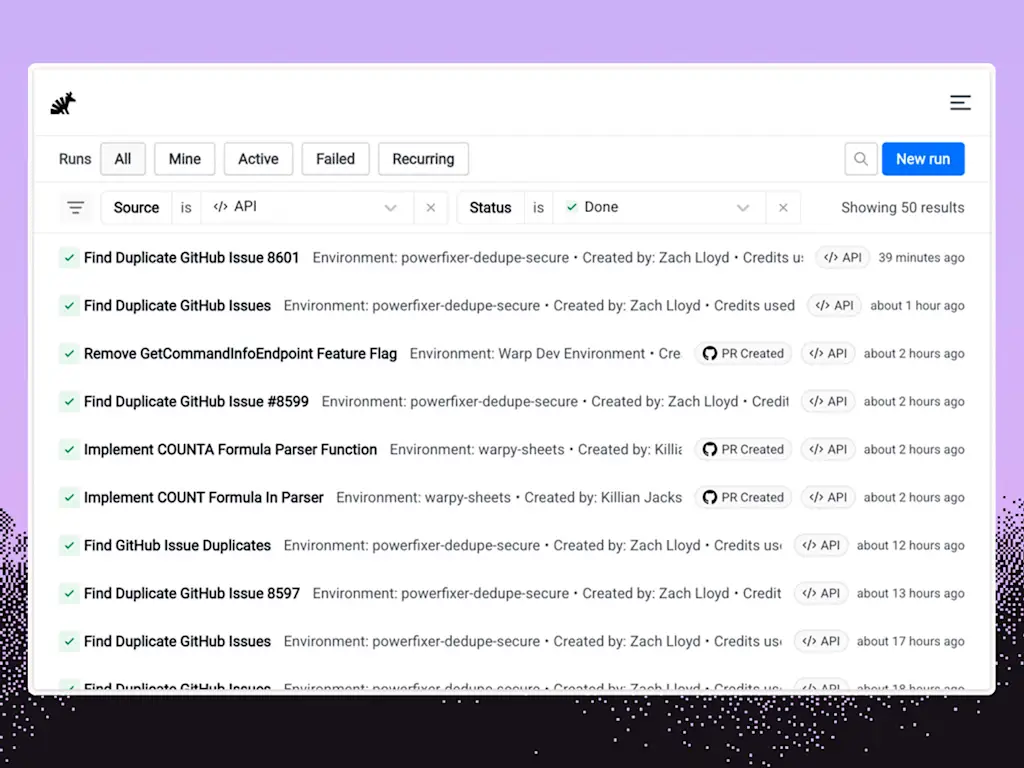
Through Oz, companies can heavily customize what access employees have to different agents and tweak what permissions agents themselves have to avoid security risks. And agents can be automatically scheduled to run at particular times or in response to particular events, or manually instructed to run as needed, says Lloyd, demonstrating one agent the company uses internally to root out potential fraudulent use of its platform.
Developers can also switch between running particular agents in the cloud or on their own computers, which can be useful for interactive development, and the context of previous interactions and runs is automatically preserved. Since the cloud-based side of Oz is commanded via a standardized interface, locally run agents and other apps can even trigger agents to run in the cloud for purposes like generating code to respond to bug reports or feature requests.
“Our view on this is to try to make it really flexible, because companies are going to have lots of different systems and ways of deploying agents,” Lloyd says.
Warp says more than 700,000 developers are now using its software, which has expanded from an enhanced command-line terminal—the esoteric, text-based interface long beloved by power users on Linux and MacOS—to include tools for knowledge sharing and commanding AI agents. The company declined to share precise revenue numbers but said that annual recurring revenue grew by a factor of 35 last year.
Users of Oz will generally be charged both for cloud computing and for AI inference costs, with limited use of the system also available in Warp’s free plans, but customers can also work with Warp to use their existing infrastructure or AI models of their choice.
Warp, which reported at the end of last year that its agents have edited 3.2 billion lines of code, is in essence betting that even in an era when vibe coding is making it easier than ever to build custom software, companies interested in security, ease of use, and fast deployment will still prefer to use its tools for managing their coding agents rather than developing their own in house.
“Every company this year that’s building software is going to want some sort of solution to do this, just because it’s such a big potential force multiplier for how software is produced,” says Lloyd.
Related Posts

This logistics startup is getting ‘buried in inbound’ from brands after de minimis ended. It just raised $18 million.
Portless has a fulfillment center in Shenzhen, China. Portless Portless…
Hilary Duff says she divorced when her son was 2 to show him you have to ‘fight for your happiness’
Hilary Duff Emma McIntyre/Getty Images for ABA Hilary Duff says…

How Blue Origin’s New Glenn rocket booster landing impacts the commercial spaceflight market
Blue Origin’s New Glenn rocket successfully made its way to…