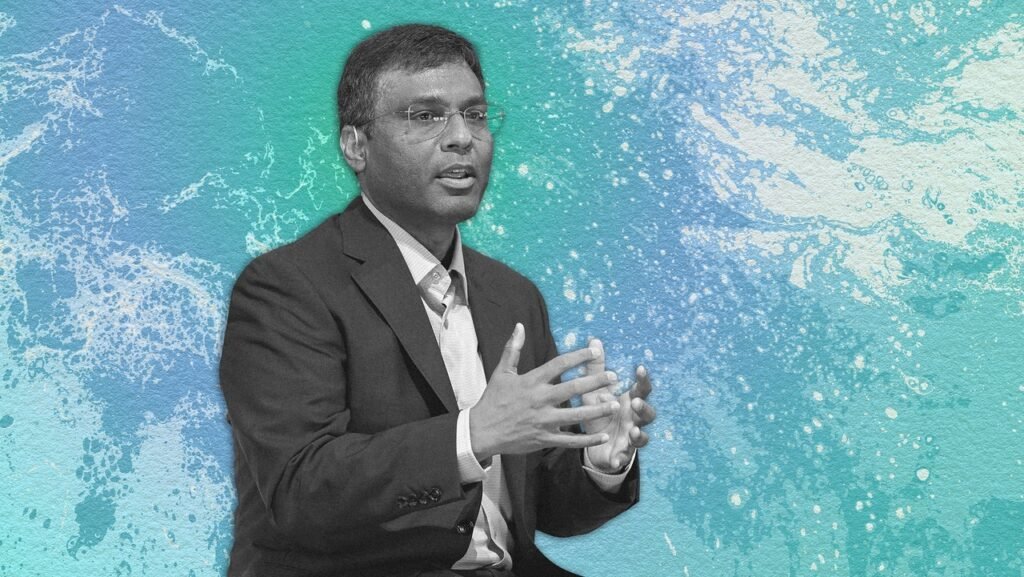
Rohit Prasad, who led Amazon’s artificial general intelligence division and helped build and scale Alexa, has been tapped as the new CEO of Boston Dynamics.
The appointment, announced earlier this week, puts Prasad at the forefront of the increasingly competitive humanoid robotics field. Hyundai Motor Group, which owns Boston Dynamics, announced earlier this year that it plans to build a factory capable of producing 30,000 robots per year by 2028.
“Boston Dynamics is uniquely positioned to advance physical AI through its world-class robotics expertise,” Prasad said in a statement. “I am honored to join the company at such a pivotal moment for the industry.”
Tesla, of course, also wants to become a leader in humanoid robotics, meaning Prasad’s progress will inevitably be measured against the company’s Optimus program and the sometimes outlandish claims CEO Elon Musk makes about its ambitions.
It’s a challenging job already, and one that could become considerably more competitive in the next few years.
From Star Trek to Alexa
Prasad built his reputation at Amazon, but his career began at Raytheon’s BBN Technologies, where he led machine-learning research and worked on real-world applications for the technology. His work included speech-to-speech translation, psychological health analytics, document image translation, speech recognition, and text classification.
His interest in machine learning was partly born from a childhood watching Star Trek, which sparked a fascination with computers people could talk to.
That background proved valuable when he moved to Amazon.
There, Prasad developed a reputation for taking advances in AI and turning them into products people could actually use. The most notable example was Alexa.
Jeff Bezos dreamed up the concept, but Amazon’s early efforts to build the assistant did not go well, to put it mildly. Prasad helped lead the push to incorporate deep learning into Alexa, allowing the system to improve as more people used it and generated more data.
It took longer than Bezos wanted, but Alexa eventually amassed an enormous amount of speech data and emerged as a functional digital assistant that quickly became one of Amazon’s most popular products.
Rethinking what AI should do
Prasad later became Amazon’s senior vice president and head scientist for AGI. In that role, he asserted that the Turing test, the famous measure of whether a machine can exhibit behavior indistinguishable from a human’s, had become outdated.
“It is time to retire the lore that has served as an inspiration for seven decades, and set a new challenge that inspires researchers and practitioners equally,” he wrote in a 2020 column for Fast Company.
AI, he argued, should be judged less by how convincingly it can imitate a person than by whether it can understand what someone wants and act accordingly.
“If you came in and said, ‘Alexa, I’m feeling hot here’ or ‘I feel this is too warm,’ it should come back and ask you, ‘Do you want to turn down the thermostat or lower the temperature?’ It shouldn’t tell you to go to the beach,” he said in an interview three years ago. “This is why AI is such a hard problem, because the context is so crucial.”
Running Boston Dynamics will give Prasad a chance to take that idea a step further, combining AI that can understand a request with machines capable of acting on it in the physical world.
Giving AI a body
Boston Dynamics’s first humanoid robots are aimed at industrial work. They will initially handle tasks such as welding and logistics before potentially moving into more complex parts of the manufacturing process, including component assembly.
Humanoid robots for the home remain much further away. Boston Dynamics’s Atlas robot currently costs between $130,000 and $140,000 to produce, and even after mass production begins, the expected price is around $30,000.
Given Prasad’s experience building consumer AI products, though, it’s not hard to imagine Boston Dynamics eventually pushing further in that direction. After all, seven years ago Prasad was already arguing that Alexa would become smarter if it had a body.
“The only way to make smart assistants really smart is to give it eyes and let it explore the world,” he said in a presentation at MIT Technology Review’s EmTech Digital AI conference.
Now he’ll have the chance to test that theory.