With a chatbot interface and agentic capabilities, the new AI web application Hark Pro checks the main boxes of a mass market AI release in 2026. But unlike the tools that have already been released by the large tech companies and frontier AI labs, Hark Pro is rethinking the core premise behind the AI assistant. While many of the “everyday AI” chatbots that have rolled out over the last month focus primarily on fielding queries and using AI to follow directed tasks, Hark Pro is using its AI to understand the tasks and needs of each user, and proactively finding ways to help.
Hark, the startup behind Hark Pro, calls it an “operating system for your life.” Now available in a limited-use free version or more usage with paid subscriptions starting at $20 a month, Hark Pro is like a computer using a computer to organize information, find answers, and handle tasks. With access to a user’s email, calendar, and other online accounts, the app can do common tasks like ordering lunch, paying bills, and planning trips.
It can also do more proactive things like identifying meeting conflicts in your calendar and rescheduling around them, or making an appointment at a new dentist that takes your insurance, or notifying you that the car you rented for an upcoming trip is at the wrong airport—and then offering to fix it.
Hark was founded by Brett Adcock, who previously founded the EVTOL startup Archer Aviation and the humanoid robotics company Figure. Since Hark’s launch in late 2025, the company has raised $700 million in series A funding and gone on a hiring spree that’s brought in engineering, AI, and design talent from companies like Apple and Tesla.
In a keynote video announcing Hark Pro’s launch, Adcock calls Hark Pro a personal intelligence tool, and the first release of what he plans to be a dramatic reimagining of the personal computer for the age of AI. “Eventually I want Hark to handle all things I do on a computer, fully end-to-end, so that I never have to use a computer again, at least not a computer as we know it,” he says.
A customizable interface
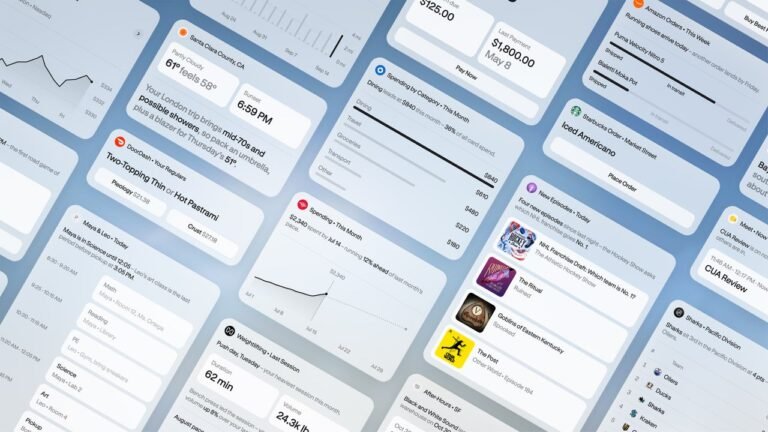
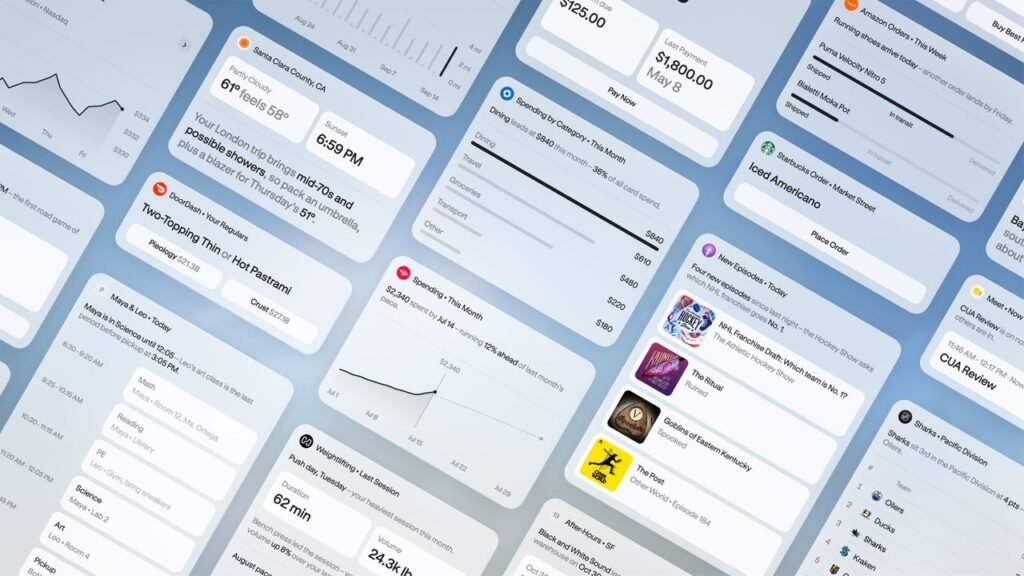
Testing out the beta version of Hark Pro ahead of its launch, the tool appears to follow the familiar chatbot formula, with a text query box and a running log of queries and responses. But instead of just a simple ask-and-answer interface, Hark Pro appears in its web app (also on iOS and Android) as more of a control panel, with a sidebar of individual widgets that hold custom-designed apps, trackers, and reminders that you can connect to any services you use.
Abidur Chowdhury, head of design at Hark and the former design lead for Apple’s iPhone Air, calls it a homepage, and it’s designed to be easily customizable while also prioritizing the main tasks or problems it can help solve on any given day. Action items appear at the top of this homepage, each with automatically rendered action buttons that can pay the bill, make the appointment, or approve the expense report. Chowdhury says Hark has tried to design this interface to avoid some of the clunkier elements of other AI platforms.
“We really didn’t want to have this clogged sidebar with a bunch of the different chats that you’ve had,” he says.
Hark Pro keeps everything in one main chain, like a long back-and-forth text message, but it also has the option to break away for specific tasks. In a tab called Projects, the tool can be used to focus in on a longer-term project, like planning for an event, developing a new business idea, or toying with a home redesign.
Another important element of the platform is that it shows the work it’s doing. Much of Hark Pro’s prowess comes from navigating the internet and performing tasks via its own computer called Handoff, which sounds fairly banal until you realize the app has control of your email and your credit card number. When Hark Pro is performing a task on a user’s behalf, a small screen displays in the chatlog that shows its internal computer navigating through whatever website it’s using.
“We think there’s a huge trust-building that you get where you see, okay, it’s navigating the right way, it’s fast, it’s doing its thing,” Chowdhury says.
Building trust also influenced some of the aesthetic choices behind Hark Pro’s design. The biggest is the app’s sky-like background. Designed to mimic the time of day for each user, the background goes from a soft blue at midday to an amber glow at sunset to a gradient of indigo at nightfall, all subtly accented with slowly moving wisps of cloud. “This is actually going to be different for every single person using the product. It’s how we wanted to represent that this platform is completely personal to you,” Chowdhury says.
Using Hark Pro
Hark Pro’s use cases vary widely. Depending on the amount of online services a user frequents, it can prompt regular orders at coffee shops or lunch spots, auto-update a calendar with a child’s music recitals or sports practices, notify when an often-streamed band is coming to town, or offer hotel suggestions and car service reservations for a work trip. The power behind these capabilities is the tool’s deep access to a user’s online life and record, functioning almost like memory. It can know which restaurants you’re most likely to want to visit, the typical price range of your hotel rooms on a work trip, or how your aging pet’s veterinary needs may be evolving. The system uses what it can find to essentially know you, and looks for ways it can help you.
“My favorite examples are when it takes something off your plate that you actually don’t want to deal with,” says Chowdhury, who recently used Hark Pro to renew the registration on his car. “It was actually a suggestion.”
After using Hark Pro briefly, this kind of suggestion seems to be one of its most powerful features. Looking through my email, Hark Pro noticed my own car was due for an oil change and offered to book an appointment before an upcoming trip. Aside from entering one piece of identifying information, Hark Pro went through the entire booking process, leaving just the selection of an appointment slot up to me. The whole process took less than five minutes, but only about 15 seconds of active time on my part.
Hark’s vision for the future of computers
Hark Pro’s release comes on the heels of a few other significant AI assistant launches in recent weeks, including Meta’s Muse (and its associated Tamagotchi-like charm device) and OpenAI’s Dots. There is clearly some shared DNA when it comes to the capabilities of these tools and how they are becoming an intermediary between people and the websites and web services people used to have to directly access, surfing over on the World Wide Web. How well Hark’s app competes with these even better funded companies remains to be seen.
Its ambitions are not just to compete, but to change the game. “Our goal as a company, to compare it to history, is to build the graphical user interface, the mouse, and the computer for this new era,” Chowdhury says.
The company plans on releasing its first hardware device in 2027. Chowdhury hopes it will change the relationship between people and computers.
“The first product that we’re building is a product that no one has ever seen before,” he says. “It’s a completely new form factor, a new product, a new way of interacting.”
Hark Pro is intended to be the first step on that path.