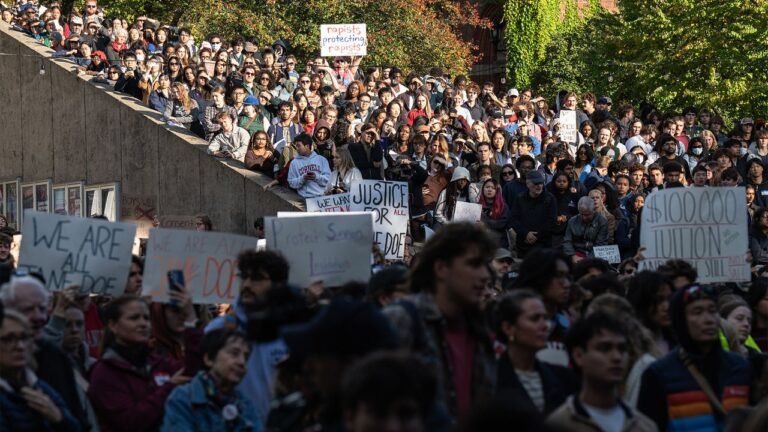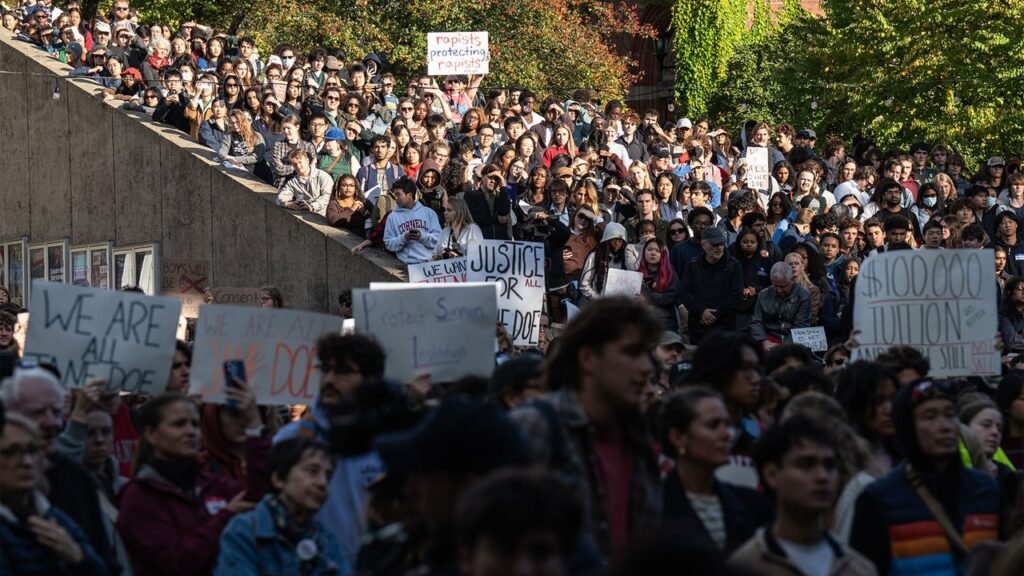
“I am Jane Doe.”
For weeks, that rallying cry has permeated social media as people have spoken out in support of Cornell University’s Jane Doe, who sued the university, Chi Phi fraternity, and seven of its members for allegedly drugging and sexually assaulting her.
Today (Thursday, October 8), the movement is expanding with nationwide “I am Jane Doe” protests planned.
Over 150 events are expected to take place under the banner “#StopSexualViolence: From the Frat House to the White House.”
Women’s March, Feminist Generation, me too. International, and Feminist are co-anchoring the “national day of action.”
The protests call “for justice for Jane Doe and other survivors, accountability for institutions that fail survivors, stronger federal protections and resources, and expanded support for student survivors on college campuses.”
Individuals have been using the phrase “I am Jane Doe” to share their own horrific stories of sexual assault, and as a means of protecting the woman’s identity after a political commentator vowed to dox her “for reasons of public interest.”
Local “I am Jane Doe” protest events and times are searchable on an interactive map published to the Women’s March website. Users can search their ZIP code, find out exact times and locations of the protests, and RSVP to attend.
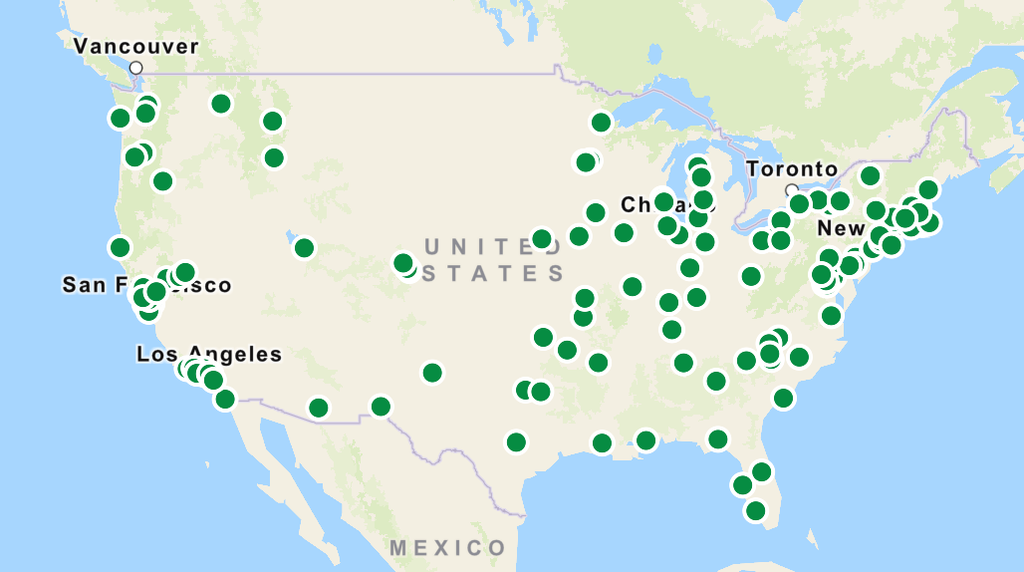
The core rally will take place at 5:30 p.m. ET outside the New York State Supreme Court in New York City’s Foley Square. This is the location where Jane Doe filed her civil lawsuit.
What does Jane Doe’s lawsuit allege?
On September 16, Jane Doe filed a civil lawsuit alleging that seven members of Cornell’s Chi Phi fraternity drugged and sexually assaulted her at their frat house on October 19, 2024.
The lawsuit claims that one of the defendants wrote “free p*ssy” in the fraternity’s Snapchat group chat, inviting other members to join in the assault; the complaint also includes a photo of the alleged message exchange. Another defendant is shown in the photo allegedly having written, “Like you can walk in and whip it out.”
Jane Doe further alleges that, over the course of multiple hours, she was continually pressured to take ketamine and gang raped.
In her civil suit, Jane Doe states that she reported the assault to the Cornell University Police Department on November 8, 2024.
In a statement about the case, updated on October 7, 2026, Cornell claims it spent several months conducting a Title IX investigation. It shared the results with the Tompkins County District Attorney’s Office, which chose not to bring charges.
Jane Doe also alleges that Cornell issued temporary suspensions to several defendants, and that some “were afforded the opportunity to mitigate their conduct by submitting essays to Cornell.”
Cornell states that expulsions and suspensions were issued in some cases. It also closed the university’s Chi Phi chapter in 2024 and has not allowed it to return to campus.
In a September 28, 2026, statement, District Attorney Matthew Van Houten said Jane Doe had previously not alleged to having been drugged or gang raped.
Yet, a transcript of Jane Doe’s conversation with Cornell police shows that she clearly stated: “I can say with 100% confidence I was raped” and that she was “completely and totally incapacitated,” according to CBS News. Van Houten has since told the publication that he never saw the transcript before making his decision not to pursue charges.
Van Houten has announced he’s reopening the case.
On October 1, New York Governor Kathy Hochul appointed Attorney General Letitia James as special prosecutor for the case.
“Newly released information continues to raise serious questions about the investigation conducted by the Cornell Police Department and the decision by the Tompkins County District Attorney not to prosecute an alleged sexual assault on Cornell University’s campus in October 2024,” Hochul stated in the announcement.
Echoes of #MeToo
The “I am Jane Doe” protests come almost nine years to the day after the #MeToo movement exploded worldwide with the New York Times’ Harvey Weinstein exposé.
While that earlier movement has since died down drastically, some wonder if the Jane Doe case could mark its revival. As Rachel O’Leary Carmona, executive director of Women’s March, put it in a Substack post: “Sexual violence has radicalized women before, and we are there again.”