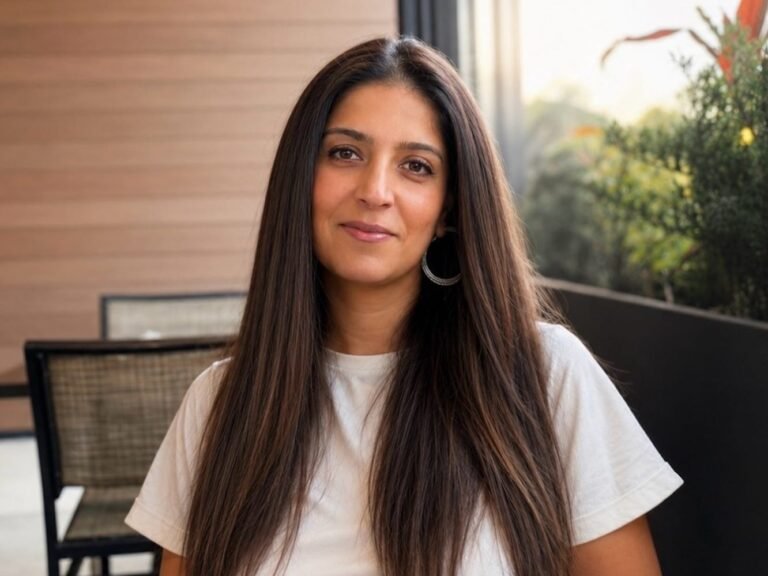
Sneh Hira
- Sneh Hira saw her team at Block expand during the four years she worked there as an operations manager.
- In February 2026, she was laid off, which she attributed partially to overhiring.
- While her job search was difficult, she said people’s willingness to help restored her faith in humanity.
This as-told-to essay is based on a conversation with Sneh Hira, who joined Block’s Afterpay business in 2022 and was laid off in February. She’s in her early 40s and lives in Chicago. The following has been edited for length and clarity.
I joined Block’s Afterpay business in 2022 as an operations manager. When I went on maternity leave in May 2023, I was the only operations manager on my team.
Over the course of the next several years, I noticed we were hiring more operations managers than the workload seemed to warrant. All the work that I’d been doing as one human was split across multiple people.
Then one day in February of this year, I checked my email and learned I’d been laid off. I remember wondering if it was a joke, and everything that followed was a blur. I later learned that many other employees had been affected.
Looking back, I thought the overhiring at Block and its efforts to integrate its different businesses may also have contributed to the layoffs.
Once the initial shock wore off, I knew I needed to figure out what came next.
My job search was difficult
The following week, I made some minor tweaks to my résumé and started applying. Even with about 20 years of professional experience, though, I wasn’t getting anywhere.
I was applying to so many jobs that I couldn’t even remember what I’d applied for the day before, so I eventually created a spreadsheet to track my applications, rejections, and interviews.
I got a few interviews early on, but I felt like I shot myself in the foot with two opportunities. Both would have required me to relocate — one to California and the other to New York. At the time, I wasn’t ready to commit to moving, so I effectively took myself out of consideration.
Afterward, my husband and I talked and decided we’d be willing to move for the right opportunity, even if it meant selling our house. I reached back out to one of the recruiters, but it was too late.
Another opportunity came up that I viewed as a backup option if nothing else worked out because the pay wasn’t ideal. I made it through several interviews but didn’t receive an offer. I found myself wondering whether the company thought I was overqualified for the role and might leave if something else came along.
That was probably the lowest point of my search. I’d shot myself in the foot with two opportunities, and now I felt like I was being passed over for my backup option.
AI came up in nearly every interview
As I kept applying, I started getting more interviews, and one topic came up practically everywhere: AI. Every company I interviewed with asked me how I’d used it.
I tried to be positive but realistic in my answers. I’d say I see AI as a tool that can help people work more efficiently and potentially save on some head count, but I see it as a tool to help people, not eliminate their roles. I also said I thought AI wasn’t perfect and still needed human oversight. Practically everyone I spoke with seemed to agree.
I also had one interview conducted by AI before I ever spoke with a recruiter. It was a horrendous experience.
All the focus on AI made me realize I needed to keep learning about it and pursuing certifications. However, with so much of my time focused on finding a job and trying to spend time with my kids, it was hard to find time to do that.
My job search eventually turned around
Even when I was getting rejection after rejection, I stuck to a routine. First thing in the morning, I’d look for new openings and apply. In the evening, I’d check again to see what was new. I also kept tweaking my résumé to better reflect my experience and the roles I was applying for.
Eventually, things started to turn around. I began getting interviews for fintech roles that aligned closely with my operations background. I was interviewing with a few companies at once — a big change from the months I’d spent wondering why I wasn’t getting anywhere.
I found an opening for a job at a fintech company and applied without a referral. My background and experience aligned well with the role, and I ultimately landed a fully remote job as a service delivery and partner performance manager. I started in June.
People’s willingness to help restored my faith in humanity
I think the routine and rhythm I developed around my job search were really helpful.
I was also struck by how willing people were to help. Former colleagues checked in on me, people offered to review my résumé, and others shared job openings or offered to connect me with people they knew. It restored my faith in humanity.
Now that I’ve landed somewhere, I want to pay that forward. If I see someone who’s been laid off, I want to help however I can.
Do you have a story to share? Reach out to the reporter via email at jzinkula@businessinsider.com, or via Signal at jzinkula.29.