Burrowed more than 100 feet in the ground, the concrete shell of one of the most fearsome pieces of Cold War infrastructure is being brought back to life. This November, the Twistflower Nuclear Missile Silo in Roswell, New Mexico, will reopen, not to house a nuclear missile, but to host a quirky three-day festival.
Named Atomika, the festival is described by organizers as a gathering of scientists, artists, and explorers for “immersive art, deep inquiry, and powerful music.” Speakers on the lineup range from UFO researchers to space explorers to professors.
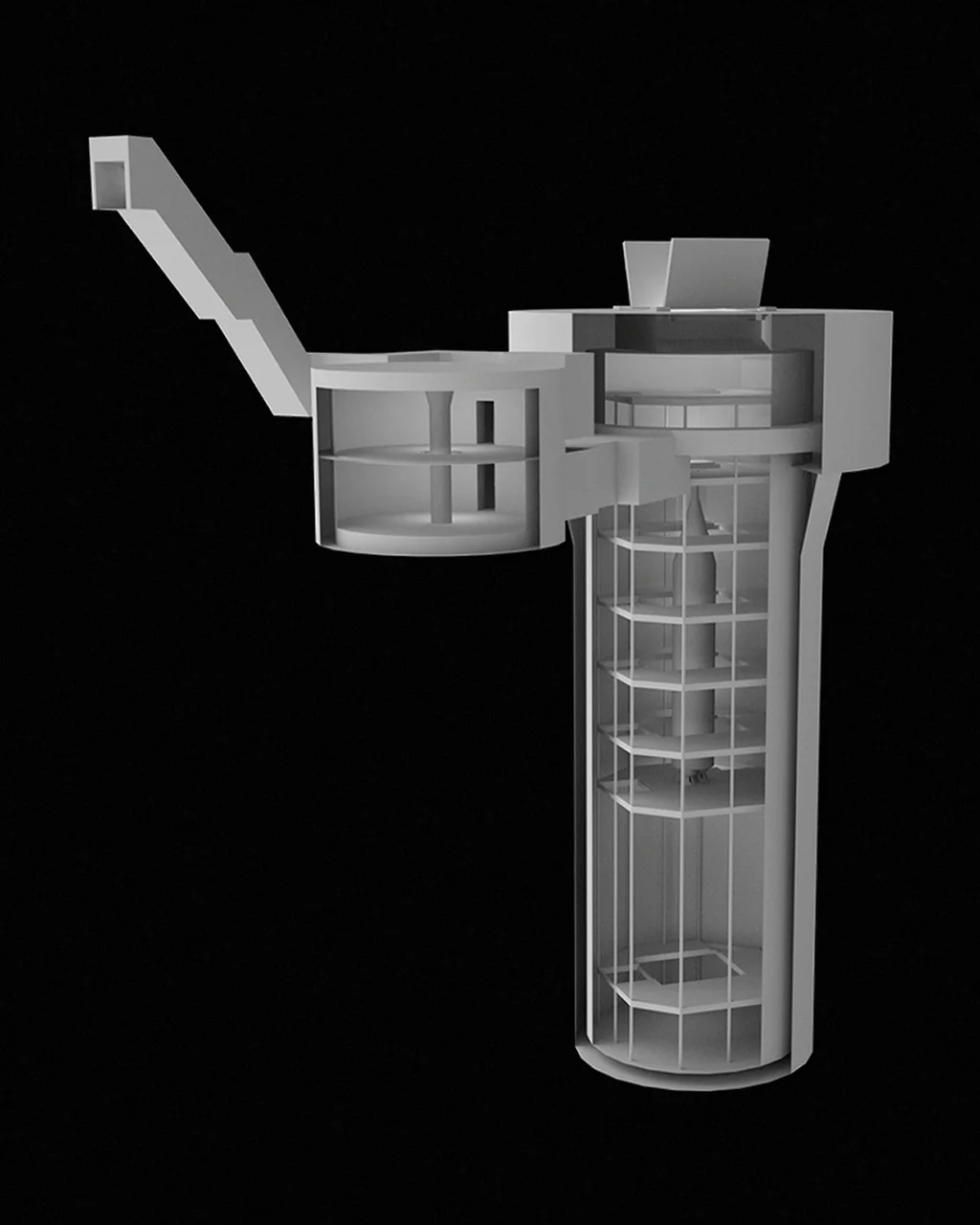
Set in and around this decommissioned nuclear facility—which Atomika now calls “a ritual site for interstellar imagination”—it’s an unexpected adaptive reuse project that could offer a guide for breathing new life into the heavy infrastructure of the Cold War.
Atomika’s founder, Nik Halik, calls it an effort to “change the polarity” of the silo, converting a space built to destroy into a positive gathering site where people can forge community around shared ideas.
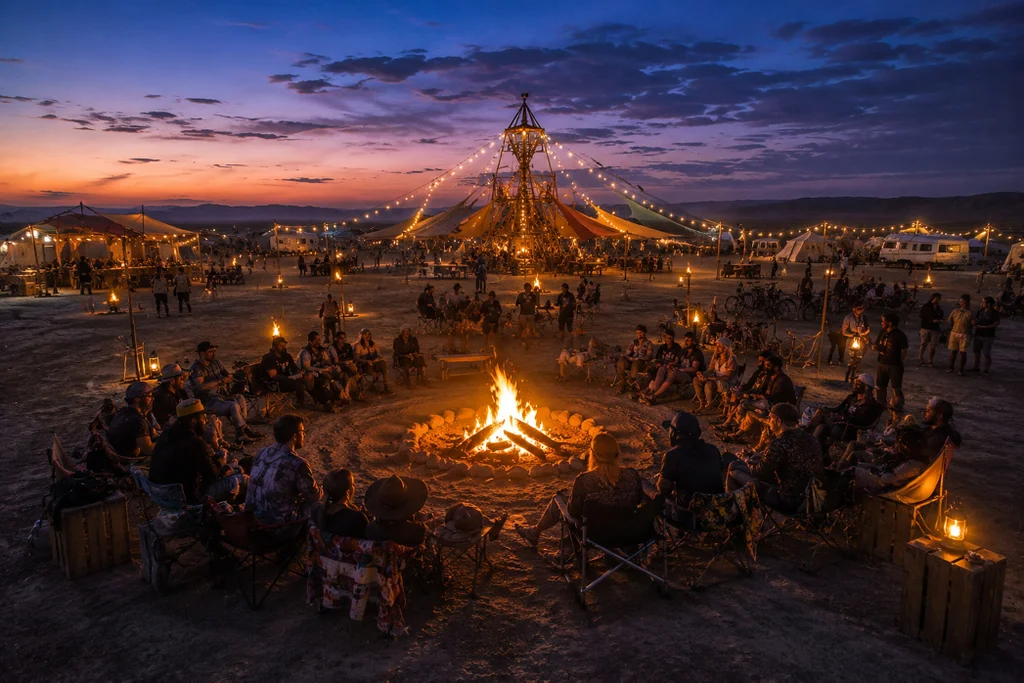
“Where I see festivals these days, the big pivot is people are seeking more authenticity and intimacy—these intimate forums, these grounds for exploration,” he says. “Just think, Burning Man meets Davos meets Area 51.”
Encountering military history
Like his festival, Australia-born Halik is unconventional. A one-time rock musician who got rich as a real estate and stock market investor, he has dived in a submarine to the wreckage site of the Titanic, and was a trained member of the backup crew of a 2008 flight to the International Space Station as a spaceflight tourist. He did not fly, however.
During his spaceflight training, conducted with cosmonauts in Russia, Halik was able to tour a decommissioned nuclear silo that once held a missile aimed to hit New York. “So I was kind of curious,” he says. “I wonder what the American ones looked like.”
That curiosity led to visits inside silos across the U.S.—and an eventual buying spree. “I own probably about 20% of all the underground nuclear bunkers right now across the United States,” he says. (He’s converting at least one of them into an AI data center.)
The Twistflower silo carried special resonance for Halik, given its connection to the U.S. side of the Cold War, as well as its location near the purported UFO crash site in Roswell, another of his interests. The silo was built in 1961 and housed a 100-foot-tall missile with a 4.5 megaton nuclear warhead capable of reaching Moscow. “Enough to wipe out 10 to 15 million humans,” Halik says. “The crazy thing was, there were five missileers in the launch control center and they were aged between 21 and 24. So they had the keys to the nukes.”
They very nearly used them. During the Cuban missile crisis of 1962, a nuclear standoff between the U.S. and the Soviet Union put the silo’s status at DEFCON 2, meaning it could be ready to launch within hours. That never happened, and the silo was decommissioned in 1965.
Repurposing a top-secret site
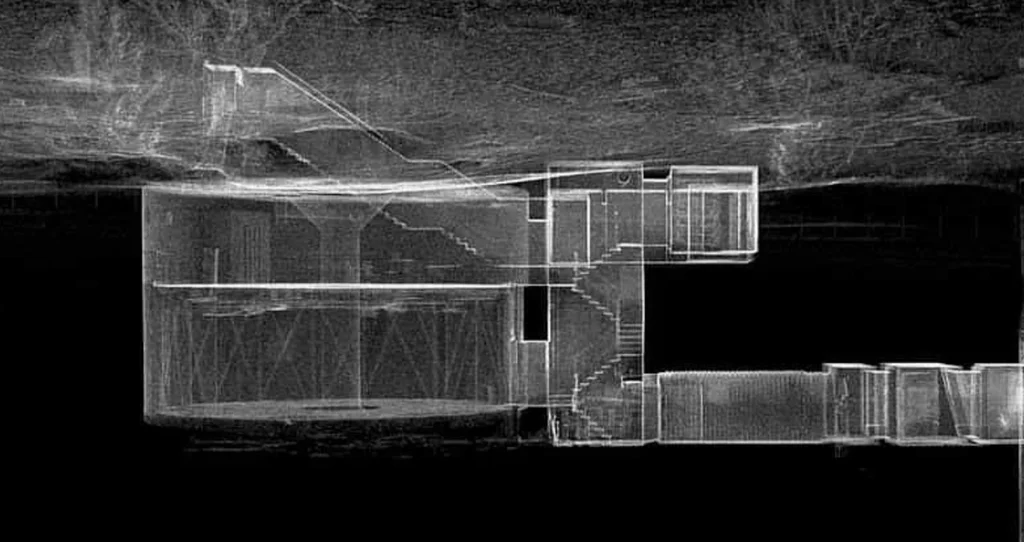
Halik bought the site in 2017 from Bob Lazar, known for claiming to be involved with secret UFO-related work for the U.S. government at Area 51. Making the nuclear silo into the center of the Atomika festival has involved converting a two-story above-ground launch control center into a kind of conference area, and outfitting the base of the silo with a laser that will project up to 12 miles into the night sky during the event.
Halik says the space required a comprehensive renovation, with the demolition of existing rooms in the launch center, removal of outdated plumbing and electrical conduits, and clearance of decades of accumulated debris and graffiti. New wood floors add warmth, while modern lighting plays up the silo’s brutal architecture and bomb-proof structure. A dedicated 1 megawatt power station has also been built on site, which Halik says will enable it to host Atomika and other events down the line.
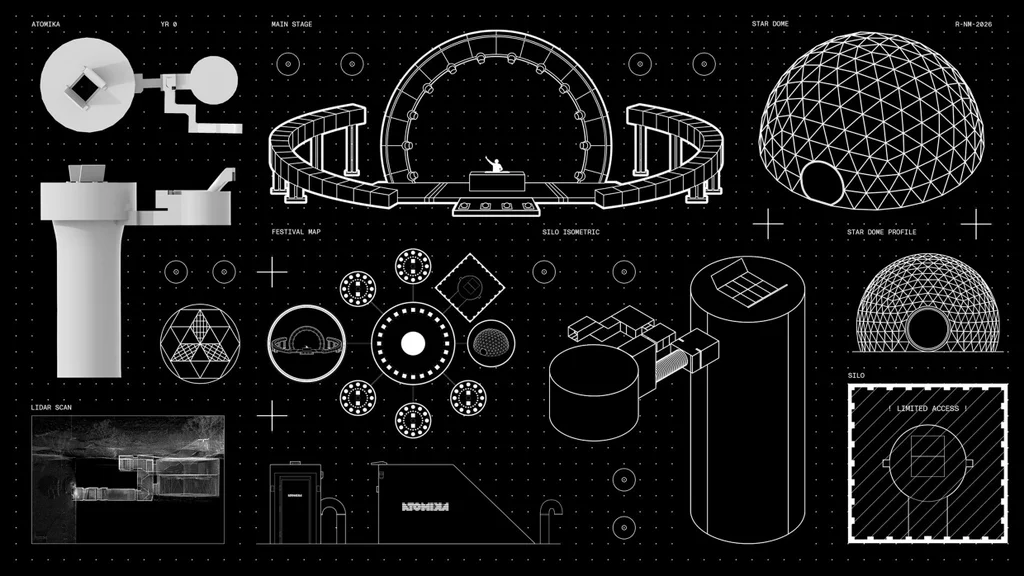
The Atomika festival lineup includes a mix of musicians, space explorers, and UFO researchers, including the ambient electronic musician Suzanne Ciani, the astronaut and aerospace engineer Chris Boshuizen, and the theoretical physicist Avi Loeb.
Spectacle aside, Halik says the nuclear silo offers a refresh of the conferences and conventions of the past, and a counterpoint to discourse that’s so often conducted solely in digital space. “In the last five years, it’s pretty much been an attention economy,” he says. “In the next five to seven years, I really see it being a reality economy, where individuals are seeking that off-grid, analog-type communication.”
Maybe that starts deep inside a nuclear silo.
The Atomika Festival runs November 6-8, near Roswell, New Mexico. Tickets start at $545.