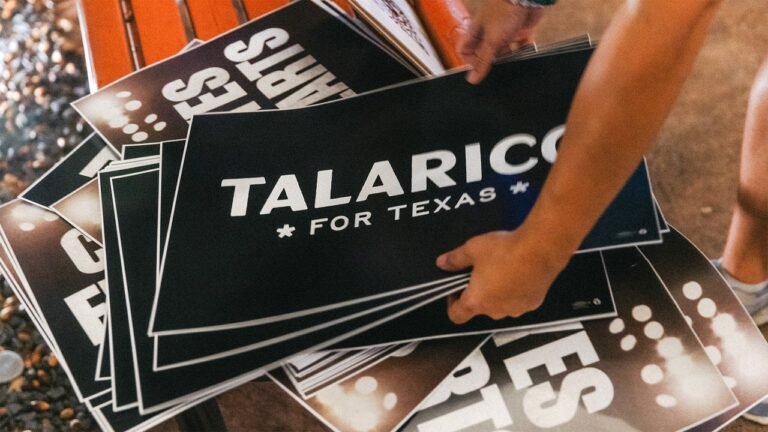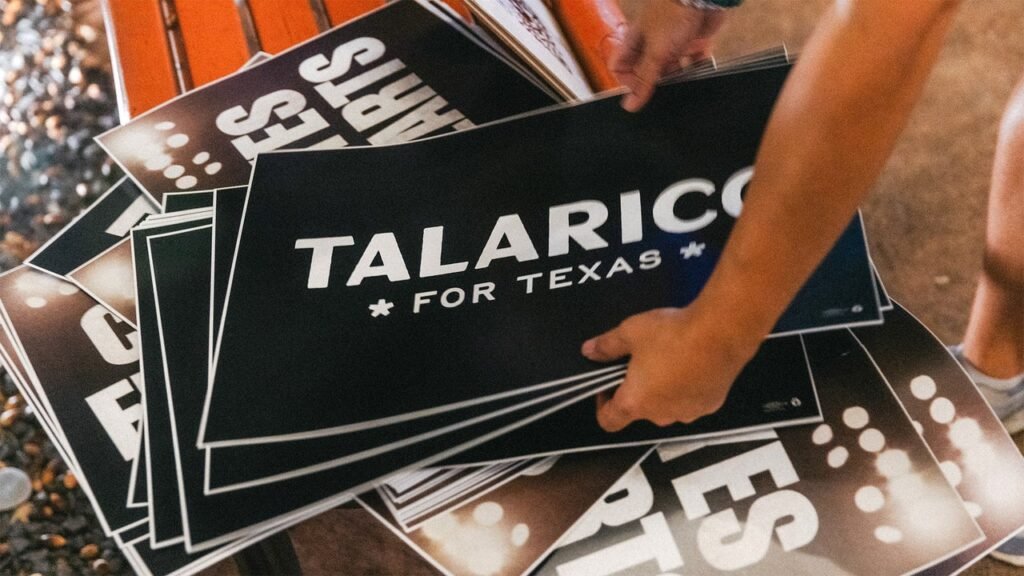
When Griffin Glaze, a graphic designer, got the job to design James Talarico’s campaign branding, she had just 10 days to do it. Talarico, a Texan who is running for a seat in the U.S. Senate, wanted something that looked unique and nonpartisan.
“A lot of what they were looking for was something that felt different,” Glaze tells Fast Company. The North Carolina designer came up with a visual identity inspired by hand-painted signage at Baptist churches, with texture and imperfection designed into its typography and asterisks for decorative Texas stars. Though they tried out different color palettes, they kept coming back to black and white because it didn’t feel linked to a political party.
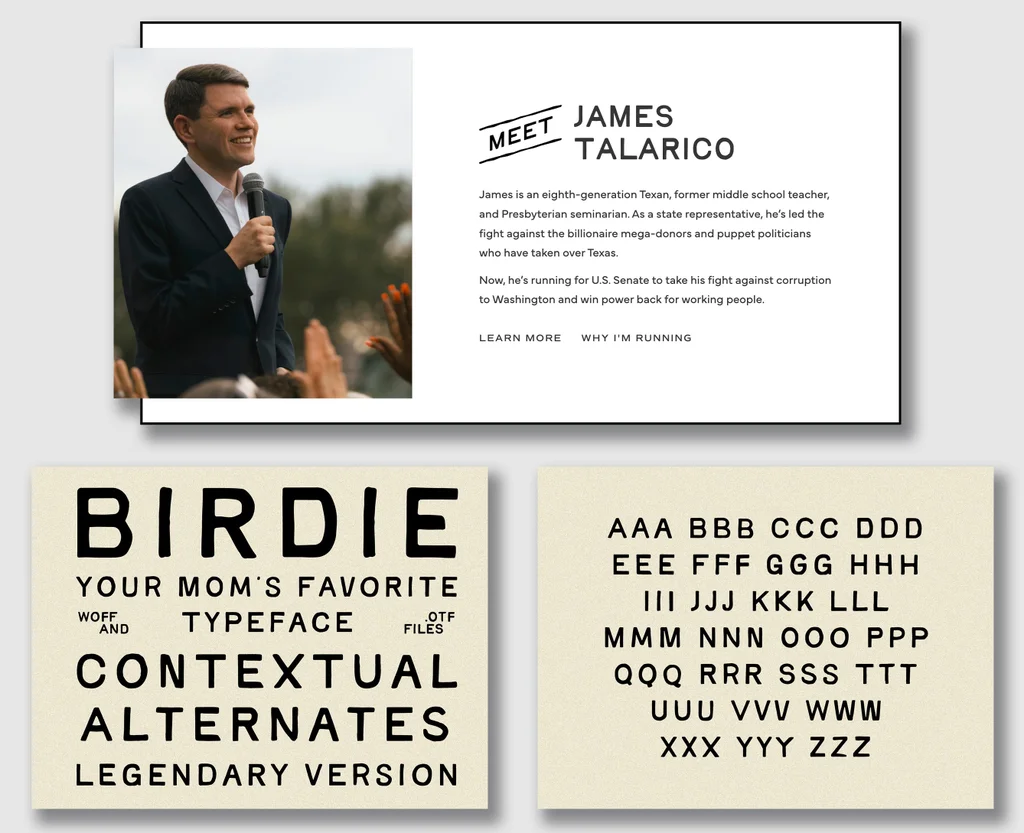
“I think for him, it was really about finding something that could be healing, more of a bridge builder, that when people saw it, they weren’t immediately jumping to a specific party,” Glaze says.
Talarico (full disclosure: he’s a Democrat) isn’t alone.
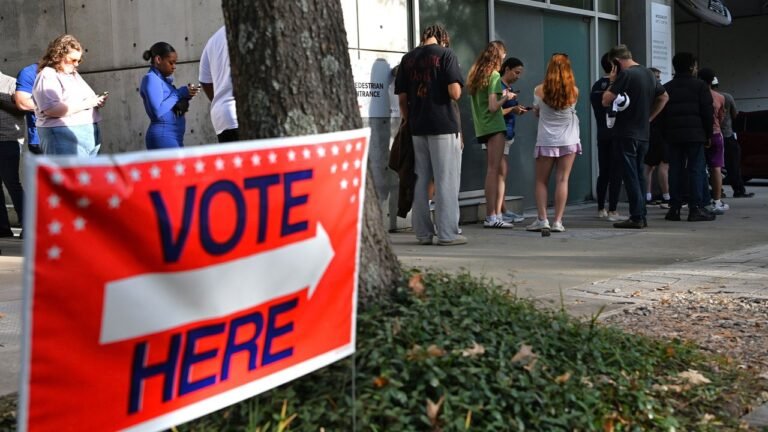
Across the midterm campaign, candidates have branded themselves to play down their party affiliation, and for good reason. Gallup polling earlier this year found 45% of U.S. adults self-identify as independent, a record high. In an environment where both major parties and the president are unpopular, candidates would rather not be associated with any of it, and it’s showing up visually in their logos, mailers, and advertisements.
For candidates actually running as independents, the trend towards less partisan branding means designing the word “independent” directly into their logos. But Democrats and Republicans too have found ways to signal a break from their parties.
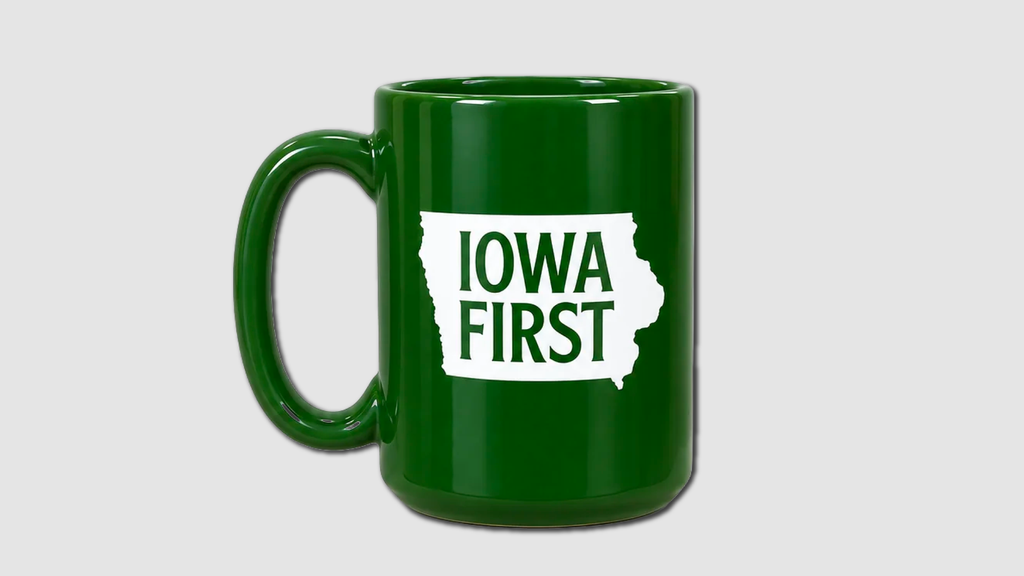
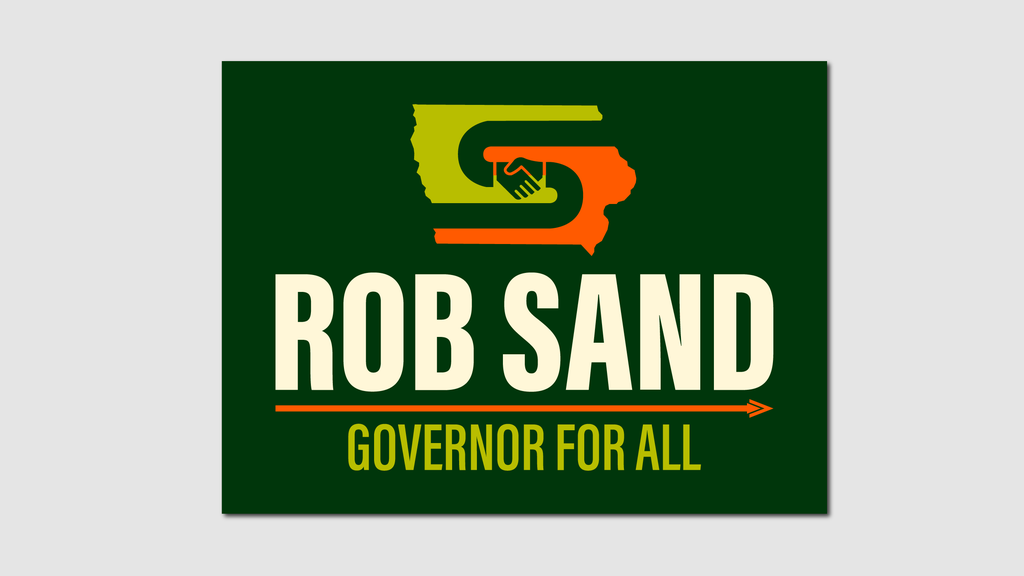
In the race for Iowa governor, neither campaign website mentions their party or President Donald Trump, and both candidates use green as their campaign color with logos designed to represent unity. The logo of Zach Lahn, a Republican, says “Iowa First,” while that of the Democrat, Rob Sand, shows shaking hands, above the tagline “Governor for All.”
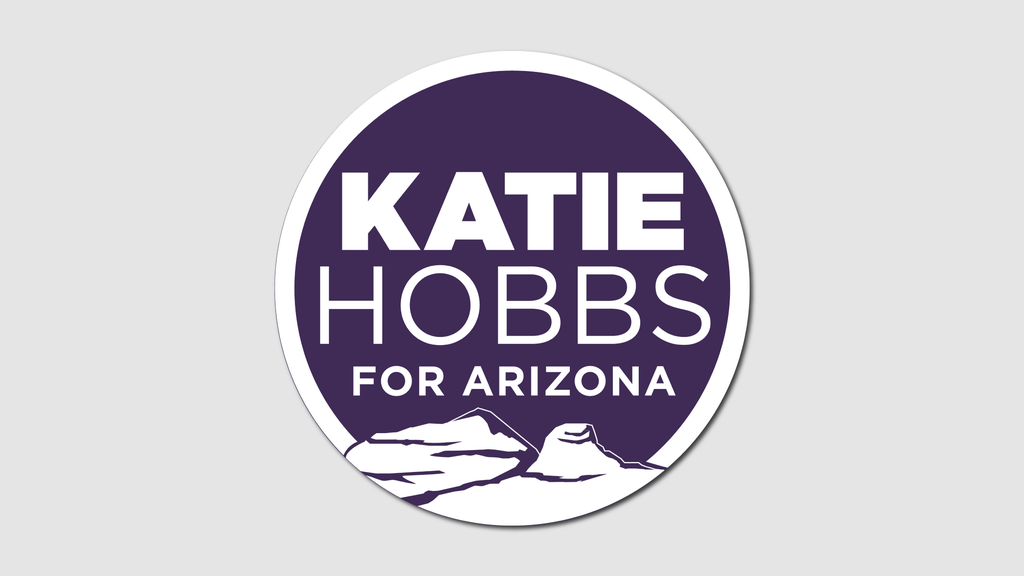
In Arizona, Governor Katie Hobbs, a Democrat, uses a circular logo with the tagline “For Arizona.” Her state party organization sent mailers to unaffiliated voters that play up elements of her record that would appeal to both sides, like public safety, slashing red tape (for conservatives), and expanding the state’s school lunch program and canceling medical debt (for liberals).
Tropes that were once associated with Republicans have gone bipartisan this year. Democrats are using their own versions of logos like Trump’s, inspired by the so-called “MAGA box,” or adapting his “America First” slogan for their own states to communicate that they’ll put their state ahead of party.
Scott Sutton, president and CEO of the New Jersey print shop Burlington Press, says that while most of the design and print work he’s gotten this year has been extremely partisan, it often comes in the form of attacking the other side for being too extreme.
“We’ve had several Republicans reference socialism to attack their opponents, and equally harsh criticism from Democrats against MAGA,” Sutton says. Even in their attacks, candidates are moving towards the center.
Candidates who play up their bipartisan appeal are trying to inoculate themselves from attacks like this. To show how centrist he would be in office, Adam Hamilton, a Kansas pastor and U.S. Senate candidate, stands in the middle of the field in his 30-second spot “Smack Dab in the Middle” and says, “Here in Kansas, we’re smack dab in the middle of the country” as a metaphor for moderation.
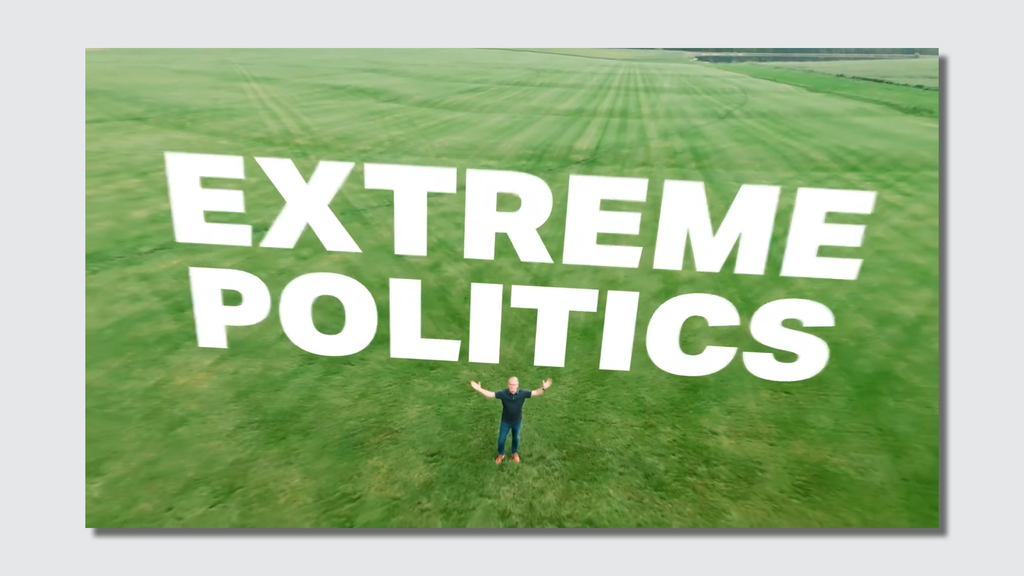
“We’re proud of being in the middle politically too, and that puts us about a million miles away from the extreme politics of Washington that are tearing us apart and driving up prices,” he says, but at no point does he mention he’s a Democrat. The closing tagline of the ad is “Time for Something Different.”
Among advertising for Republican House and Senate candidates, mentions of bipartisanship, working across the aisle, or “both sides” are up 60% from 2024, according to data from the ad tracking firm AdImpact. Mentions of Trump are way down as Republicans seek to distance themselves from him and his agenda.
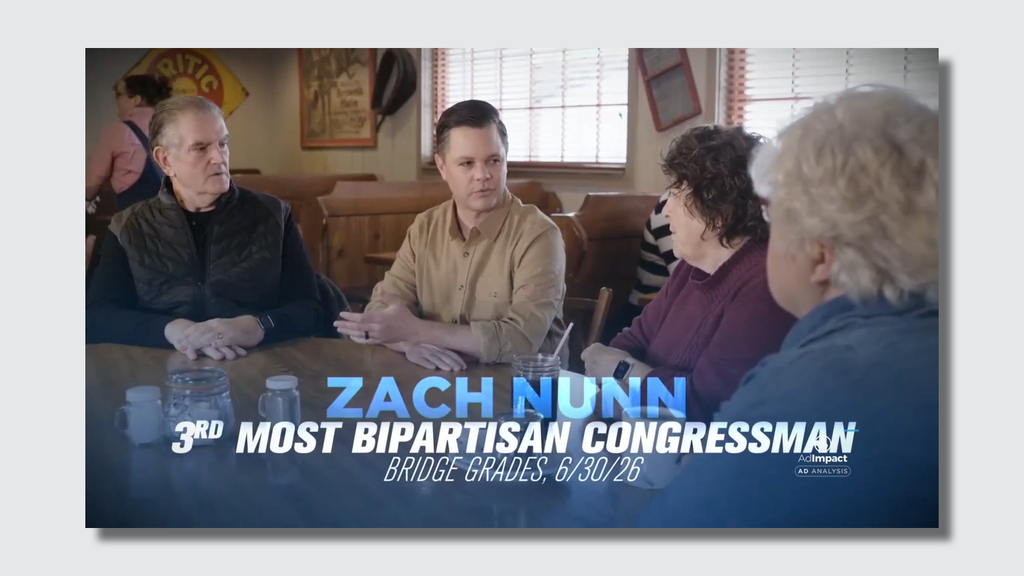
Mike Rogers, the Republican candidate for a U.S. Senate seat from Michigan, practically sounds like a Democrat in a recent ad. It shows him seated in bar with a Canadian beer in front of him, saying, “Canada is not our enemy” and that if elected, he’ll “end this tariff war. Now.” Zach Nunn, an Iowa Republican running for reelection in a House district the nonpartisan Cook Political Report rates as “Lean Democratic,” touts his ranking as one of the three most bipartisan members of Congress as a selling point in his ad “Iowa Comes First.”
Nearly six in 10 Americans have unfavorable views of the Democratic and Republican parties, according to Pew Research Center. Candidates branding themselves to stand apart from them this year are just taking their cues from voters.