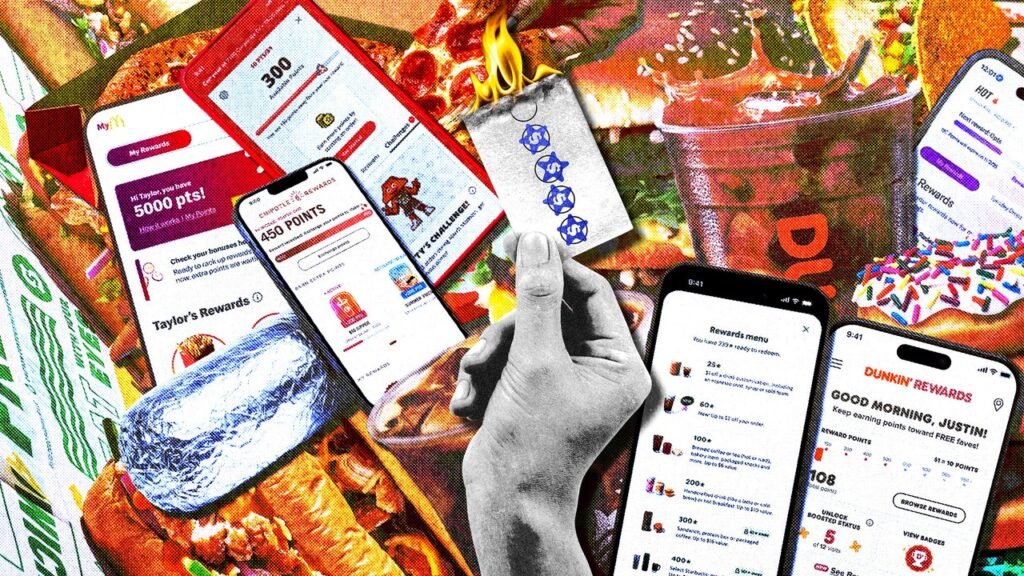
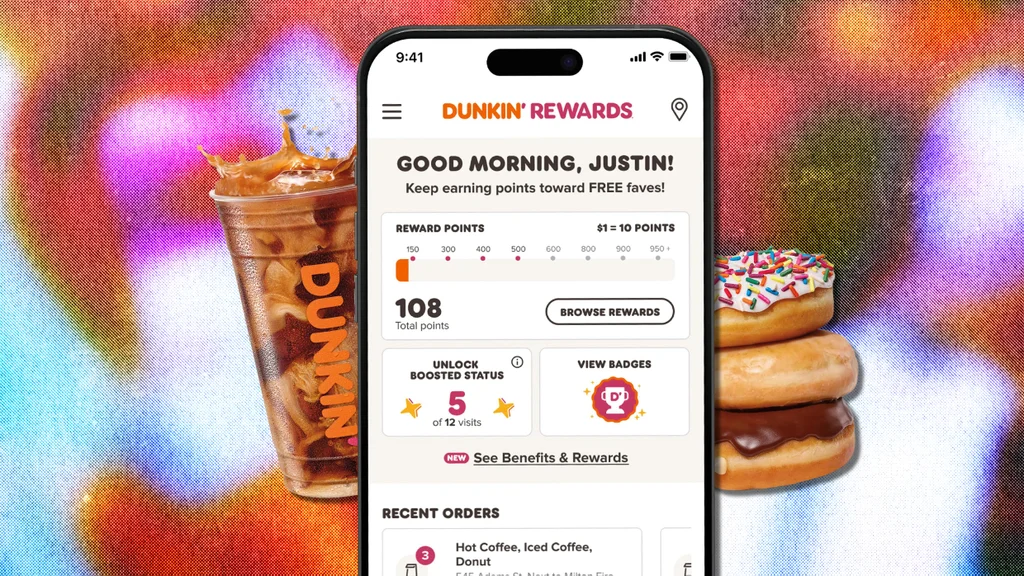
Aaron Braun had decided to play the long game with his Dunkin’ Rewards points. For five years, his employer, an IT company that kept him on the road, covered his coffee and breakfast via a company card linked to his Dunkin’ account, so he never bothered to redeem his points. In the Dunkin’ app, every purchase inches a progress bar further to the right, unlocking the first reward at 150 points, then topping out at 900. “My bar has been full forever,” Braun jokes.
Last year, he was staring at a stockpile of more than 93,000 points. He had hoped to reach 100,000, telling me that his two teenagers had just started driving themselves to school. “I was holding on to these for my kids,” he says. “The whole idea was that they could get Dunkin’.”
Then Dunkin’ started canceling points more than a year old. Braun, who is more serious about rewards than many people are—on our call, he mentions the Hertz and Lowe’s programs, remembers carrying the physical Starbucks card, and has held upper-tier status with JetBlue and Hilton—opened the app in the fall to find that his balance was off . . . by “about 63,800 points,” he says, equal to roughly $250 worth of coffees.
He is hardly the only chain restaurant customer who has watched a rewards program change underneath him lately. In the past year, Starbucks made it harder for members to earn reward points, which it calls “Stars.” Subway removed the free-footlong reward from its revived Sub Club and replaced it with Subway Cash. As of May, it now takes 7,000 points, or $70 of spending, to earn a free Big Mac at McDonald’s. And in August, Panera put a hard cap on its supposedly Unlimited Sip Club, prompting people who prepaid for a whole year to trade tips online about how to get around the forced-arbitration clause if they want to take legal action.
Some might argue that, at times, the entire restaurant rewards ecosystem can feel like an elaborate humiliation ritual. Once a month, Starbucks chooses a Monday when members can claim one free drink customization. Burger King Royal Perks members get a free soft drink on their “half-birthday,” provided they spend at least $1 (the chain’s soft drinks typically cost $1.50 to $2.50). McDonald’s recently let members trade 1,500 burger points for a one-month trial of Snapchat+.
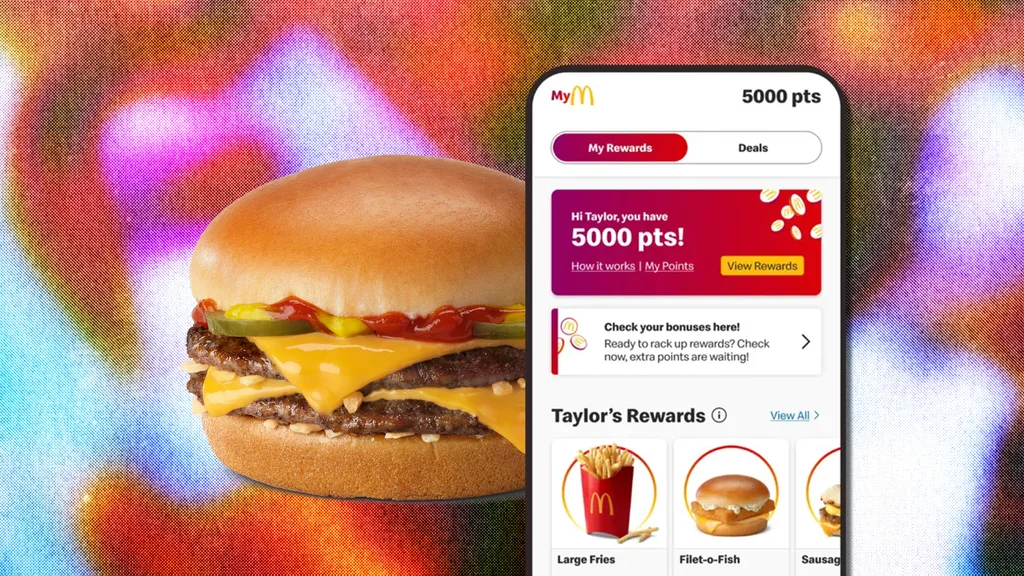
Unsurprisingly, a recent survey by restaurant technology firm Tillster found that dissatisfaction with fast-food loyalty programs has nearly doubled over the past year, from 15% to 28%. Meanwhile, more than a third of diners still belong to no restaurant loyalty program at all. That’s an ostensibly large, unclaimed slice of the consumer pie for somebody’s taking.
And restaurants have it easy. Practically every brand now chases loyalty in its own fragmented sector—travel companies, media outlets, fashion brands, even banks. But restaurants have a high number of customers already voluntarily placing orders through apps with accounts that log their personal data and shopping histories. Getting it right could unlock big bucks and position a restaurant brand well for the future.
The problem is the old-school bargain—spend X, get back Y—does not seem to work so well anymore. “That’s not really that exciting to consumers and it’s not really differentiated,” Zach Goldstein, CEO of loyalty software company Thanx, told Restaurant Business last year.
And a restaurant can only give away so much free food. When restaurants try to make rewards more sophisticated and involved—personalized, targeted, and engaging—they risk making the bargain less compelling to consumers.
Customers are already showing limited patience for this trade-off. In a recent Toast survey, more than half of diners said they’ve left a restaurant loyalty program because of “friction” around earning rewards—business lost before a habit ever formed.
Subway story
Maybe not coincidentally, the industry is currently in the middle of what’s been dubbed a “great rewards overhaul.” Pizza Hut, Cava, Burger King, Potbelly, Jimmy John’s, and surely others have been busy retooling their programs in the last 12 months. Three other chains I checked in with said they’re in the process of overhauling theirs, ostensibly for release by year-end or early 2027, but they declined to share details. Who, if anyone, is getting this right?
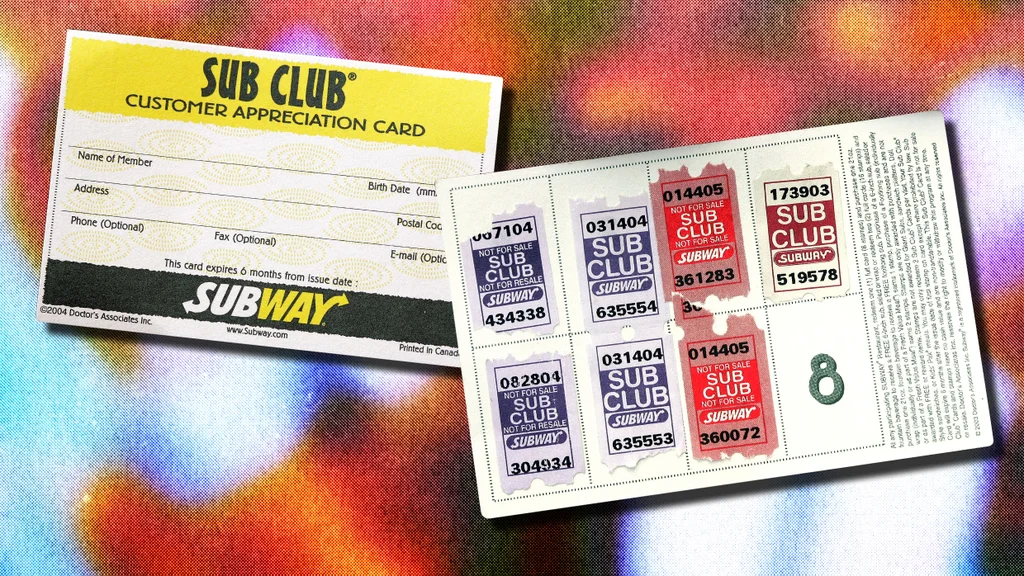
Subway has taken a few stabs at it. The sandwich chain was the one to introduce the first major fast-food rewards program, Sub Club, more than 40 years ago. Its wallet-sized “customer appreciation card” spurred a whole generation of copycats who tried to capture the same balance of value and simplicity. If you collected eight stamps on your card—two for a footlong, one for a 6-inch—you got a free footlong sandwich.
But the trouble with Sub Club, Subway eventually learned, was its simplicity.
“Employees would steal these rolls of stamps, which had thousands of stamps on them,” Bill Mathis, a 25-year franchisee who chairs the North American Association of Subway Franchisees and the Coalition of Franchisee Associations, tells me. “And they’d sell them or give them to their friends.”
By the 2000s, you could buy rolls of Sub Club stamps on eBay. People admitted to counterfeiting them with scanners and crayons. In 2005—the year it canceled Sub Club to many customers’ dismay—spokesman Kevin Kane said Subway was amazed to see the lengths some people would go to get the deal: “It wasn’t a cruise. It wasn’t a trip to the Bahamas. You’re getting free subs.” But he acknowledged fraud had become too widespread, and added the company had been debating “whether the promotion was outdated” anyway.
Yet last December, as the rewards-overhaul frenzy was shifting into high gear industrywide, Subway brought back Sub Club, fully digitized this time to thwart fraud, but offering a deal so good it felt like someone must be getting robbed: Buy just three footlong sandwiches, and the fourth would be free. Subway’s own paid partners even captioned Instagram posts with lines like “We lowkey unlocked the unlimited free sub glitch.”
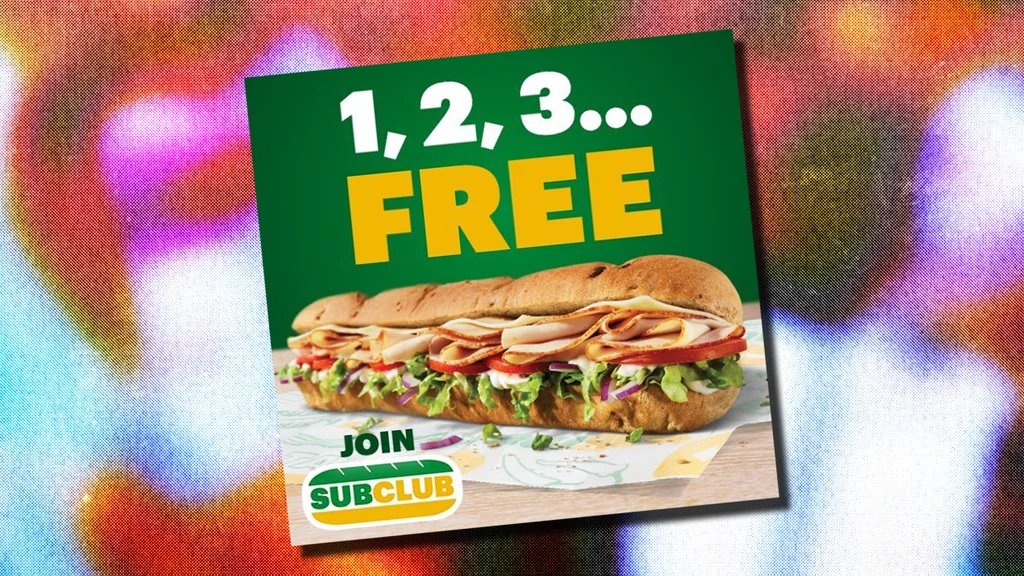
“Loyalty is becoming the new battleground,” Damien Harmon, Subway’s North America president, explained, calling Sub Club’s free sandwiches a simple reward that just required customers to count to four, rather than “always check the app.”
There was just one problem: Mathis says his 5,000-member franchise group warned Subway in advance that this deal “was not going to make economic sense” for them. (One franchisee took things a bit further, writing “Buy 3 get 1 free is financial suicide” on an internal message board.)
It wasn’t just free sandwiches, but the fact that all sandwiches qualified even when they were on sale, and that every purchase also earned “Subway Cash” to spend later. “If Subway mandated an offer for a $6.99 footlong,” Mathis told me, as an example, “a customer could spend $21 to get a free $10 to $13 sandwich and still accumulate some Subway Cash.”
This past April, Subway canceled the free-footlong deal for the second time in 20 years. What remained of Sub Club was an offer granting $2 of Subway Cash for every 400 points. Customers got 60 days to redeem any free subs they’d earned.
Responding to questions from Fast Company, Subway chose not to discuss the specific changes to, or the future of, Sub Club. But a spokesperson did say that Subway believes loyalty is “a necessary part of doing business in today’s QSR industry,” and Sub Club remains “an important part of our approach to building lasting relationships with our guests.”
“I can do the math”
After his point count dropped, Braun contacted the Dunkin’ help desk to plead for some sympathy, but he was told the policy was the policy. “I’ve proved my loyalty to you,” he recalls saying. “It would be nice if you could show some to me.” (Dunkin’ didn’t reply to Fast Company’s request for comment.)
Braun can’t help comparing Dunkin’ to Hilton, where loyalty ensures that “you get parking spaces up front, the best room in the house is waiting for you, you can check in anytime you want, and there’s a bag waiting at the front desk when you check in with treats and snacks.”
He understands the bigger economic picture, of course, that erasing rewards points makes a company’s balance sheet look better. When a chain awards points for a purchase, it has to put a dollar value on them and carry that amount as deferred revenue, a liability, until the points are redeemed or expire—and only one of those outcomes costs the chain any food.
Say you visit Subway and buy four $10 footlongs, which earns you $2 of Subway Cash under the Sub Club policy. Subway can’t count the entire $40 you’ve spent as revenue yet—it has to hold some back to cover the $2 you’re now owed. But if you wait too long to redeem those two dollars, the credit expires, and Subway can recognize the previously deferred revenue. (The accounting term for this is breakage.)
Chains are not getting rich from breakage. But how much they earn from it is hard to pin down, and the reasons hint at how this stuff gets so complex. No publicly traded brand I looked at reports breakage separately. Chipotle comes closest, disclosing $81 million in Chipotle Rewards liabilities as of June.
Meanwhile, private companies (Dunkin’, Subway, Panera) don’t publish their finances. For the big franchise chains, there is another complication: The corporate parent develops the rewards program and collects royalties from it, while franchisees often absorb much of the cost of the free food.
And the sums can be significant. Starbucks lumps unredeemed Stars in with unspent gift cards; the two added up to $1.74 billion last quarter. One industry estimate puts unused U.S. loyalty points, across all industries, at $10 billion per year. Chains get to set their own expiration clock. The shorter it runs, the more breakage a chain will likely claim, and the sooner it can count that money as revenue.
Even if points haven’t expired yet, their buying power can still always be shrunk. Take the Dunkin’ Rewards overhaul: The expiration date crept forward, but the company also increased the points needed for rewards. A single drip coffee climbed from 500 to 600 points, and cold brew increased from 500 to 950 points.
This past year, McDonald’s made a similar devaluation maneuver across several global markets, drawing rants from as far away as Australia; the Today show there warned viewers that “Macca’s has rejigged how many points you need,” calling the points “not real” and “a fake currency created to incentivize your loyalty” that the company can revalue “anytime they like.”
Customers have watched years of “rewards inflation” hit Starbucks, too. The fabled Gold Card that debuted in the 2000s—a literal gold-colored card with members’ names inscribed—once offered free add-ins, free extra shots, and free drinks for as few as 12 Stars.
In 2015, the company switched how Stars were awarded, requiring drinkers of $2 plain coffee, for instance, to visit more than 31 times to earn the free item they used to receive after 12. A regular customer named Greg Sesek made the news for writing “I can do the math” across his rewards card and dramatically cutting it up in protest.
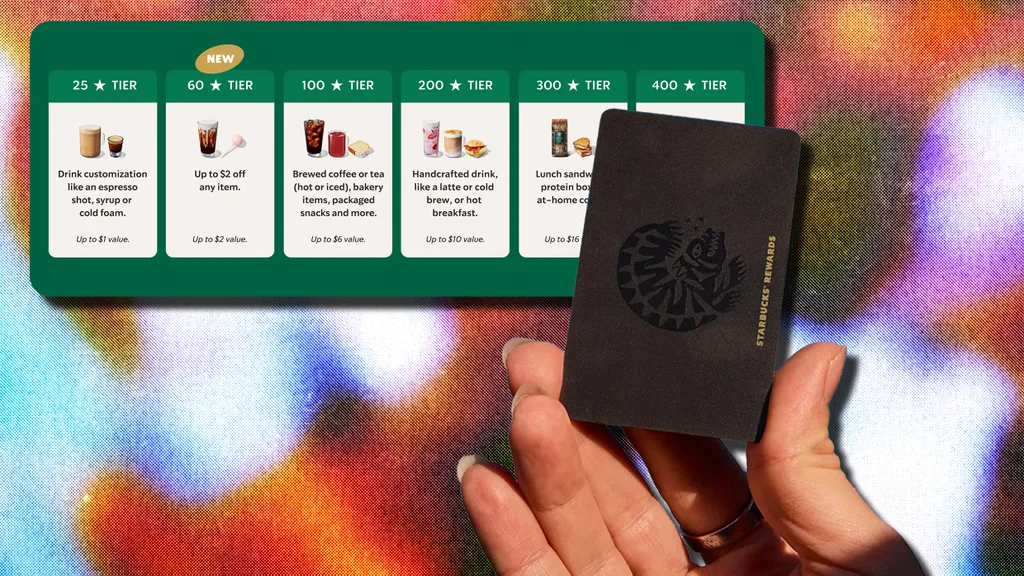
This past March, Starbucks revamped its rewards program again, sorting members, who all used to earn 2 Stars per dollar spent, into Green, Gold, and Reserve tiers. The top Reserve tier now earns 1.7 Stars per dollar, and the base Green tier earns 1 (before reload bonuses). Reserve members get a metal card but have to spend a lot to keep it active—the equivalent of $1,470 a year, or $575 more than the annual American Express Platinum fee.
It now costs 25 Stars for extra syrup at Starbucks, 100 for a brewed coffee, and 300 for a sandwich. On the other hand, members also get a “secret” drink menu, plus special Triple Star Days when they can earn “triple Stars on their entire purchase.”
Explaining the overhaul to investors, Starbucks was blunt. “We had to stop doing all that discounting,” CEO Brian Niccol said, adding the lesson was there is no need to “make our rewards program a coupon book.”
Echoing the larger industry lately, Niccol was saying that the rewards model has been redesigned to make the economics work better for Starbucks without giving customers a reason to stop coming. The part left unsaid involves figuring out how much the bargain can change before customers notice.
The Marriott model
Many brands have taken a page from airlines, which pioneered the modern data-driven loyalty program that offers personalized perks.
When American Airlines launched AAdvantage in 1981, it had a crucial edge. Its sophisticated computer reservation system, designed by IBM and known as Sabre, was the first to be able to link passenger names and other identifying information across ticket purchases, allowing the airline to identify who its best customers were and where they traveled.
Hotels recognized the genius of this quickly. But they didn’t have “miles” as an easy currency to calculate points from, so their programs grew more elaborate—and sometimes too generous.
Holiday Inn’s Priority Club launched in 1983 and shut down just three years later—in a preview of the Sub Club problem—after offering as the top reward available a free week at a Holiday Inn worldwide, round-trip flight, and car rental. By 1990, these programs were reportedly consuming up to 3% of revenue at certain hotel chains. Yet as many as half of the members said eliminating them would impact their choice of hotel, making it a risk for a chain to drop its costly program.
Stowe Shoemaker, a University of Nevada, Las Vegas, professor and former dean of its William F. Harrah College of Hospitality who worked with Hyatt, Hilton, and Accor on their loyalty programs, has called this the hotel industry’s version of the prisoner’s dilemma: Chains would be better off if they spent less on rewards, but the incentive is for them to keep their programs running as long as their competitors do.
Meanwhile, the hotel business was evolving in a way that made the programs even more indispensable, Shoemaker says. Hotel companies were, ironically, beginning to operate more like franchised restaurant chains.
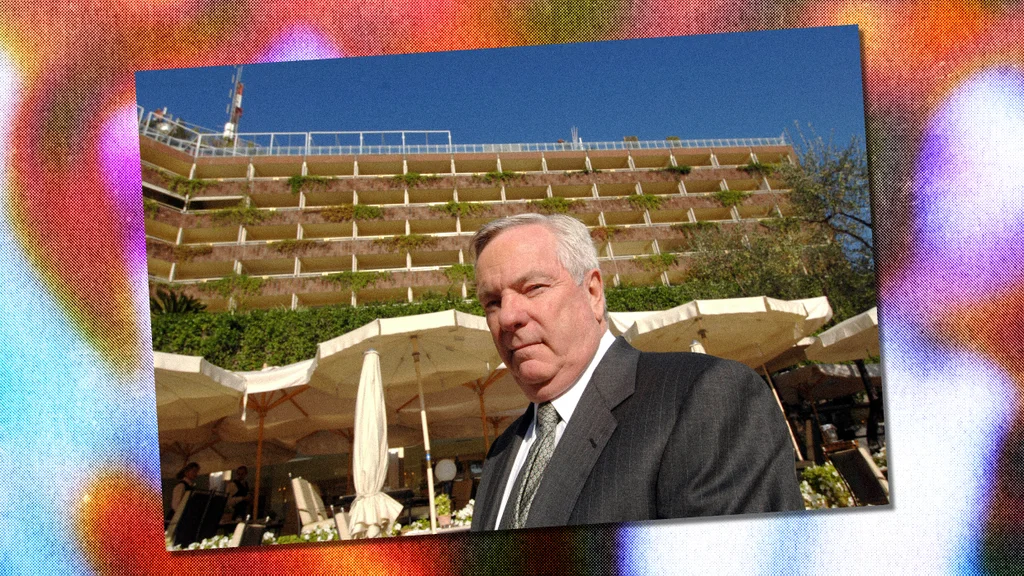
Marriott got there first, thanks to a then-controversial move by its CFO, Stephen Bollenbach, during the early ’90s real estate collapse. He split the company in two, separating its physical hotels and debt into a separate firm and turning Marriott into an “asset-light” hotel company that licensed its name and operating expertise to property owners in exchange for fees and a role in putting Marriott’s “heads in beds,” as the phrase goes.
Marriott’s top rivals followed. Under the model, Shoemaker says, hotel brands went primarily into the business of selling their image. “To win property owners to your brand, you have to provide them with a lot of data about who you can put in their rooms,” he tells me. A loyalty program was the obvious pitch.
During this time, customer databases were less sophisticated at chain restaurants, but these brands wanted their own version of “butts in seats.” At the turn of the millennium, arguably the two most successful promotions in fast-food history were running: Sub Club, a low-tech adhesive-on-paper phenomenon that became a fraud magnet, and the McDonald’s Monopoly game.
Monopoly yielded so little actionable data on who was collecting the pieces that an ex-cop famously rigged it for almost 13 straight years—1989 to 2001. Conspirators included a Colombo crime family member who, unknown to McDonald’s, appeared in a Monopoly commercial holding the keys to the Dodge Viper he’d “won.”
Shoemaker tells me soon he was brought in to advise Lettuce Entertain You Enterprises and Tilman Fertitta’s Landry’s restaurant-and-casino empire, which were the first to build restaurant loyalty databases. They learned the hotel industry’s lesson: The more they knew about their guests, the more effectively rewards could be targeted, and the easier it would be to expand by recruiting new restaurant owners.
By the time fast food caught on in the late 2000s, the playbook was waiting. Starbucks, which launched its program in 2008, quickly adopted elite status tiers and a personalized card. MyPanera followed in 2010, with a profile stored on each member that tailored rewards to their purchase history.
Today, Dunkin’ belongs to Inspire Brands, a holding company created by private equity firm Roark Capital, whose founding CEO, a former hotel executive, set out to build the Hilton of restaurant franchising.
Chipotle hired an expert from the hotel world, too. In May, it named Arlie Sisson, Hyatt’s former global head of digital, as its first chief digital officer. She is the first industry executive to tell me that having the data to personalize rewards changes what restaurants can offer, in part because the stakes are lower.
“I don’t have to build a pool,” she says, of the ease of thinking about smaller-scale personalization. “Do you want a tortilla? Do you want an entrée? Do you want a free beverage? What is it that really makes you tick?”
As it happens, before Braun was a Dunkin’ regular, he was a young front office manager at the Swissôtel in Boston. The chain flew all the operational managers to New York in the ’90s and put them in a room for two weeks to create Swissôtel’s first frequent-guest program. Braun says the guiding principle back then was simple: “The people who were super loyal to us, we were super loyal to them.”
Swissôtel is owned by Accor today. Its rewards program hasn’t changed much since 2008 but now has more than 100 million members, double what it had five years ago.
Have it your way?
Restaurant chains’ rewards programs are now so complex and gamified that they barely resemble Subway’s simple stamp card. There are layers you have to unlock. Leveling up to a new tier raises your earning rate, completing in-app challenges awards badges, referring friends yields special discounts, and sometimes one perk costs you another. (Use your birthday discount—or pay full price so your purchase streak stays alive?)
Every new layer yields more data but takes chains further away from what members say they want most. In a recent survey by Alchemer, 85% of fast-food loyalty members named saving money as their top priority, not status or cool perks.
Still, chains continue embarking on elaborate rewards program vision quests. Taco Bell’s newly redesigned app goes “far beyond just an earn-and-burn-type program,” Yum Brands CEO Chris Turner told investors in July. It features a “loyalty hub” that over the coming year will add things like group ordering and personalized profile avatars.
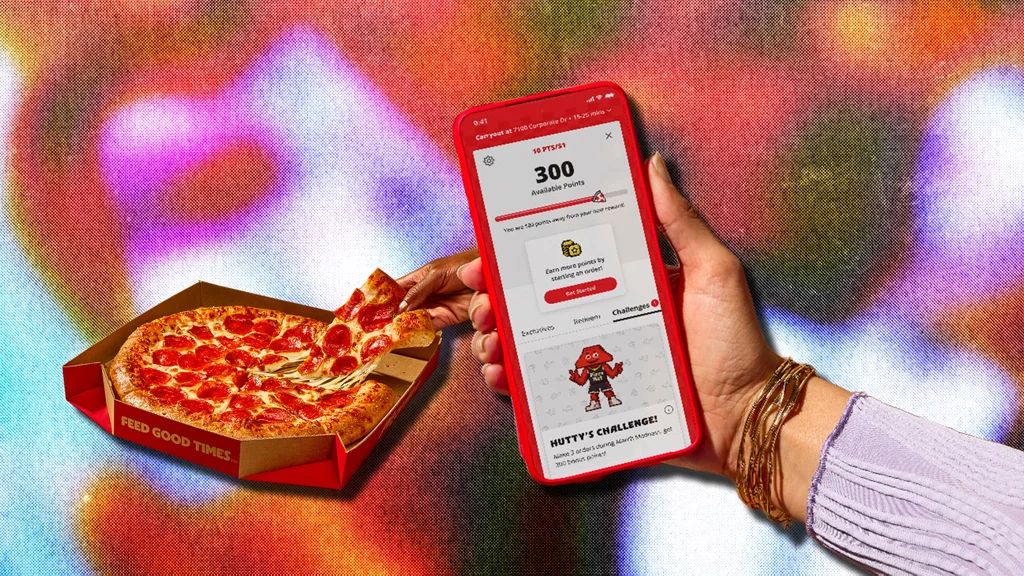
This past spring, Pizza Hut announced that Hut Rewards had been transformed into a “next-generation membership” full of “exclusive experiences . . . designed to feel distinctly member-only.” This involved releasing limited-edition Space Jam merchandise and increasing the points earned from 2 to 10 per dollar, but raising the redemption prices dramatically so that some rewards were much harder to earn.
Chipotle’s Sisson tells me she is discovering a pattern in the restaurant sector where rewards programs either are too invasive or lazily lump everyone into the same “massive tiers.” Both are “the bane of my existence,” she insists, “because they are making a bad name for all of us.”
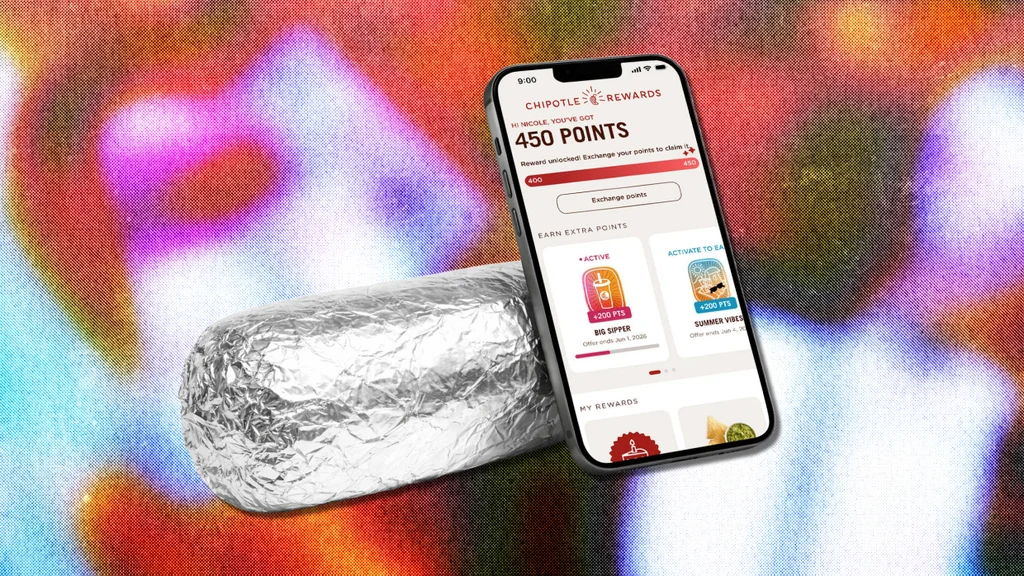
Chipotle’s recent “Summer of Extras” promo had its own leaderboards and bonuses for streaks, but Sisson calls the gamified element “additive”—not essential to play, but itself an example of ways the program is being personalized. Some Chipotle customers want to complete quests on an app, she says. “For those who don’t, fantastic, we’ll just reward you in the background.”
Over the summer, Chipotle released chile-lime chips, its first pre-seasoned chip, as an exclusive to members through the app. The company has said that since relaunching the program in April, its least-frequent guests have shown the largest uptick in visits—evidence, she says, that Chipotle is doing something right.
Shoemaker writes about the “trap” of believing that purchase frequency equals customer loyalty. It can work if brands “use the information gathered during frequent visits to focus on components of the loyalty,” he says.
The example he gives is a coffee shop’s 10th-cup-is-free offer—by the 10th cup, staff should know the regular’s name and maybe their order and even an interesting fact about them. But if brands ignore this customer personalization, he warns, they “disregard the emotional and psychological factors that build real commitment. . . . Without that commitment, customers focus on the ‘deal’ rather than the brand.”
Somehow, Braun is still a regular at Dunkin’. It is just too embedded in his Massachusetts routine, he admits, right there before he gets on the highway to go to work. He had actually just picked up coffee for his kids on the day we spoke. This was convenience, not loyalty, he says, and maybe Dunkin’ is banking on not needing the latter anymore.