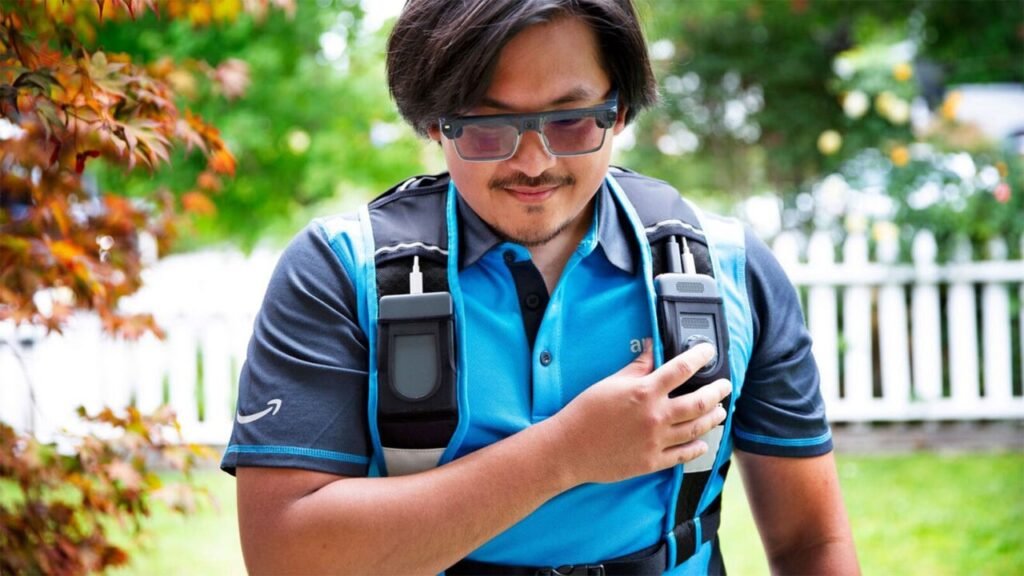
Your next Amazon delivery driver could be sporting a new look.
Amazon plans to roll out 5,000 of what it’s calling smart delivery glasses, which were designed in-house, to delivery drivers this year, with a goal of equipping more than 20,000 drivers with these gadgets by the end of next year. The smart glasses are intended to guide drivers through every step of a delivery while freeing up their hands, the Seattle-based retail giant said in a recent announcement.
“After exploring a range of different approaches, we landed on smart glasses because they solve the core problem: They put everything a driver needs directly in their line of sight, using a design that’s comfortable and familiar, so their hands are just carrying packages and their eyes stay up,” Amazon said in a statement.
“The glasses guide drivers through each step, from confirming the right packages are in the van to surfacing customer delivery preferences on the walk to the delivery location to capturing proof of delivery automatically.”
The glasses provide various helpful prompts to the delivery driver, including how many packages are associated with a particular stop, navigation instructions, and customer delivery preferences. But others—like an audio alert that a pet may be present—a driver could presumably deduct on their own.
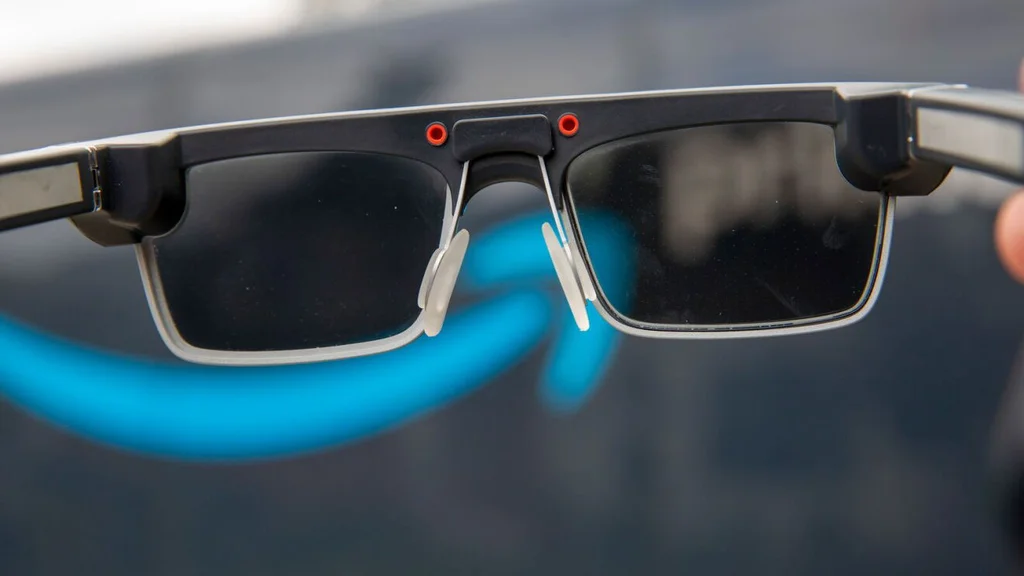
Though many consumers still find smart glasses to be “creepy”—thanks to the related privacy, security, and ethical concerns—Amazon says it designed the glasses with privacy top of mind. The company said the camera on the glasses only captures still images, as there’s no video or audio component, and every image is automatically anonymized.
Potentially identifying information captured by the smart glasses, like faces or license plates, will be detected and blurred, according to Amazon. “The blurred images are encrypted, accessible only to a limited number of people who need them to improve the delivery experience and reduce delivery errors, and automatically deleted after a short retention period.”
As is already common now, the Amazon delivery driver may capture a photo of a customer’s package upon delivery. And while the company said it’s “entirely optional” for drivers to wear the glasses, it doesn’t seem that customers can opt-out—other than by not shopping from Amazon, of course.
DRIVERS SOUND OFF
In its announcement, Amazon painted an idyllic picture of how the privacy of drivers, too, will be protected—including with a switch to turn off the camera whenever a driver chooses. Suffice to say, some people are more than a little skeptical.
On a Reddit forum intended for Amazon delivery service partner (DSP) van drivers, however, the new smart glasses have been a frequent topic of discussion in recent months. In one, several people sounded off about what they saw as a wide range of privacy concerns with the glasses—including that their bathroom breaks would be captured—while others expressed frustration that Amazon designers are out of touch with the actual needs of delivery drivers.
One Redditor predicted that Amazon will be sued after drivers realize they’re being recorded using the bathroom and urged drivers to carry a thermometer to capture the temperature inside a delivery truck or van, which can reportedly be much more extreme than outside. “They’ll quietly make these glasses disappear here in like 8 months,” the person posited.
Still others worry that the new smart glasses are part of a more nefarious goal for Amazon to gather data that it will eventually use to train AI delivery robots. “I don’t want to train my replacement,” wrote one Redditor. Another posted: “We are one step away from being replaced by robots.”
Amazon didn’t immediately respond to a request for comment from Fast Company regarding these types of concerns.
IMPROVEMENTS FROM DRIVER FEEDBACK
But Amazon has had an opportunity to address any concerns raised during a trial phase, in which more than 300 DSPS and hundreds of their drivers began using the delivery smart classes beginning in 2025. The feedback it has received has been “strong,” the company said
“Hundreds of drivers shaped the design through ride-alongs, lab tests, and pilot programs, and their feedback led to improvements like moving the computing hardware and battery off the headset into a small controller worn in the delivery vest to improve comfort over a full shift,” Amazon said. “Since our first prototype, we’ve made hundreds of updates to both the software and the hardware, and they keep getting better.”