
As the war in Iran raised global oil prices, oil emissions dropped and solar and wind power expanded.
That led to a slight decrease in global greenhouse gas emissions in 2026. But it’s not a sign that we’ve turned the tide on fossil fuel use, experts warn.
Global carbon emissions from fossil fuels are projected to decrease by 0.4% in 2026, according to a report presented at the COP31 climate talks hosted in Turkey and published in the journal Nature.
That change was driven by a drop in oil emissions, which will be about 1.9% less than the year prior.
Oil emissions declined as gas and diesel pump prices rose 10% to 50% across the United States, China, and the European Union, compared to 2025, the researchers note.
But this change in global emissions is “not a sign that emissions have peaked from the transition to cleaner energy,” they write.
In other words, there hasn’t been a global turn away from fossil fuels and toward renewables.
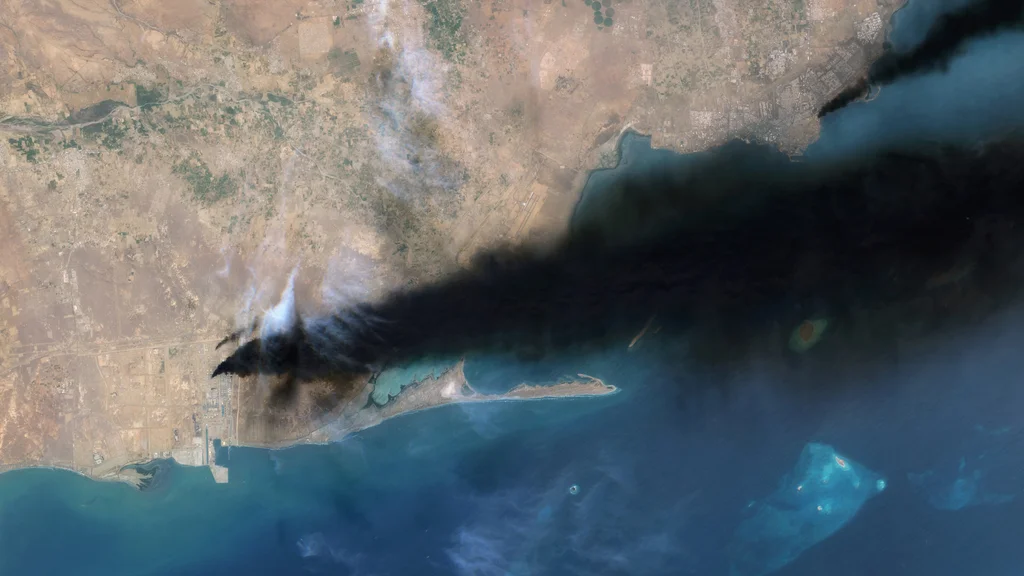
Instead, this dip was a short-term response to the high oil prices and supply chain snags caused by the Iran war. And that means we have more to do to expand clean energy and stop the surge in plant-warming greenhouse gas emissions.
“A decline in fossil CO2 emissions is encouraging, but a reduction driven partly by geopolitical shocks is not a sustainable climate solution,” Pierre Friedlingstein, director of the Global Carbon Budget Office at the University of Exeter and leader of the study, said in a statement.
The situation mirrors what happened after the first year of the COVID-19 pandemic, when lockdowns that halted commutes and shuttered businesses led to a record drop in carbon emissions.
That drop came about not because of a push toward smart climate policies, but because of one destabilizing event. There was no indication then that this drop in emissions would continue year over year, which is what’s required to decrease emissions enough to meet climate goals.
The impact of the war in Iran brings the same threat: that the world will return to its fossil fuel business-as-usual behavior once oil prices drop and supply chain issues are solved.
Bill Hare, CEO of Climate Analytics, doesn’t even consider this change in emissions a decline. It’s a “flatline,” he said in a statement, with the 0.4% drop “statistically indistinguishable from zero.”
“The clean energy transition is delivering real gains: solar, wind and electric vehicles are now offsetting roughly two-thirds of the emissions growth from rising energy demand,” he added. “But those gains are being swallowed by continued and growing fossil fuel use elsewhere: in industry, in emerging economies, and across sectors where the energy transition has barely begun.”
The dangers of fossil fuels have been a major topic at the COP31 climate talks. In his opening address, United Nations climate chief Simon Stiell said that the crisis of high fossil fuel prices is “spreading inflation like a cancer.”
UN Secretary General António Guterres made similar comments, noting that fossil fuels don’t only drive the climate crisis, they come with steep economic and security costs—as the conflict in Iran illustrates.
“Across 130 countries, petrol prices have risen by around 26%—and diesel by 38%. Families, businesses, and governments are paying the price,” he said. And oil companies are raking in billions, he added.
“Changing suppliers will not eliminate this exposure,” he continued. “The only answer is to reduce dependence itself—through clean energy, grids, storage, efficiency and electrification.”
Though this slight drop isn’t a sign that our fossil fuel emissions have peaked, the researchers note, the emissions that were avoided because of clean energy technologies like solar and wind are “substantial.”
If we can keep accelerating clean energy deployment, they add, “a sustained peak and decline in global CO2 emissions could be a few years away.”